Key takeaways
- "Ozempic teeth" is not the drug attacking your teeth. It is side effects, mainly dry mouth, that make decay and sensitivity more likely.
- Less saliva means less natural washing and acid-neutralising, so teeth are more exposed. Nausea, vomiting or reflux can also erode enamel.
- Warning signs to catch early: a dry or sticky mouth, new sensitivity, bad breath, or teeth that feel rough.
- You do not have to choose between the medication and your teeth. Hydration, saliva, fluoride and more frequent check-ups keep the risk small. Never stop a prescribed drug without your doctor.
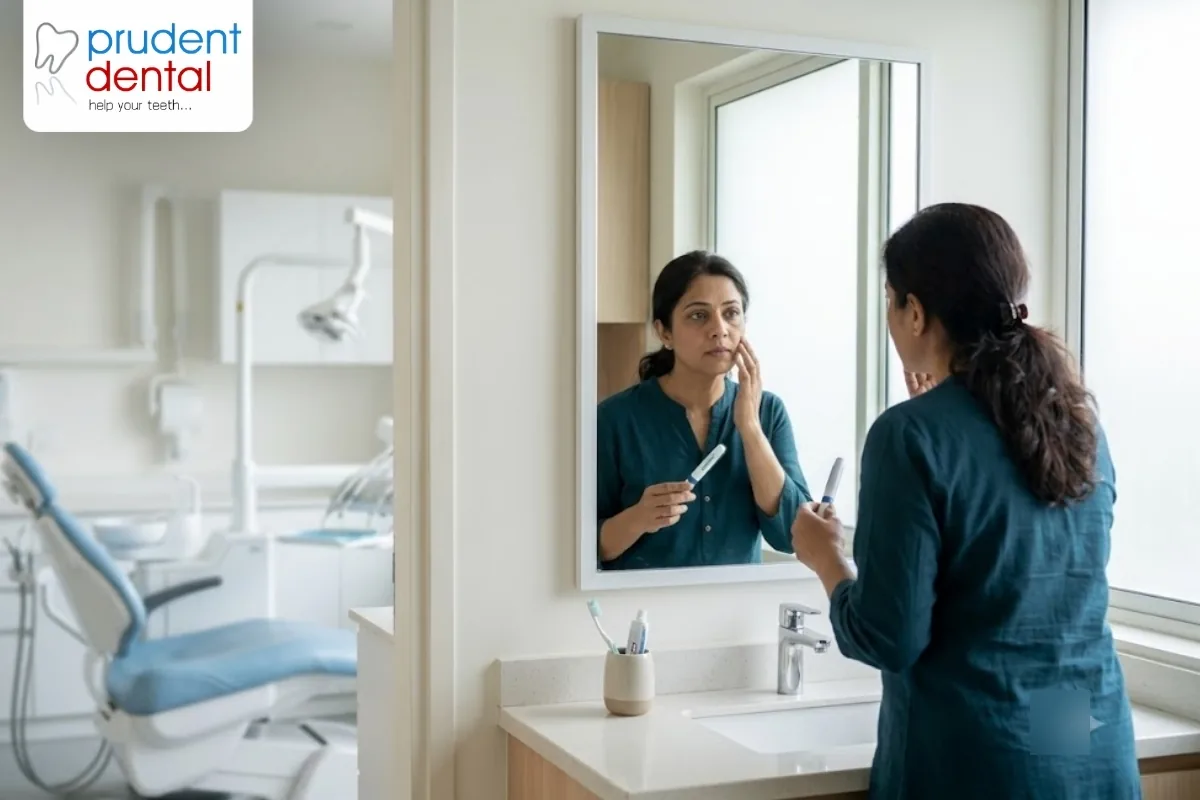
The weight came off. Then the sensitivity started. "Ozempic teeth" is not printed on the leaflet, but dentists are seeing it, and the reason is not the drug itself. It is what the drug does to your saliva, and the knock-on effects that follow. Here is what is actually happening, the signs to watch for, and how to keep your teeth safe while you stay on your treatment.
Quick answer: GLP-1 weight-loss drugs like Ozempic do not damage teeth directly, but their side effects can. A drier mouth means less saliva to wash away food and neutralise acid, and nausea, vomiting or reflux can erode enamel, together raising the risk of decay and sensitivity. The damage is largely preventable with good care.
What is "Ozempic teeth"?
"Ozempic teeth" is an informal nickname rather than a medical diagnosis. It describes the dental problems some people report while taking GLP-1 medicines, the class that includes Ozempic, Wegovy and Mounjaro, used for type 2 diabetes and weight loss. People typically mean a dry mouth, new sensitivity, bad breath, or fresh decay appearing faster than they are used to.
The important thing to understand is that the medicine is not corroding your teeth. It is changing the conditions inside your mouth, and it is those changed conditions that do the damage over time. That distinction matters, because it means the problem is preventable rather than inevitable.
Why a weight-loss drug shows up in your mouth
Three side effects, working together, explain almost all of it:
| What the drug does | Effect on your mouth | What it can lead to |
|---|---|---|
| Can reduce saliva (dry mouth) | Less saliva to wash away food and neutralise acid | Higher risk of decay, plaque and bad breath |
| Can cause nausea, vomiting or reflux | Stomach acid reaches the teeth | Enamel erosion and sensitivity, especially on the back of the teeth |
| Changes how and what you eat | Smaller, softer meals and less chewing | Less saliva stimulated, and grazing keeps acid levels up |
Saliva is the quiet hero here. It rinses the mouth, neutralises acid, and carries the minerals that keep enamel strong. When it drops, every other risk factor gets worse at once. That is why dry mouth, not the drug, is the villain of this story, and it is also the part you can do the most about.
The warning signs to catch early
None of these mean disaster. They mean it is time to tighten up your routine and tell your dentist. Look out for:
- A mouth that feels dry, sticky, or thirsty more than usual
- New or increasing sensitivity to hot, cold or sweet
- Bad breath that will not shift, or a constant bad taste
- Teeth that feel rough, or edges that feel thinner
- Gums that bleed more easily than before
Who is most at risk
The effect is not the same for everyone. You are more exposed if you already had a dry mouth or a history of decay, if your oral-care routine is patchy, if you graze on sugary or acidic drinks through the day, or if nausea and vomiting are a strong part of your side effects. If several of these apply to you, treat this as a nudge to get ahead of it rather than a reason to worry.
How to protect your teeth on a GLP-1 drug
The good news is that a handful of small habits cancel out most of the risk. You do not have to choose between your treatment and your teeth.
- Sip water through the day. Hydration is the simplest way to fight a dry mouth.
- Stimulate saliva. Sugar-free gum or lozenges keep saliva flowing between meals.
- Brush with fluoride, twice a day, and clean between your teeth daily. Spit, do not rinse, so the fluoride keeps working.
- Do not brush straight after vomiting or reflux. The enamel is softened by acid; rinse with water, wait a while, then brush.
- Go easy on grazing, especially sugary or acidic drinks sipped over long periods.
- See your dentist more often. A professional clean and a check every few months catches anything starting while it is still small.
One thing this article is not: advice to stop or change your medication. That is a decision for the doctor who prescribed it. The message here is simpler, keep taking your treatment as prescribed, and protect your mouth while you do.
When to see a dentist
If you are on a GLP-1 drug, it is worth telling your dentist so they can watch for the early signs and plan slightly more frequent visits. At Prudent Dental Clinic in Viman Nagar, Pune, a routine dental examination checks for early decay, erosion and dryness, and we will show you exactly what to do at home. If you have noticed new sensitivity or think a cavity may be starting, do not wait for it to hurt, book a check-up or call +91 70287 22200.
Sources & further reading
Cochrane Oral Health (evidence reviews) · American Dental Association (MouthHealthy) · NHS, Dental Health · World Health Organization, Oral Health
Ozempic and your teeth: FAQs
- Dental examination
- Scaling and polishing
- Signs you have a cavity (and what happens next)
- Electric vs manual toothbrush: which is better?
- How to remove plaque and tartar from your teeth
- Does baking soda whiten teeth? A dentist's take
- Hydroxyapatite vs fluoride toothpaste: a dentist's view
- Does oil pulling really work? What the science says
- Is charcoal toothpaste safe? What it does to enamel
On a weight-loss drug? A check-up keeps your teeth ahead of it. Call +91 70287 22200.
Call +91 70287 22200 · Open 7 days, 9 AM–9 PM (5 PM Sun)