Key takeaways
- On average, electric toothbrushes remove slightly more plaque than manual ones, but the difference is modest.
- Technique and consistency matter far more than the type of brush. A manual brush used well cleans very effectively.
- Electric brushes help most if you press too hard, struggle to brush thoroughly, wear braces, or have limited hand movement.
- The best toothbrush is simply the one you will use properly, twice a day, for two minutes.
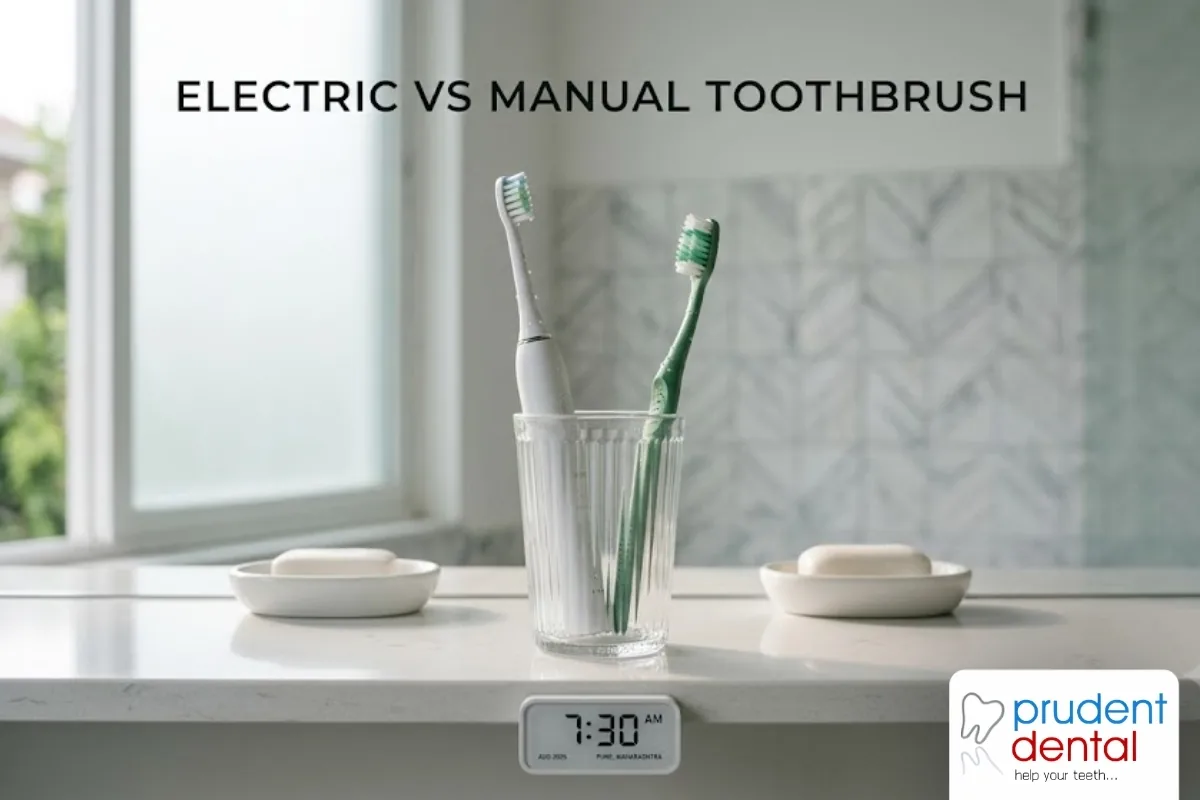
"Should I switch to an electric toothbrush?" is one of the most common questions patients ask, usually while eyeing an expensive one in the shop. The honest answer is more reassuring than the marketing suggests: both can keep your teeth and gums perfectly healthy, and the way you brush matters more than what you brush with. Here is a balanced look at what the evidence actually says.
What the evidence says
Reviews of the research generally find that electric toothbrushes, particularly the oscillating-rotating type, remove a little more plaque and reduce gum inflammation somewhat more than manual brushing over time. So there is a genuine, measurable edge. The key word, though, is little. The gap is modest, and it shrinks to nothing when a manual brush is used with good technique for the full two minutes. In other words, an electric brush gives most people a small, useful advantage rather than a transformation.
Why electric brushes tend to help
Where electric toothbrushes earn their keep is by removing human error from the equation:
- The timer. Most have a built-in two-minute timer, and a lot of people who think they brush for two minutes are actually done in under one. The timer alone improves many people's brushing.
- The bristle action. The rapid movement helps disturb plaque, so you do not have to generate the motion yourself.
- The pressure sensor. Many models warn you when you press too hard, which helps prevent the gum recession that heavy scrubbing causes.
- Ease of use. They ask less of your hand, which genuinely helps some people clean more thoroughly.
When a manual brush is perfectly fine
If a manual toothbrush and a good routine keep your gums pink and firm and your dentist is happy at check-ups, there is simply no need to change. A soft manual brush, used gently at the gumline for two minutes twice a day, alongside cleaning between the teeth, controls plaque very effectively. It is also cheaper, needs no charging, and travels easily. The fundamentals we cover in how to remove plaque and tartar apply whichever brush you hold.
Who benefits most from switching
An electric brush is most worth considering if you:
- Find it hard to brush thoroughly, or tend to rush.
- Press too hard with a manual brush, or already have some gum recession.
- Wear braces, which are fiddly to clean around.
- Have arthritis or reduced hand movement that makes manual brushing awkward.
- Are helping a child build a good two-minute habit.
The bottom line
The best toothbrush is the one you will actually use properly and consistently. Both types work; an electric brush offers a small, real advantage and some helpful features, while a manual brush used well is genuinely fine. Whichever you choose, gentle technique, two minutes twice a day, cleaning between the teeth, and regular professional cleanings are what keep your mouth healthy.
At Prudent Dental Clinic in Viman Nagar, Pune, we are happy to show you the technique that suits your teeth and gums, with whichever brush you prefer. The clinic is open seven days a week from 9 AM to 9 PM (5 PM on Sundays), and you can book a check-up online or call.
Sources & further reading
Indian Dental Association · American Dental Association (MouthHealthy) · NHS, Dental Health
Electric vs manual toothbrush FAQs
Not sure your brushing is doing the job? Call +91 70287 22200 for a check-up.
Call +91 70287 22200 · Open 7 days, 9 AM–9 PM (5 PM Sun)