Key takeaways
- Oil pulling is an old Ayurvedic practice. Swishing oil may modestly freshen the mouth, but the evidence behind bigger claims is weak.
- The American Dental Association does not recommend oil pulling as a dental hygiene practice, citing a lack of reliable scientific evidence.
- Oil pulling cannot remove plaque effectively, clean between teeth, or shift tartar. It can never replace brushing, flossing, or professional cleanings.
- For most healthy adults it is a harmless optional extra. Spit the oil into a bin, never swallow it, and keep your proven routine unchanged.
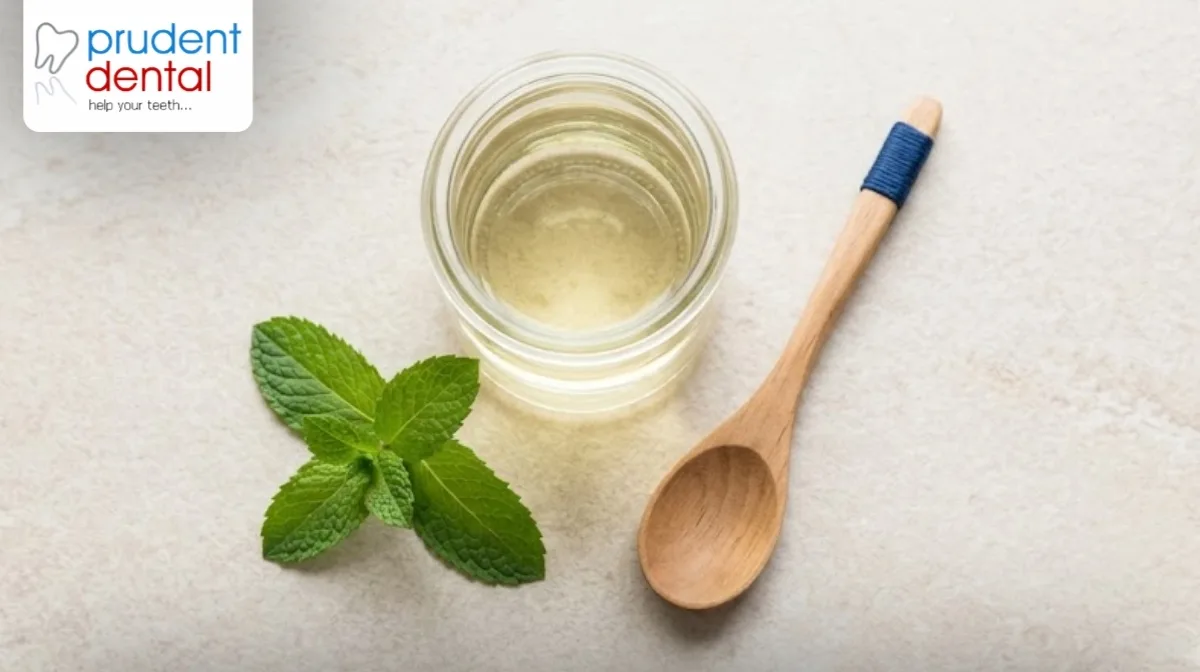
Scroll through Instagram or YouTube and you will find oil pulling, which means swishing a spoonful of coconut or sesame oil around the mouth. People credit it with everything from whiter teeth to a full-body "detox". The practice is far older than the hashtags. Classical Ayurvedic texts describe oil rinses known as kavala and gandusha, and many Indian families have passed the habit down through generations.
So does tradition hold up against modern evidence? The answer sits somewhere in the middle. Oil pulling appears harmless for most healthy adults and may offer a small freshness benefit. It is not a proven therapy, and it is never a substitute for brushing, cleaning between your teeth, and professional dental care. Here is what the research actually shows.
Does oil pulling really work?
Partly. Swishing edible oil may modestly reduce some mouth bacteria, and many people find their mouth feels fresher afterwards. However, the studies behind it are small and of limited quality, which is why the American Dental Association does not recommend oil pulling as a dental hygiene practice. Think supplement, not treatment.
A handful of small clinical trials, many from India, have compared oil pulling with chlorhexidine mouthwash or with no rinse at all. Some report modest improvements in plaque or gum-health scores. That sounds promising, but reviewers consistently point out the same weaknesses: the studies are short, involve few participants, and often lack the rigorous controls needed to draw firm conclusions.
This is why professional bodies remain cautious. The American Dental Association has stated that, given the lack of reliable scientific evidence, it does not recommend oil pulling as a dental hygiene practice. That is not hostility towards Ayurveda. It is the same evidence bar every product and practice is held to, whether that is a mouthwash or an electric toothbrush.
Nor does it mean the ritual is worthless. Swishing any liquid for several minutes stimulates saliva, dislodges loose food debris, and leaves the mouth feeling cleaner. The open question is whether oil pulling adds anything meaningful on top of a proven routine. So far, the research suggests probably not much.
Can oil pulling replace brushing?
No. Oil pulling cannot remove plaque the way a toothbrush and fluoride toothpaste do, and it cannot clean between teeth or remove hardened tartar. Brushing twice a day, cleaning between your teeth, and regular professional cleanings remain essential. At best, oil pulling is an optional extra on top of that routine.
The reason comes down to how dental disease actually starts. Plaque is a sticky bacterial film that bonds to tooth surfaces, so it has to be physically disrupted. That is exactly what bristles and floss do. Fluoride toothpaste then strengthens enamel against acid attack. Swished oil cannot grip and lift a biofilm the way mechanical cleaning does. And once plaque mineralises into tartar, nothing you swish at home will shift it. Only professional scaling and polishing with dental instruments can remove hardened deposits.
| Habit | What it actually does | Strength of evidence | Role in your routine |
|---|---|---|---|
| Brushing twice daily with fluoride toothpaste | Physically removes plaque and strengthens enamel against decay | Very well established | Essential, non-negotiable |
| Cleaning between teeth (floss or interdental brushes) | Removes plaque from surfaces a toothbrush cannot reach | Well established | Essential daily habit |
| Professional scaling and polishing | Removes hardened tartar and surface stains a brush cannot touch | Well established | Periodic, as advised by your dentist |
| Oil pulling | May modestly reduce some oral bacteria; freshens the mouth | Limited and inconclusive | Optional extra only |
At Prudent Dental Clinic in Viman Nagar, Pune, we see this play out in real mouths. Dr. Puja Bansal (BDS), who has practised dentistry for 27 years, has watched many oral-care trends come and go. Her advice has stayed the same. Enjoy the extras if you like them, but judge any habit by whether the basics are still being done. A solid preventive routine, meaning brushing, interdental cleaning, a sensible diet, and regular check-ups, is what actually keeps teeth out of trouble.
Is coconut oil good for teeth?
Coconut oil is not harmful to teeth, and its lauric acid content shows mild antibacterial properties in laboratory settings. But there is no strong clinical evidence that swishing it prevents cavities, whitens teeth, or treats gum disease. It is a pleasant, traditional choice for oil pulling, and that is all.
Coconut oil became the modern favourite partly because of taste and partly because of laboratory studies on lauric acid, one of its main fatty acids, which can inhibit certain bacteria in a petri dish. Laboratory findings do not automatically translate into clinical benefit inside a living mouth, where saliva, diet, and biofilm behave very differently. Traditional practice more often used sesame oil, and there is no convincing evidence that one edible oil outperforms another. If you enjoy the ritual, choose whichever you prefer.
One claim deserves particular caution, and that is whitening. Oil contains no bleaching agent, and any brighter feeling after a session is more likely a cleaner-feeling mouth than a genuine change in tooth shade. Surface stains from tea, coffee, or tobacco respond to professional polishing, and deeper discolouration needs a dentist's assessment. No amount of swishing will change that.
How can you try oil pulling safely?
If you would like to keep the tradition, do it sensibly. Use a spoonful of an edible oil and swish gently. Traditional practice describes around fifteen to twenty minutes, though shorter is fine if your jaw tires. Spit the oil into a bin rather than the basin, where it can clog drains. Never swallow it, because the oil carries bacteria and debris from your mouth. Then brush and clean between your teeth as normal.
A few groups should skip it altogether: young children, anyone with swallowing difficulties, and anyone for whom prolonged swishing triggers jaw pain. Most importantly, never use oil pulling to quietly manage a symptom. Bleeding gums, persistent bad breath, sensitivity, or toothache are signals that need an examination, not an oil rinse over the top. Our FAQ page answers more common questions, and you can book a consultation if something in your mouth does not feel right. The clinic is open seven days a week, from 9 AM to 9 PM (5 PM on Sundays).
Sources & further reading
American Dental Association (MouthHealthy) · Indian Dental Association
Oil pulling: your questions answered
Trying a new oral-care trend? Get honest, evidence-led advice. Call +91 70287 22200.
Call +91 70287 22200 · Open 7 days, 9 AM–9 PM (5 PM Sun)