

Key takeaways
- Braces trap food and plaque around the brackets and wire, so cleaning has to be more thorough than usual.
- Brush twice a day around every bracket and the gum line, and use a small interdental brush to reach under the wire.
- Keep flossing with a floss threader or orthodontic floss; a water flosser is a handy extra alongside brushing.
- Avoid hard and sticky foods that damage braces, and go easy on frequent sugar to prevent decay and white spot marks.
Braces do a great job of straightening teeth, but they also give food and plaque far more places to hide. That makes day-to-day cleaning more important, not less, while you are wearing them. Get the routine right and your teeth come out of treatment straight and healthy; neglect it and you can be left with decay or permanent white marks. Here is how to look after teeth with fixed braces.
Why cleaning matters more with braces
Brackets and wires create lots of little ledges and corners where food debris and plaque collect and are easy to miss with a quick brush. Plaque left sitting around a bracket is what causes decay, gum inflammation and the tell-tale white marks. So the goal through treatment is simple: keep every surface, including around each bracket, as clean as you would keep a tooth without braces, which just takes a little more time and the right tools.
Brushing around brackets
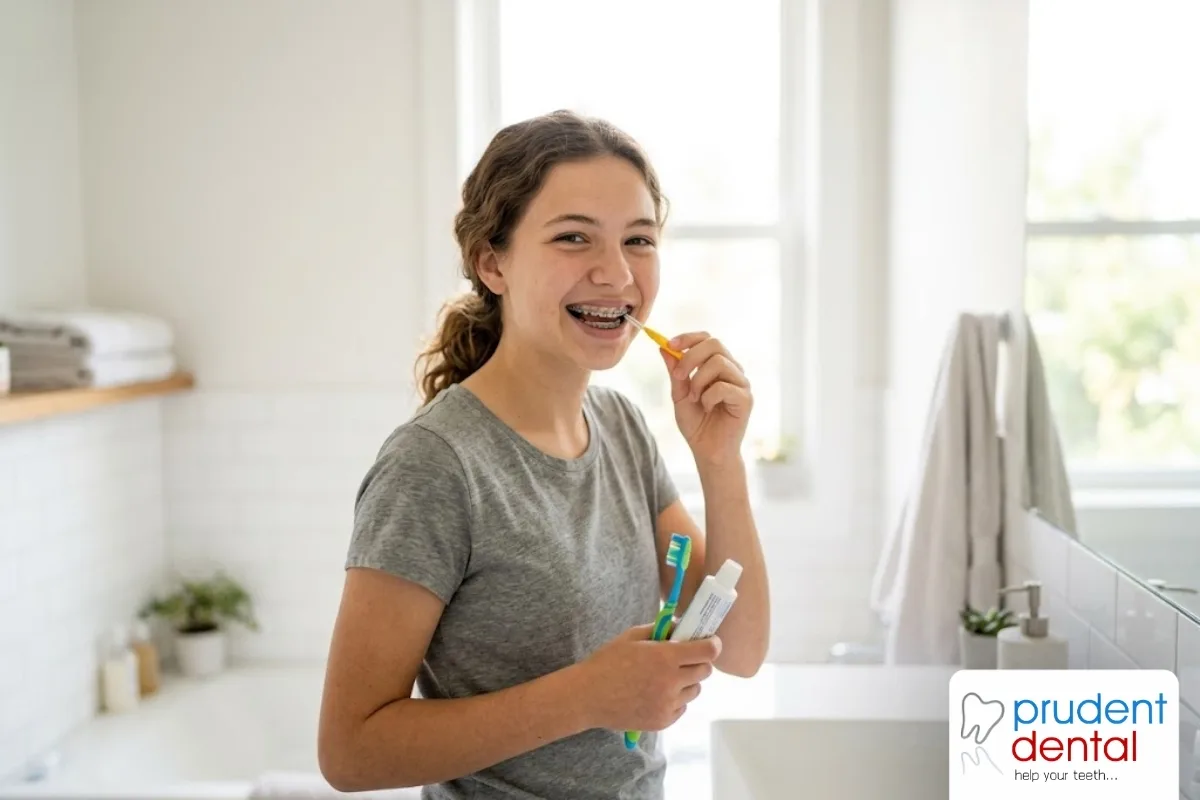
Brush for a full two minutes, twice a day, and slow down around the fittings. Angle the brush to clean above and below each bracket and along the gum line, working tooth by tooth rather than sweeping across the front. A small interdental brush is the star tool here: it slips under the wire and around brackets where a normal brush cannot reach. Because food lodges around braces, many people find a quick brush after meals helpful too. Our guide to brushing and flossing properly covers the basics that still apply.
Flossing with a wire in the way
Flossing is still worth doing, it just needs a little help getting past the wire. A floss threader lets you pass floss behind the wire to clean between the teeth, and orthodontic floss with a stiff tip does the same. A water flosser is a convenient extra that many brace-wearers like for flushing debris out from around brackets, best used alongside brushing rather than as a replacement for it.
What to eat, and what to avoid
Two aims here: protect the braces, and protect the teeth. To protect the braces, avoid hard and sticky foods that bend wires or pull off brackets, hard sweets, nuts, popcorn, ice, chikki, sticky toffees and very chewy things, and cut firm foods like apples and carrots into small pieces instead of biting them. To protect the teeth, ease off frequent sugary and fizzy drinks, because sugar sitting around the brackets is exactly what leads to decay and white marks.
Watch for white spots, and keep up check-ups
White spot lesions are early demineralised patches that form where plaque lingers around a bracket. They are the first stage of decay and can leave permanent marks once the braces come off, so they are worth preventing with good cleaning from day one. Alongside your orthodontic adjustments, keep up routine dental care and cleanings, they catch any early decay or gum inflammation while it is easy to sort, and a professional clean reaches what a brush cannot. You can book a check-up during your treatment.
Sources & further reading
American Dental Association (MouthHealthy) · NIDCR, US National Institute of Dental & Craniofacial Research · NHS, Dental Health · Indian Dental Association
Caring for teeth with braces: your questions answered
- Braces vs clear aligners: which is right for you?
- How to brush and floss properly: a dentist's guide
- Orthodontics
- How to remove plaque and tartar from your teeth
- How your oral health affects your overall health
- Thumb-sucking and children's teeth: what to know
- Dental anxiety: help for nervous patients
- Root canal aftercare: healing and what to eat
- Milk teeth vs permanent teeth: what parents should know
Braces need extra care. For a clean and check during treatment, call +91 70287 22200.
Call +91 70287 22200 · Open 7 days, 9 AM–9 PM (5 PM Sun)