

Key takeaways
- Tenderness on biting for a few days is normal; it should steadily ease, not worsen.
- Eat soft, lukewarm foods and chew on the opposite side until the permanent crown or filling is placed.
- Brush and floss as usual, gently, and slide floss out sideways near a temporary filling.
- Swelling, fever, or pain that returns after settling needs a same-day call to your dentist.
- Do not delay the permanent crown; a root-treated back tooth stays fragile until it is protected.
Some tenderness when you bite, and a little soreness around the gum, is completely normal for a few days after root canal treatment. Most people manage well with soft foods, gentle brushing and whatever pain relief their dentist recommends. Chew on the other side of your mouth until the permanent crown or filling is placed, and the tooth usually settles steadily. If pain worsens after it had begun to ease, or you notice swelling or fever, contact your dentist promptly.
What is normal after a root canal
During root canal treatment the inflamed or infected pulp is removed and the canals inside the root are cleaned, shaped and sealed. The ligament and bone around the root tip need time to settle afterwards, which is why the tooth often feels tender to bite on for a few days. A dull ache once the anaesthetic wears off, mild gum soreness and some awareness of the tooth while chewing are all expected. If you would like a refresher on what was actually done, our guide to the root canal procedure, step by step explains each stage.
Any discomfort usually peaks in the first day or two and then fades steadily. Simple pain relief recommended by your dentist is normally enough; take it as directed rather than waiting for pain to build. Because the nerve has been removed, the tooth itself no longer feels hot and cold, though the gum around it may stay slightly sensitive for a short while. At Prudent Dental Clinic, root canal treatment is planned by Dr. Puja Bansal with consultant endodontist Dr. Mrunal Godse, and we review healing at your follow-up visit.
What to eat while the tooth settles
Wait until the anaesthetic has fully worn off before eating anything, otherwise it is easy to bite your cheek or tongue without noticing. For the first few days choose soft foods that need little chewing, keep them warm rather than piping hot, and chew on the opposite side of your mouth. This matters most while a temporary filling is in place, because it is not built to take heavy biting forces. Softer meals also spare the tender ligament around the root from being loaded while it heals.
As the tenderness eases, move back to your usual diet gradually, still keeping hard items away from the treated tooth. Avoid nuts, ice, hard crusts, raw carrot and anything sticky such as chikki or chewing gum until the permanent crown or filling is in place. Sticky foods can pull a temporary filling out, and hard ones can crack an unprotected tooth. Once the final restoration is fitted and your dentist confirms the bite is comfortable, you can eat normally on that side again.
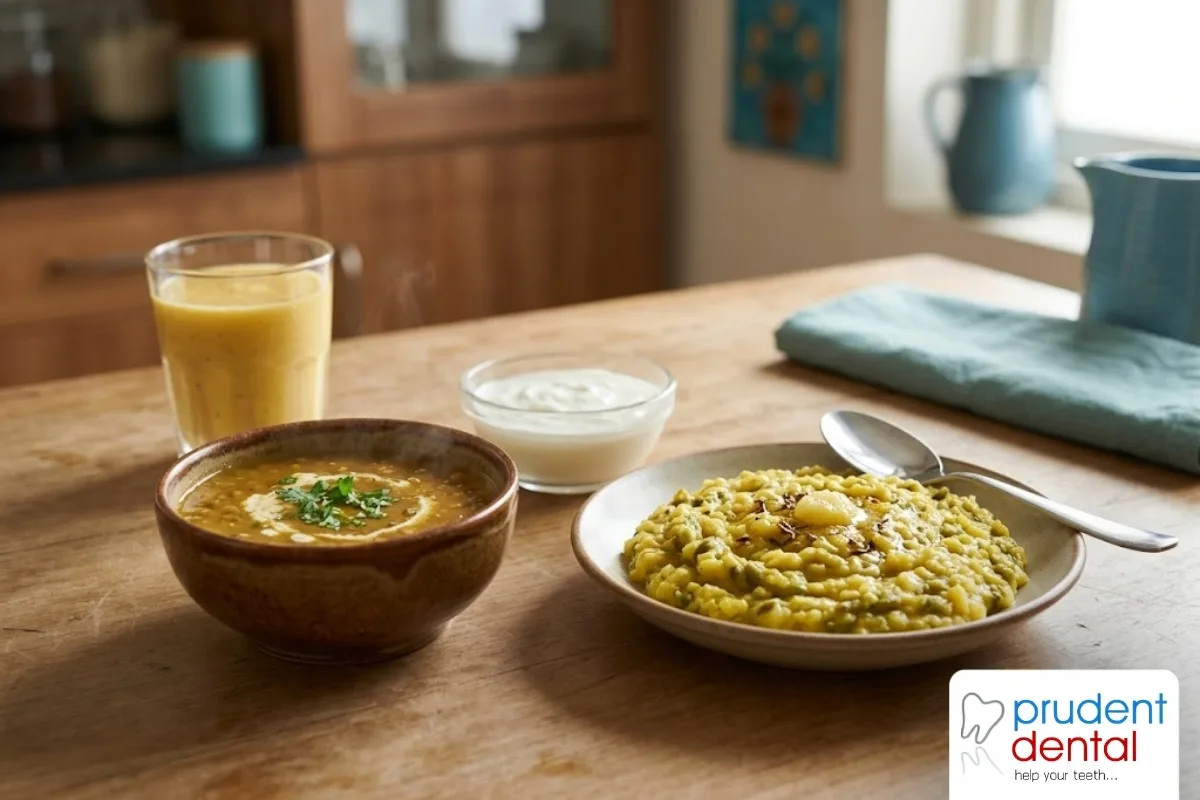
- Khichdi, curd rice or soft dal and rice
- Idli, upma or poha with a little extra moisture
- Soups and clear broths, warm rather than hot
- Scrambled or boiled eggs and soft paneer dishes
- Dahi, lassi, milkshakes and smoothies
- Mashed potato and well-cooked vegetables
- Soft fruits such as banana, papaya or chikoo
- Porridge, oats or dalia
Brushing, flossing and daily care
Keep brushing twice a day as usual, including the treated tooth; just be gentle around it while the gum is tender. A soft-bristled brush and your regular fluoride toothpaste are all you need. Floss carefully next to a temporary filling, sliding the floss out sideways rather than snapping it upwards, so you do not dislodge the margin. If the gum feels sore, a warm salt water rinse once or twice a day for the first few days can be soothing. Clean, healthy gums help the area settle faster and protect the rest of your mouth.
Why the timing of the permanent crown matters
A root-treated tooth no longer has a blood supply from the pulp, and back teeth in particular become more brittle over time. Until the permanent crown or final filling is placed, the tooth is protected only by a temporary material that gradually wears and can leak. If bacteria seep past a failing temporary seal, the cleaned canals can become reinfected and the treatment may need to be redone. That is why your dentist will give you a clear timeframe for the final restoration, and why keeping that appointment genuinely matters.
Molars and premolars take the heaviest chewing forces, so they usually need a crown rather than just a filling; front teeth can sometimes be restored with a filling alone if enough sound tooth remains. Your dentist will confirm which option suits your tooth once it has settled. We have covered the reasons, the materials and what to expect in our guide to getting a crown after a root canal. Until then, treat the tooth as fragile: no nuts, ice or hard chewing on that side.
Red flags: when to contact your dentist
Most root canals heal without drama, but a few signs need prompt attention rather than watchful waiting. Contact your dentist the same day if you notice swelling of the gum, cheek or face, fever, pain that worsens after it had started to settle, or throbbing that keeps you awake despite pain relief. A bite that suddenly feels high, a temporary filling that falls out, or any reaction to prescribed medication also warrants a call. None of these automatically means the treatment has failed, but they should be checked early.
If swelling spreads towards the eye or neck, or you have difficulty swallowing or breathing, treat it as an emergency and seek medical care immediately. For anything less urgent, Prudent Dental Clinic in Viman Nagar is open seven days a week, so you do not have to wait out a worrying weekend. Call us on +91 70287 22200 and describe your symptoms; we will tell you whether to come in straight away or simply keep an eye on things until your scheduled review.
Root canal aftercare FAQs
Sources & further reading: NHS, Dental Health; American Dental Association (MouthHealthy); World Health Organization, Oral Health; Indian Dental Association.
Questions about your own teeth? Call +91 70287 22200.
Call +91 70287 22200 · Open 7 days, 9 AM–9 PM (5 PM Sun)