

Key takeaways
- Technique beats force: a soft brush at a 45-degree angle to the gum line, small circular strokes, two minutes twice a day.
- Floss with a gentle C-shape hug around each tooth, below the contact point, using a fresh section for every tooth.
- Bleeding when you start flossing usually means inflamed gums; keep flossing gently rather than stopping, and see a dentist if it persists.
- Replace your brush when the bristles splay; worn bristles clean poorly and splaying often signals too much pressure.
- Home care cannot remove hardened tartar; regular professional scaling and check-ups complete the routine.
Good brushing is about technique, not force. Hold a soft-bristled brush at a 45-degree angle to the gum line and use small, gentle circular strokes for two minutes, twice a day. Flossing works the same way: a gentle C-shape hug around each tooth, below the point where the teeth touch, with a fresh section of floss for every tooth. This guide from Prudent Dental Clinic in Viman Nagar, Pune walks you through both, and covers the mistakes we correct most often at the chair.
Brushing: the technique that actually cleans
Start with a soft-bristled brush and hold it at a 45-degree angle to the gum line, so the bristle tips point at the spot where the tooth meets the gum. That junction is where plaque gathers first, and it is the area most people miss. Use small, gentle circular strokes, a few teeth at a time, and follow a set route: outer surfaces, inner surfaces, then the chewing surfaces. Two minutes twice a day is the standard, and most people who time themselves discover they were stopping well short of it.
Pressure is the enemy of good brushing. Scrubbing hard with a back-and-forth sawing action wears enamel, irritates the gums and can contribute to recession over time, while cleaning no better than gentle circles. Finish by brushing your tongue lightly from back to front to reduce bacteria and freshen breath, and spit out the toothpaste rather than rinsing straight away, so the fluoride keeps working. If your bristles splay outwards within weeks, that is your grip talking: hold the brush like a pen, not a fist.
Flossing: the C-shape that makes the difference
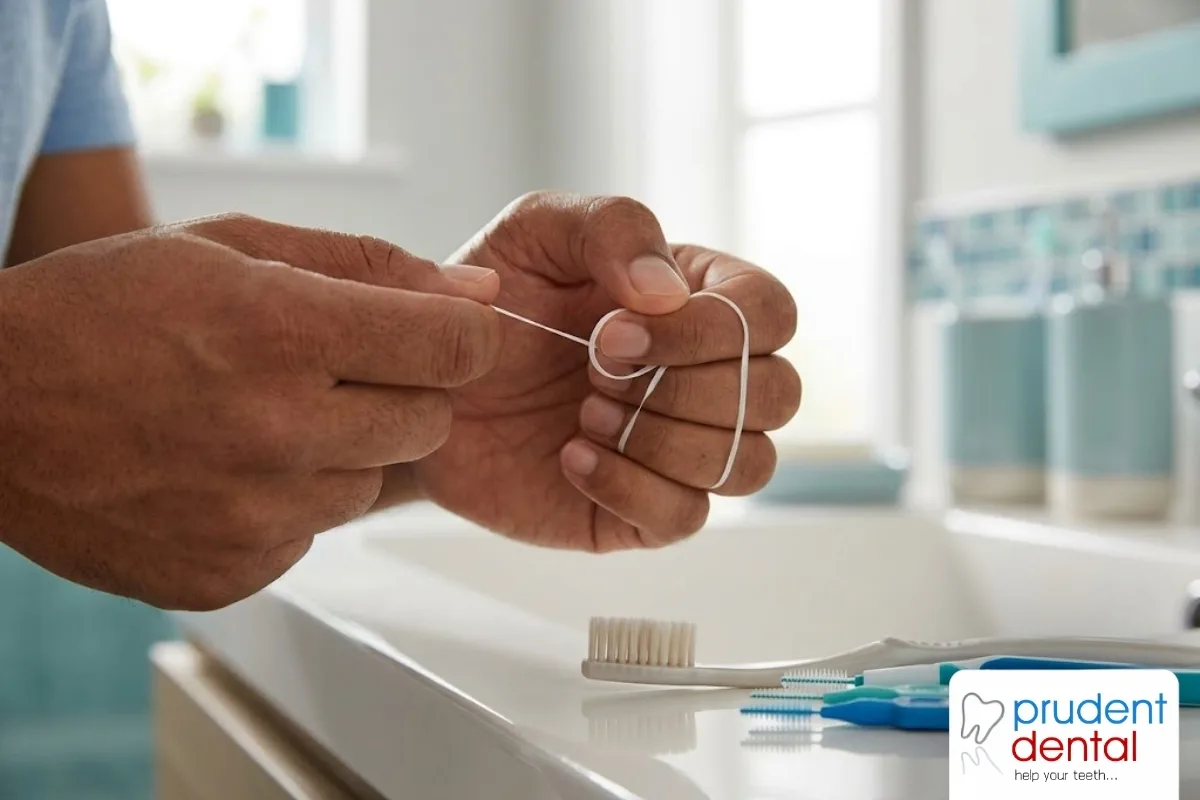
Take a comfortable length of floss and wind the ends around your middle fingers, leaving a short working section held taut between thumbs and forefingers. Guide it gently past the contact point where two teeth touch, using a light see-saw motion rather than snapping it down onto the gum. Once through, curve the floss into a C-shape so it hugs the side of one tooth, slide it just below the gum line, and sweep upwards a few times. Then hug the neighbouring tooth and repeat, so both sides of every gap get cleaned.
Move to a fresh section of floss for each tooth, otherwise you are simply transferring plaque from one gap to the next. If your gaps are wider, perhaps after gum treatment or naturally with age, interdental brushes often clean them better than floss, because their bristles fill the space that floss cannot. Water flossers suit some people too, particularly around braces and bridges, though they earn their place as an addition to flossing rather than a replacement for it.
Bleeding gums when you start flossing
Bleeding when you begin flossing is common, and it rarely means you have hurt yourself. It usually means the gums are already inflamed by plaque sitting undisturbed between the teeth, a condition called gingivitis. Inflamed tissue bleeds at the lightest touch, so the flossing is revealing the problem, not causing it. The counterintuitive answer is to keep going, gently and daily. As the plaque is cleared, the inflammation usually settles and the bleeding fades, often within a week or two of consistent, careful flossing.
If the bleeding continues beyond a couple of weeks despite gentle daily flossing, or if your gums are swollen, tender or receding, book a dental visit rather than pushing on alone. Persistent bleeding can signal gum disease that has progressed beyond what home care can reverse, and hardened deposits called tartar cannot be brushed or flossed away. A professional scaling and polishing removes them and gives your gums a clean surface to heal against. Bleeding with pain, pus or loose teeth deserves an urgent appointment.
Common mistakes that undo good habits
Most of the problems we see at the chair are not caused by laziness. They are caused by well-meaning habits that quietly work against the teeth: brushing harder in the belief that force equals cleanliness, rushing through a routine on autopilot, or rinsing away the very fluoride the toothpaste has just delivered. Here are the mistakes we correct most often, all of them easy to fix once you know they are there.
- Scrubbing hard with a sawing motion instead of gentle circles; it wears enamel and pushes gums back.
- Brushing straight after acidic food or drink; give softened enamel a little while to recover first.
- Rinsing with water immediately after brushing, which washes the fluoride away; spit, do not rinse.
- Skipping the gum line and the backs of the last molars, the two most-missed zones in the mouth.
- Snapping floss down onto the gum instead of easing it past the contact point.
- Reusing the same section of floss for every tooth.
- Keeping a brush with splayed, flattened bristles; it cannot reach where it needs to.
- Treating mouthwash as a substitute for flossing; it freshens, but it does not clean between teeth.
Choosing the right tools
A good brush has soft bristles and a head small enough to reach your back molars comfortably; hard bristles clean no better and punish the gums. Both manual and electric brushes work well when the technique is right, though electric brushes with pressure sensors and built-in timers make good technique easier to sustain; our guide to electric versus manual toothbrushes weighs them up honestly. Use a fluoride toothpaste, and replace any brush or brush head roughly every three months, or sooner once the bristles splay.
| Tool | Best suited to | Technique note |
|---|---|---|
| Dental floss | Tight contacts and narrow gaps | Gentle C-shape hug, fresh section for each tooth |
| Interdental brushes | Wider gaps, gum recession, around bridges | Choose a size that fits snugly without forcing |
| Water flosser | Braces, implants, limited dexterity | A helpful addition rather than a full replacement |
Where professional care fits in
Even flawless home care has a limit. Plaque that escapes the brush hardens into tartar within days, and once set it cannot be brushed or flossed away, as our guide to removing plaque and tartar explains. Periodic professional cleaning clears what home care cannot and lets us spot early gum trouble before it grows. At Prudent Dental Clinic in Viman Nagar, Pune, Dr. Puja Bansal and her team check your gums, your technique and your brush wear pattern at every visit. We are open seven days a week; call +91 70287 22200 to book a check-up and cleaning.
How to brush and floss properly FAQs
Sources & further reading: NHS, Dental Health; American Dental Association (MouthHealthy); World Health Organization, Oral Health; Indian Dental Association.
Questions about your own teeth? Call +91 70287 22200.
Call +91 70287 22200 · Open 7 days, 9 AM–9 PM (5 PM Sun)