Key takeaways
- Antibiotics can calm the swelling and pain of a tooth infection for a while, but they cannot reach and remove the source inside the tooth.
- They are not a substitute for a root canal or extraction; once they stop, the infection usually returns because the cause remains.
- They are sometimes used alongside treatment when an infection has spread or there is swelling or fever, not instead of it.
- Repeated courses to avoid treating the tooth leave the infection in place and add to antibiotic resistance; facial swelling is urgent.
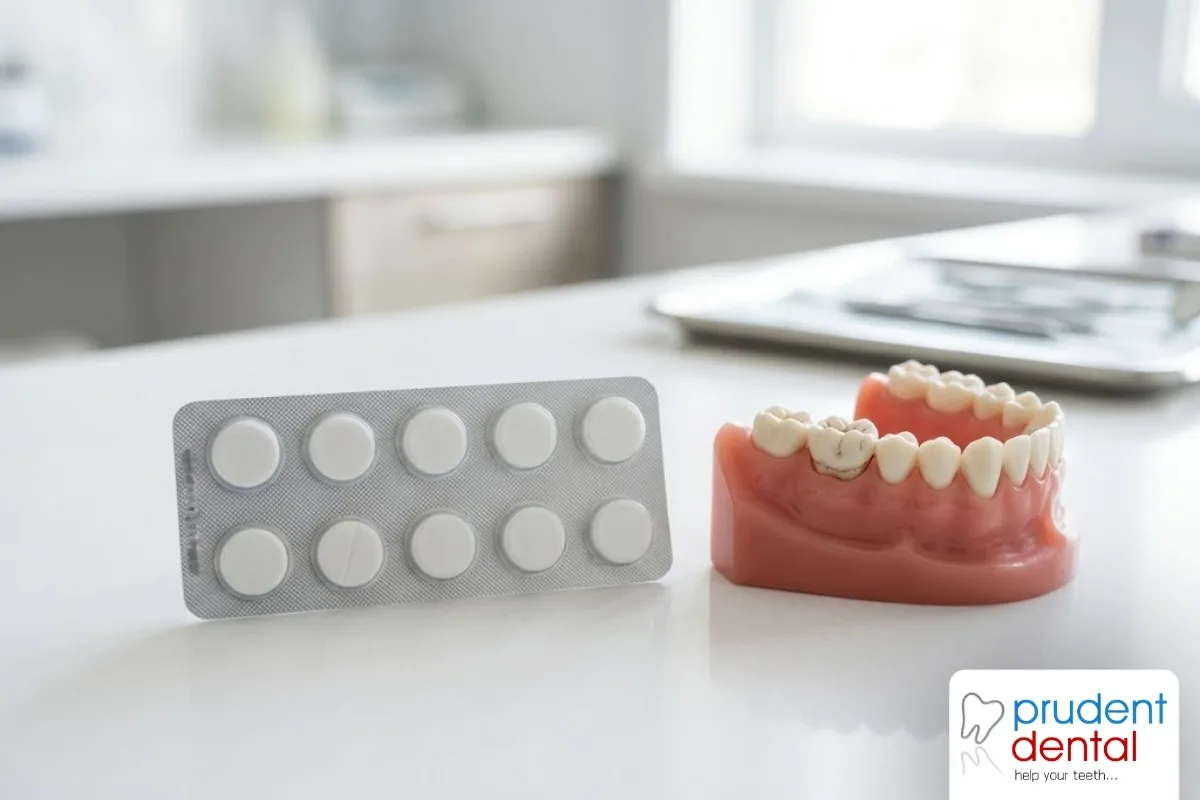
When a tooth is throbbing and the face is starting to swell, it is natural to hope a course of antibiotics will fix it. They can certainly take the edge off. But there is an important distinction that a lot of people miss: antibiotics can quieten a tooth infection, yet they cannot cure it, because they do not remove what is causing it. Here is why, explained plainly.
What antibiotics can and cannot do
A tooth infection usually starts inside the tooth, in the pulp, and spreads to the tip of the root. The problem is that this space has a poor blood supply once the tissue is infected or dead, so antibiotics carried in the bloodstream cannot properly reach and clear it. They can lower the overall bacterial load and settle the swelling and pain for a time, which is why you may feel better for a few days. But the infected material is still sitting inside the tooth, so when the course finishes, the problem tends to come straight back.
Why a root canal or extraction is the actual fix
Curing the infection means physically removing its source. That is exactly what a root canal does: it cleans the infected inside of the tooth and seals it, so the tooth can stay. If the tooth is too damaged to save, the alternative is to take it out. Either way, it is the treatment, not the tablet, that resolves things. Our guide to root canal versus extraction explains how that choice is made.
So why are antibiotics sometimes prescribed?
There are real situations where a dentist does prescribe them, alongside treating the tooth: significant facial swelling, signs the infection is spreading, a fever, or to settle a severe flare-up so that treatment can be carried out safely. In these cases the antibiotics support the treatment, buying a little time or containing spread, but they are not the treatment. For a straightforward infected tooth with no spread, current guidance often favours dealing with the tooth rather than reaching for antibiotics at all.
The risk of using them as a substitute
Repeatedly taking antibiotics to mask a tooth that needs treatment causes two problems. It leaves the underlying infection in place, so it keeps returning and often worsening. And overusing antibiotics adds to antibiotic resistance, a serious and growing problem for everyone, not just for your tooth. Antibiotics are a valuable tool used at the right moment, not a way to avoid the dentist.
When it is urgent
Facial swelling from a tooth should be taken seriously. Rapidly spreading swelling, difficulty swallowing or breathing, or swelling around the eye or under the tongue needs emergency medical attention. For other dental swelling or a painful infected tooth, contact a dentist promptly rather than waiting on a pharmacy antibiotic. You can book an appointment, and our dental abscess guide covers the warning signs.
Sources & further reading
American Dental Association (MouthHealthy) · NIDCR, US National Institute of Dental & Craniofacial Research · NHS, Dental Health · Indian Dental Association
Antibiotics and tooth infection: your questions answered
- Does a root canal hurt? Myths vs modern reality
- Root canal vs extraction: save it or pull it?
- Dental abscess: when swelling becomes serious
- Root canal treatment
- Full mouth rehabilitation: rebuilding a worn or damaged bite
- CBCT scans: how 3D imaging makes dental treatment safer
- Should you replace old silver fillings with tooth-coloured ones?
- Bridge or implant for a front tooth?
- Root canal or implant: save or replace?
An infected tooth needs treating, not just antibiotics. Call +91 70287 22200 to be seen.
Call +91 70287 22200 · Open 7 days, 9 AM–9 PM (5 PM Sun)