

Periodontics (Gum Disease Treatment) in Pune
Looking after the gums and the bone that hold your teeth in place.
- Home
- Services
- Preventive Dentistry
- Periodontics
What is periodontics?
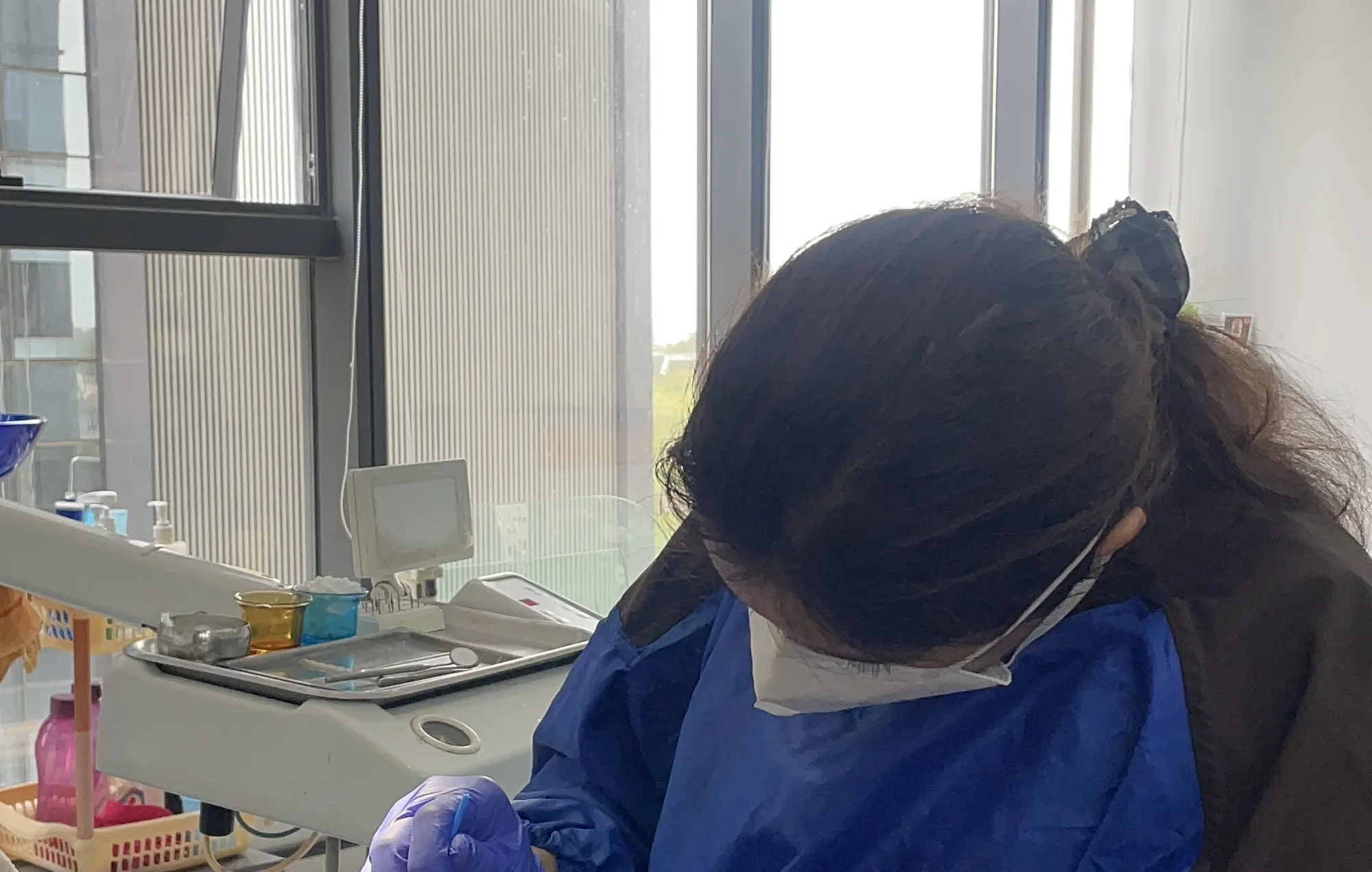
Periodontics is the care of your gums and the bone that support your teeth. When plaque is left along the gumline it can inflame the gums, and over time this can affect the tissue and bone that keep teeth firmly in place. Good gum care keeps that foundation healthy.
At Prudent Dental Clinic in Viman Nagar, gum treatment is carried out by Dr. Puja Bansal (BDS), a general dentist with 27 years of experience. Every case begins with an examination of your gums so care is planned around what your mouth actually needs. Where a case calls for specialist gum treatment or surgery, our consultant periodontist Dr. Sumanth S. (MDS in Periodontology and Oral Implantology, 25 years of experience, 22 as a specialist) takes over, in the same clinic.
Key takeaways
- Periodontics looks after the gums and the bone that support the teeth, not just the teeth themselves.
- Gum disease ranges from gingivitis, an early and often reversible inflammation, to periodontitis, where the supporting bone is affected.
- Common warning signs are bleeding gums, persistent bad breath, receding gums and teeth that feel loose.
- A general practice can provide professional cleaning, scaling and root planing (deep cleaning), oral-hygiene guidance and maintenance visits.
- Advanced gum surgery and complex cases are handled by our consultant periodontist, Dr. Sumanth S. (MDS).
- Cost is quoted individually after an examination. There is no fixed online price.
From gingivitis to periodontitis
Gum disease usually begins as gingivitis, when plaque along the gumline makes the gums red, puffy and prone to bleeding. At this stage it is often reversible with a professional clean and better daily cleaning. If it is left, it can progress to periodontitis, where the gum starts to pull away from the tooth and the underlying bone can be affected, which is what eventually loosens teeth.
You can read more in our guides to gum disease from gingivitis to periodontitis and receding gums, causes and treatment.
Warning signs to watch for
- Gums that bleed when you brush or floss
- Red, swollen or tender gums
- Persistent bad breath or a bad taste in the mouth
- Gums that are pulling away or receding from the teeth
- Teeth that feel loose or seem to be drifting apart
- Sensitivity where the root has become exposed
These signs do not always mean advanced disease, but they should be checked. The earlier gum problems are treated, the more straightforward they usually are.
How gum disease is treated
Professional cleaning
A scale and polish removes plaque and hardened tartar from around the gumline that brushing cannot shift. This is often enough to settle early gingivitis.
Scaling and root planing
For gums that have started to detach, a deeper clean below the gumline removes tartar from the root surfaces and smooths them so the gum can reattach. Usually done with local anaesthesia.
Oral-hygiene guidance
We show you the brushing and cleaning technique that suits your mouth, including cleaning between the teeth, so you can keep the gumline healthy at home between visits.
Maintenance visits
Once your gums are stable, regular maintenance cleans and reviews help keep gum disease under control and catch any change early before it progresses.
Referral when it is needed
Advanced gum surgery, such as gum or bone grafting, and complex or aggressive cases are exactly what our consultant periodontist handles, so that level of care happens here too.
Which of these you need depends on the state of your gums. A scaling and polishing visit is a good starting point for most people, and treatment is planned after your gums have been examined.
Why treat gum disease early?
- Early gingivitis can often be reversed rather than just managed
- Protects the bone and tissue that hold your teeth in place
- Helps keep your natural teeth for longer
- Fresher breath and gums that no longer bleed when you clean
- Usually simpler and more comfortable than treating advanced disease later
Healthy gums are also part of routine preventive dentistry, so a regular dental examination is one of the best ways to keep gum problems from taking hold.
What about cost?
There is no single price for gum treatment, because it depends on the state of your gums and how much cleaning is needed. A routine scale and polish is different from deep cleaning carried out over more than one visit. After examining your gums, we give you a clear, written and personalised quote so you know exactly what to expect. No surprises.
Request a ConsultationGum health and dental implants
Healthy gums are the foundation that dental implants depend on. An implant sits in the same bone and gum that support natural teeth, and untreated gum disease raises the risk of inflammation around an implant later, a problem called peri-implantitis. That is why gum assessment comes before implant planning, not after.
At Prudent Dental Clinic, Dr. Puja Bansal (BDS), who holds a certificate in oral implantology, checks and treats the gums as part of every implant plan, and existing implant patients are monitored so their gums stay healthy for the long run. Where advanced periodontal surgery is needed around an implant, our consultant periodontist and implantologist manages it as part of your care here.
When should I see a dentist about my gums?
It is worth booking a check if your gums bleed when you brush or floss, look red or swollen, feel sore, or have started to pull away from your teeth. Persistent bad breath, a loose tooth, or teeth that seem to be drifting are also reasons to be seen. Gum disease is often painless in its early stages, so these small signs are the most useful ones to act on.
Is periodontal treatment painful?
A routine scale and polish is usually comfortable and needs no anaesthetic. For deeper cleaning below the gumline, the area is numbed with local anaesthesia so you stay comfortable during the procedure. It is normal for gums to feel a little tender for a day or two afterwards, which can usually be managed with ordinary pain relief and gentle cleaning.
Gum treatment FAQs
Sources & further reading: Indian Dental Association; World Health Organization, Oral Health.
Also explore preventive dentistry, scaling & polishing, dental examination, and our sterilisation & safety standards.
Worried about bleeding or sore gums? Talk to Dr. Bansal. Call +91 70287 22200.
Call +91 70287 22200 · Open 7 days, 9 AM–9 PM (5 PM Sun)