

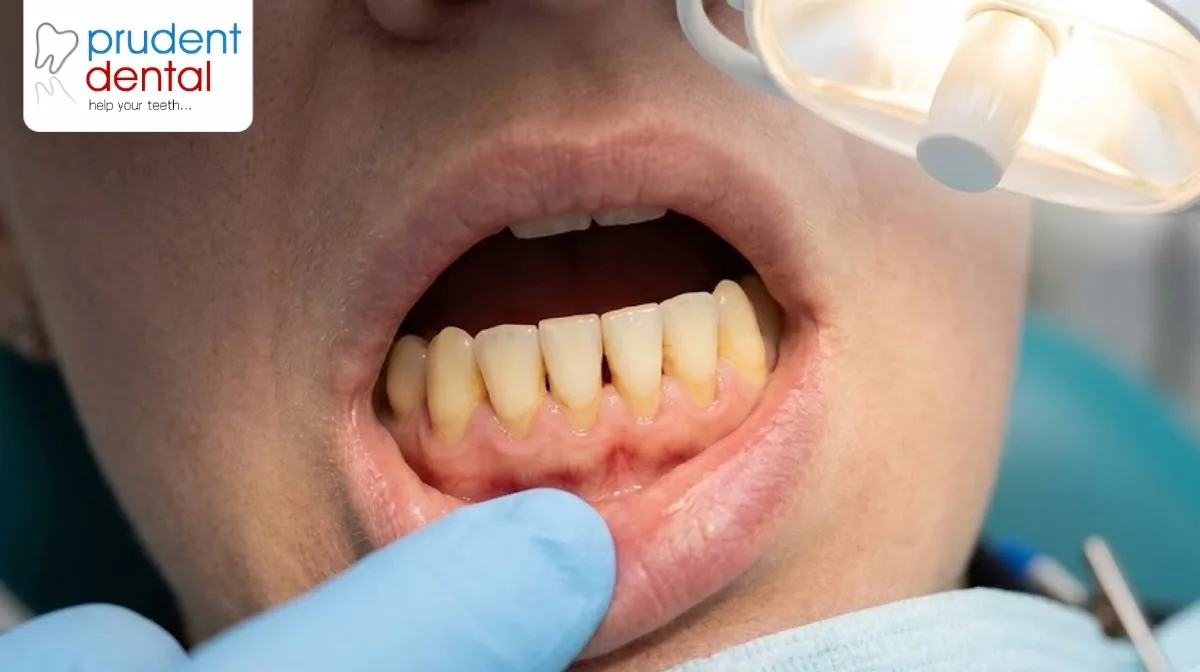
Key takeaways
- Gums recede for several reasons: brushing too hard, gum disease, teeth grinding, genetics and age.
- Gums do not grow back on their own, and no toothpaste rebuilds them. The realistic goal is to stop further recession.
- Treatment means fixing the cause: a soft brush and gentle technique, treating gum disease, and a night guard for grinding.
- For severe recession, a gum graft can cover exposed roots. A check-up finds why it is happening.
Noticing that your teeth look longer, or feeling a notch where the tooth meets the gum, is usually the first sign that your gums are receding. It is common, it tends to creep up slowly, and it is widely misunderstood, especially the myth that gums can be coaxed to grow back. This guide explains why gums recede, what can genuinely be done, and how to stop it progressing.
What is gum recession?
Gum recession is when the gum tissue around a tooth pulls back or wears away, exposing more of the tooth and eventually the root. Because roots are not protected by hard enamel, they are more sensitive to hot and cold and more prone to decay, which is why recession is worth addressing rather than just living with.
Why do gums recede?
Usually more than one factor is at play, which is why the fix depends on the cause:
- Brushing too hard. One of the most common causes. A stiff brush and heavy scrubbing gradually wear the delicate gum away over years.
- Gum disease. Inflammation from plaque and tartar destroys gum and bone, causing recession. We explain this in gum disease: gingivitis to periodontitis.
- Teeth grinding. The repeated force of grinding and clenching stresses the gums and can contribute to recession.
- Genetics and thin gums. Some people simply have thinner, more fragile gum tissue that recedes more easily.
- Age and other factors. Gums tend to recede gradually with age, and tobacco, tongue or lip piercings, and a misaligned bite can all play a part.
Can receding gums grow back?
This is the myth worth clearing up. Gum tissue does not regenerate, so once gum has receded, it does not grow back on its own, and no toothpaste, oil or home remedy rebuilds it, whatever the marketing claims. That is not a reason for despair, though. The genuine, achievable goal is to stop the recession getting any worse by removing whatever is causing it. Where recession is significant, a dentist can also discuss a gum graft, a procedure that covers the exposed root with tissue. But halting further loss is the priority for everyone.
How gum recession is treated
Because recession is a symptom, treatment starts with the cause:
- Fix the brushing. Switch to a soft brush and a gentle technique. This alone stops a lot of recession from progressing.
- Treat any gum disease. A professional cleaning removes the plaque and tartar driving inflammation.
- Protect against grinding. A night guard shields the teeth and gums if clenching is a factor.
- Soothe sensitivity. Exposed roots that twinge with cold can be settled with desensitising products or treatments your dentist recommends, a problem we also cover in tooth sensitivity.
- Consider a graft if needed. For severe or worsening recession, a gum graft can cover the root and protect the tooth.
When to see a dentist
It is worth having recession looked at whenever you notice it, because a dentist can tell whether it is simple brushing damage or a sign of gum disease that needs treating, and can stop it before more gum is lost. At Prudent Dental Clinic in Viman Nagar, Pune, we find why your gums are receding and match the treatment to the cause. The clinic is open seven days a week from 9 AM to 9 PM (5 PM on Sundays), and you can book a check-up online or call.
Sources & further reading
Indian Dental Association · American Dental Association (MouthHealthy) · NHS, Dental Health
Receding gums FAQs
Noticing your gums pulling back? Call +91 70287 22200 to find the cause early.
Call +91 70287 22200 · Open 7 days, 9 AM–9 PM (5 PM Sun)