

Single Tooth Implant in Viman Nagar, Pune
Replacing one missing tooth with an implant, abutment and crown, without touching the healthy teeth beside it.
- Home
- Services
- Dental Implants
- Single Tooth Implant
What is a single tooth implant?
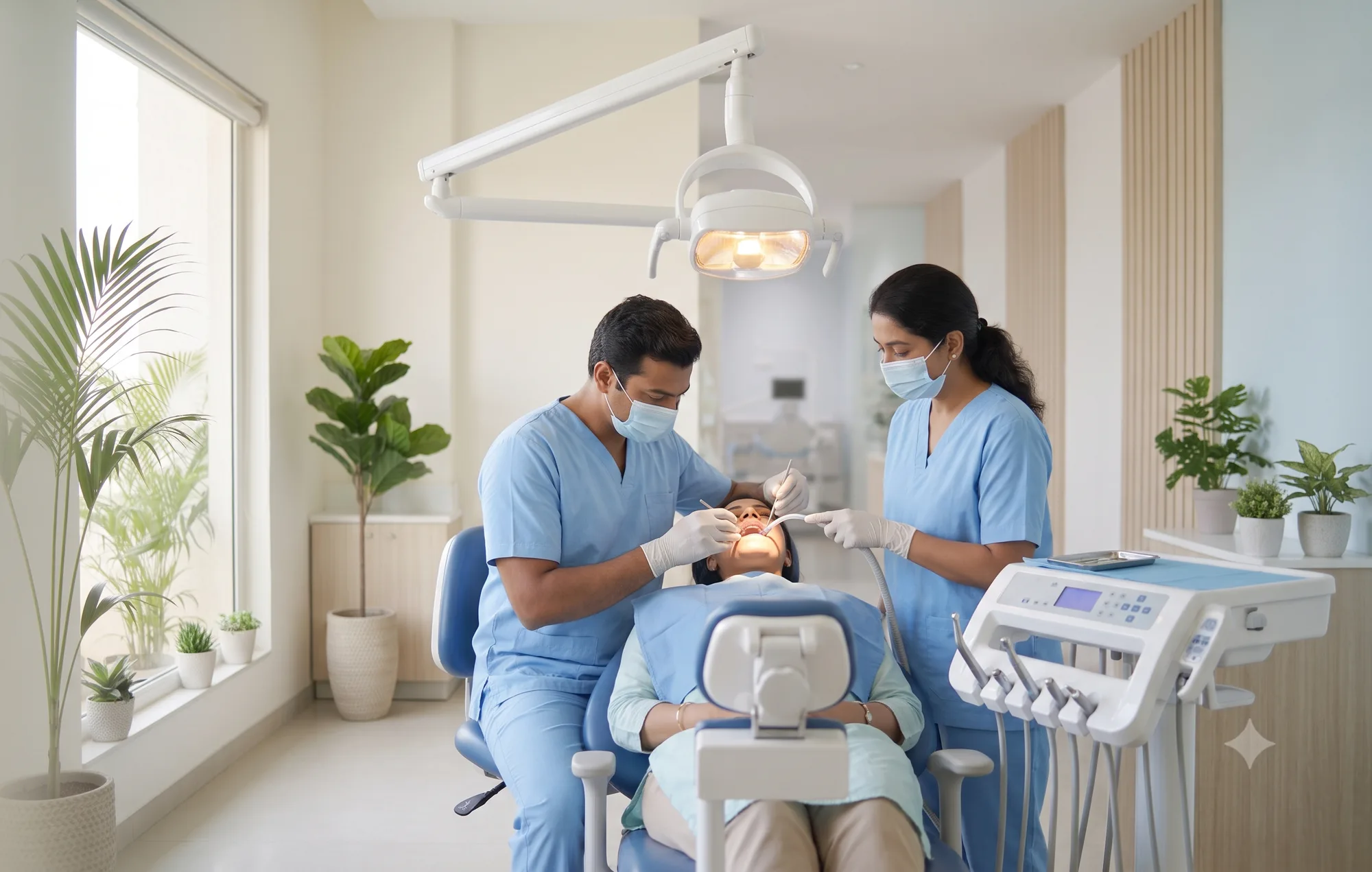
A single tooth implant replaces one missing tooth with three connected parts: a small titanium post placed in the jawbone, an abutment that connects to the post, and a custom crown that sits on top. Unlike a bridge, it stands on its own. The healthy teeth on either side are left alone.
At Prudent Dental Clinic in Viman Nagar, implants are planned and placed by Dr. Puja Bansal (BDS), an implantologist with 27 years of clinical experience. This page is part of our wider guide to dental implants and focuses on replacing a single missing tooth.
Key takeaways
- A single tooth implant has three parts: a titanium post in the jawbone, a connecting abutment and a custom crown.
- It replaces a missing tooth without reshaping or crowning the healthy teeth on either side of the gap.
- Treatment is staged: consultation and X-ray, implant placement, a healing period of several months, then the final crown.
- Replacing a missing tooth early helps avoid drifting teeth, bite changes and gradual bone loss in the gap.
- Suitability depends on your bone, gums and general health. It is confirmed with an examination and X-ray, never assumed.
Why does replacing one missing tooth matter?
A gap left after tooth loss rarely stays a simple gap. Neighbouring teeth can drift or tilt into the space, the opposing tooth may over-erupt, and your bite can change. The jawbone beneath the gap gradually shrinks without a root to stimulate it. Early replacement helps avoid these knock-on problems.
Because the implant post sits in the bone the way a natural root does, it addresses the bone as well as the visible tooth. The longer a gap is left, the more involved later treatment can become.
What can happen if a gap is left untreated
- Neighbouring teeth drift or tilt into the space
- The opposing tooth may over-erupt into the gap
- Your bite and chewing pattern can change
- The bone under the gap gradually shrinks
- Food trapping and cleaning become harder around tilted teeth
Not every gap causes every problem. An examination shows what is actually happening in your mouth.
What is the single tooth implant process at our clinic?
Treatment happens in stages. It begins with a consultation and digital X-ray, followed by placement of the implant post under local anaesthesia. The bone then heals and bonds with the post over several months (a process called osseointegration) before the abutment and final crown are fitted.
1
Consultation & X-ray
Dr. Bansal examines the gap, the neighbouring teeth and your gums, and takes a digital X-ray to assess the bone available for the implant.
2
Treatment planning
The implant position, the type of crown and the overall timeline are planned and explained, and you receive a written treatment plan.
3
Implant placement
Under local anaesthesia, the titanium post is placed into the jawbone under our strict sterilisation protocol.
4
Healing & osseointegration
Over the following months the bone bonds with the implant post. A temporary tooth can often be worn while you heal.
5
Abutment & final crown
Once the implant is stable, the abutment is connected and the custom crown is fitted and adjusted to your bite.
Timelines vary with healing and bone quality, so your plan is individual. Read more about the low-dose imaging we use on our digital X-rays page.
Who is a good candidate for a single tooth implant?
Most healthy adults with a fully developed jaw, enough bone to hold the implant and healthy gums can be considered. Uncontrolled diabetes, heavy smoking, gum disease and certain medications can affect healing. Suitability is always confirmed with an examination and X-ray, never assumed.
If you are missing several teeth, or a whole arch, see our page on full mouth dental implants. If you want a faster route, our same-day dental implants page explains that option, including why many patients are not candidates for it.
Factors we assess at your consultation
- Amount and quality of bone at the gap
- Health of your gums and neighbouring teeth
- General health and any medical conditions or medications
- Smoking habits, which can slow healing
- Your bite and how the new tooth will meet it
None of these automatically rules an implant out. They shape the plan and the advice you receive.
Implant or bridge for one missing tooth?
Both can replace a single missing tooth well. An implant stands independently and helps maintain the bone beneath the gap, but involves minor surgery and a longer timeline. A bridge is quicker and avoids surgery, but the neighbouring teeth must be reshaped to support it. The better choice depends on your bone, gums and adjacent teeth.
| Consideration | Single tooth implant | Dental bridge |
|---|---|---|
| Neighbouring teeth | Left untouched; the implant stands on its own | Reshaped and crowned to support the bridge |
| Surgery | Minor surgery to place the post | No surgery involved |
| Bone in the gap | The post replaces the root, which helps maintain the bone | The bone under the gap is not stimulated and may shrink over time |
| Treatment timeline | Several months, including healing | Usually a few weeks |
| Daily cleaning | Brushed and cleaned much like a natural tooth | Needs special floss or brushes under the false tooth |
The right choice varies from patient to patient. Dr. Bansal talks you through both at your consultation.
How do you care for a single tooth implant?
Care for an implant much like a natural tooth: brush twice a day, clean between teeth daily, and keep regular check-ups so the implant, crown and surrounding gum can be monitored. Implants cannot decay, but the gum and bone around them can still become inflamed without good hygiene.
- Follow the aftercare instructions given on the day of placement
- Eat soft foods and avoid the area while it heals initially
- Brush twice daily and clean around the implant as shown
- Avoid smoking, which can interfere with healing
- Attend review appointments so healing can be checked
Why have it placed at Prudent Dental Clinic?
Implants here are placed by Dr. Puja Bansal (BDS), a dentist with 27 years of clinical experience who completed a Certificate Course in Oral Implantology at D.Y. Patil College, Pune in 2018. The clinic has served Viman Nagar since 2005 and follows a strict sterilisation protocol.
- Registered with the Maharashtra State Dental Council (reg. A8860)
- Located at DNK Square, Viman Nagar, open 7 days, 9 AM to 9 PM (5 PM on Sundays)
- Strict sterilisation protocol for every procedure
- Written, itemised treatment plans. See what affects dental treatment costs
What does a single-tooth implant cost?
There is no single price. What you pay depends on your own mouth, so we examine first and give you a written, itemised quote rather than publishing a flat figure that would not apply to you.
How much do dental implants cost in Pune? explains exactly what drives the cost and how to compare quotes fairly. See also our dental treatment cost guide.
Single tooth implant FAQs
Sources & further reading: American Dental Association (MouthHealthy); NHS, Dental Health.
Also explore dental implants, full mouth dental implants, same-day dental implants, and crowns & bridges.
Missing a tooth? Talk to Dr. Bansal about your options. Call +91 70287 22200.
Call +91 70287 22200 · Open 7 days, 9 AM–9 PM (5 PM Sun)