Key takeaways
- Simple extraction of an erupted wisdom tooth costs less; surgical removal of an impacted one involves a gum flap, bone removal and sutures, so it costs more.
- Depth and angle of impaction are the biggest technical drivers of the fee, with horizontal lower teeth the most demanding.
- Imaging such as an OPG, or a 3D scan when roots sit near the nerve, adds a small planning cost that protects you from far bigger problems.
- Ask what a quote includes: review visits, suture removal and medicines are sometimes billed separately, which makes headline figures hard to compare.
- Symptom-free, well-positioned wisdom teeth can often be monitored instead of removed, and the only figure worth trusting is a written itemised estimate given after an examination.
There is no single price for wisdom tooth removal in Pune, because the fee reflects the work involved, and that varies enormously from tooth to tooth. A fully erupted tooth that lifts out in minutes sits at one end of the scale; a horizontally impacted lower molar lying close to a nerve sits at the other. In practice the cost is decided by five things: the type of extraction, the depth and angle of impaction, the imaging needed to plan it safely, the jaw involved, and the aftercare that follows. This guide explains each factor, so you know exactly what to ask before agreeing to treatment.
Simple versus surgical: the main cost divider
The single biggest influence on price is whether your tooth needs a simple or a surgical extraction. A wisdom tooth that has erupted fully, stands upright and has straightforward roots can often be removed under local anaesthetic in one short visit, much like any other tooth. This is routine work within tooth extractions and sits at the lower end of any fee scale. It needs less chair time, fewer instruments and frequently no stitches, so the clinic's costs, and therefore yours, stay modest.
A surgical extraction is a different procedure altogether. The dentist raises a small gum flap, may remove a sliver of bone, often sections the tooth into pieces, and closes the site with sutures. Each of those steps adds surgical time, sterile disposables and clinical skill, which is why an impacted tooth usually costs noticeably more than an erupted one. Neither route is better; the tooth's position decides which is appropriate, and your dentist should tell you clearly which category yours falls into before quoting anything.
How impaction depth and angle change the work
Impacted wisdom teeth are graded by how deeply they sit and the direction they point. A tooth trapped only under gum tissue is quicker to reach than one partly covered by bone, and a tooth buried completely in bone takes the most surgical effort of all. Depth matters because bone must be removed carefully and conservatively, and deeper teeth simply demand more of it. As a rule, the deeper the impaction, the longer the procedure and the higher the fee.
Angle matters just as much. A vertically positioned tooth may slide out along its own path, while a tooth leaning forwards into its neighbour usually needs sectioning. Horizontal and backwards-tilted impactions in the lower jaw are typically the most demanding, because the tooth must be divided and delivered in pieces without disturbing nearby structures. These cases fall under oral surgery rather than routine extraction, and that difference in complexity is reflected honestly in the estimate you receive.
Imaging needs before removal
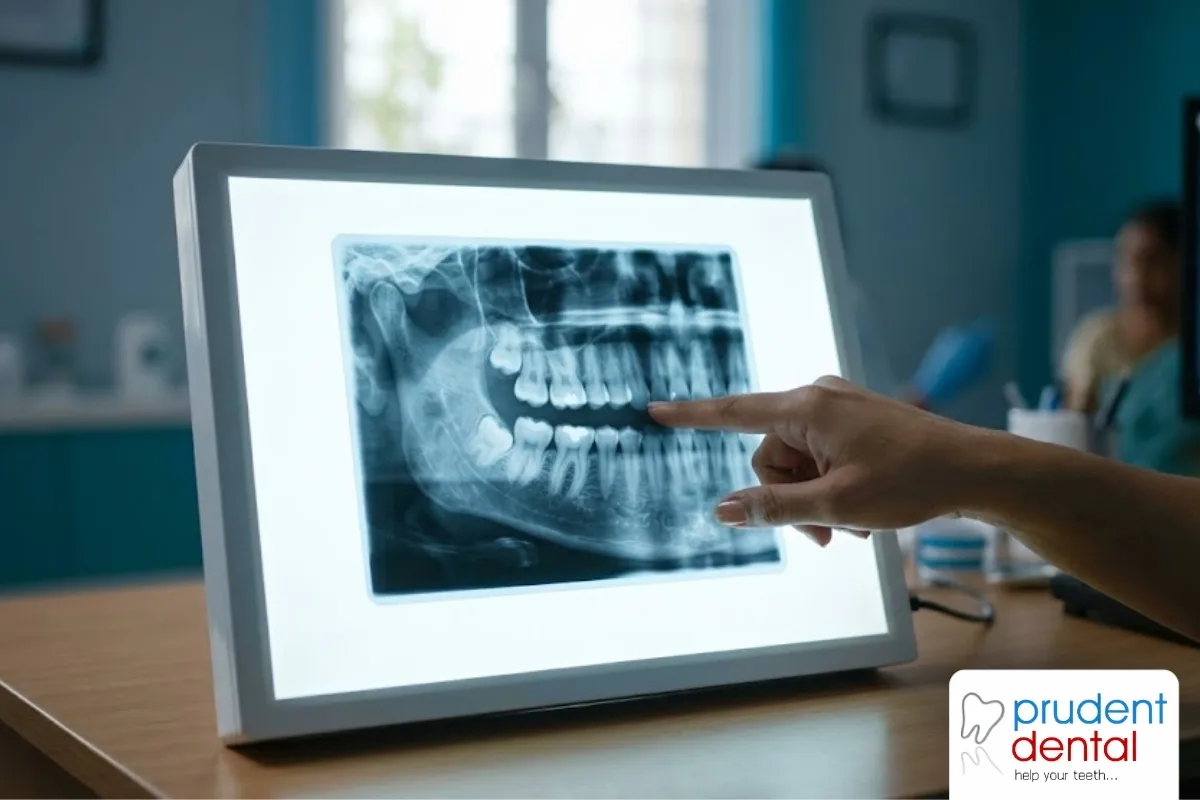
Every wisdom tooth assessment starts with an x-ray, and the type of imaging affects both safety and cost. A small intraoral film may be enough for an upright upper tooth, while a full-mouth OPG shows the whole tooth, its roots and its relationship to important anatomy. For lower teeth whose roots appear close to the inferior alveolar nerve, the nerve that gives feeling to your lip and chin, a 3D scan is often advised before surgery. Imaging adds a line to the bill, but it is money spent on avoiding a complication rather than on treating one.
Which jaw, and the other factors dentists weigh
Upper wisdom teeth are usually less costly to remove than lower ones. The bone of the upper jaw is softer, access is often easier, and fewer upper teeth are severely impacted. Lower wisdom teeth sit in denser bone, closer to the nerve, and account for most surgical cases. Beyond the jaw itself, several patient factors change the picture, and an honest quote takes all of them into account before a figure is put in writing.
Aftercare and follow-up visits
The extraction fee is not always the whole story. Surgical cases usually need a review visit for suture removal and a healing check, and prescribed medicines are a separate small cost. If a dry socket develops, an uncomfortable but treatable complication where the blood clot is lost early, the site may need one or two extra dressings. If pain suddenly worsens a few days after removal, ring the clinic promptly rather than waiting it out. When comparing quotes across clinics in Pune, ask specifically what is included: some quotes cover reviews and dressings, others list only the procedure itself, which can make a cheaper headline figure misleading.
Does the tooth need to come out at all?
Not every wisdom tooth needs removal, and a trustworthy clinic will say so. A tooth that has erupted fully, bites properly against its opposite number and can be kept clean is often best left alone and simply monitored at routine check-ups. Removal is usually advised when there is repeated gum infection around a partly erupted tooth, decay in the wisdom tooth or the molar in front, a cyst visible on the x-ray, or persistent food trapping. Watchful waiting costs you nothing beyond your normal check-up, so the first question is not what removal costs, but whether it is needed at all.
At Prudent Dental Clinic, a dentist in Pune based in Viman Nagar, Dr. Puja Bansal, who has 27 years of experience, examines every wisdom tooth case herself before anything is planned, and cases that genuinely need hospital-based maxillofacial care are referred honestly rather than attempted in the chair. After the examination and x-ray you receive a written itemised estimate, so you can see exactly what each part of the fee covers before you decide. You can read more about how fees are built up in our guide to dental treatment costs in Pune, or call +91 70287 22200 to book an assessment; the clinic is open seven days a week.
Wisdom tooth removal cost in Pune FAQs
Sources & further reading: American Dental Association (MouthHealthy); NIDCR, US National Institute of Dental & Craniofacial Research; NHS, Dental Health; Indian Dental Association.
Questions about your own teeth? Call +91 70287 22200.
Call +91 70287 22200 · Open 7 days, 9 AM–9 PM (5 PM Sun)