

Tooth Extractions in Pune
Safe, gentle removal of a tooth that cannot be saved, under local anaesthesia.
- Home
- Services
- General Dentistry
- Tooth Extractions
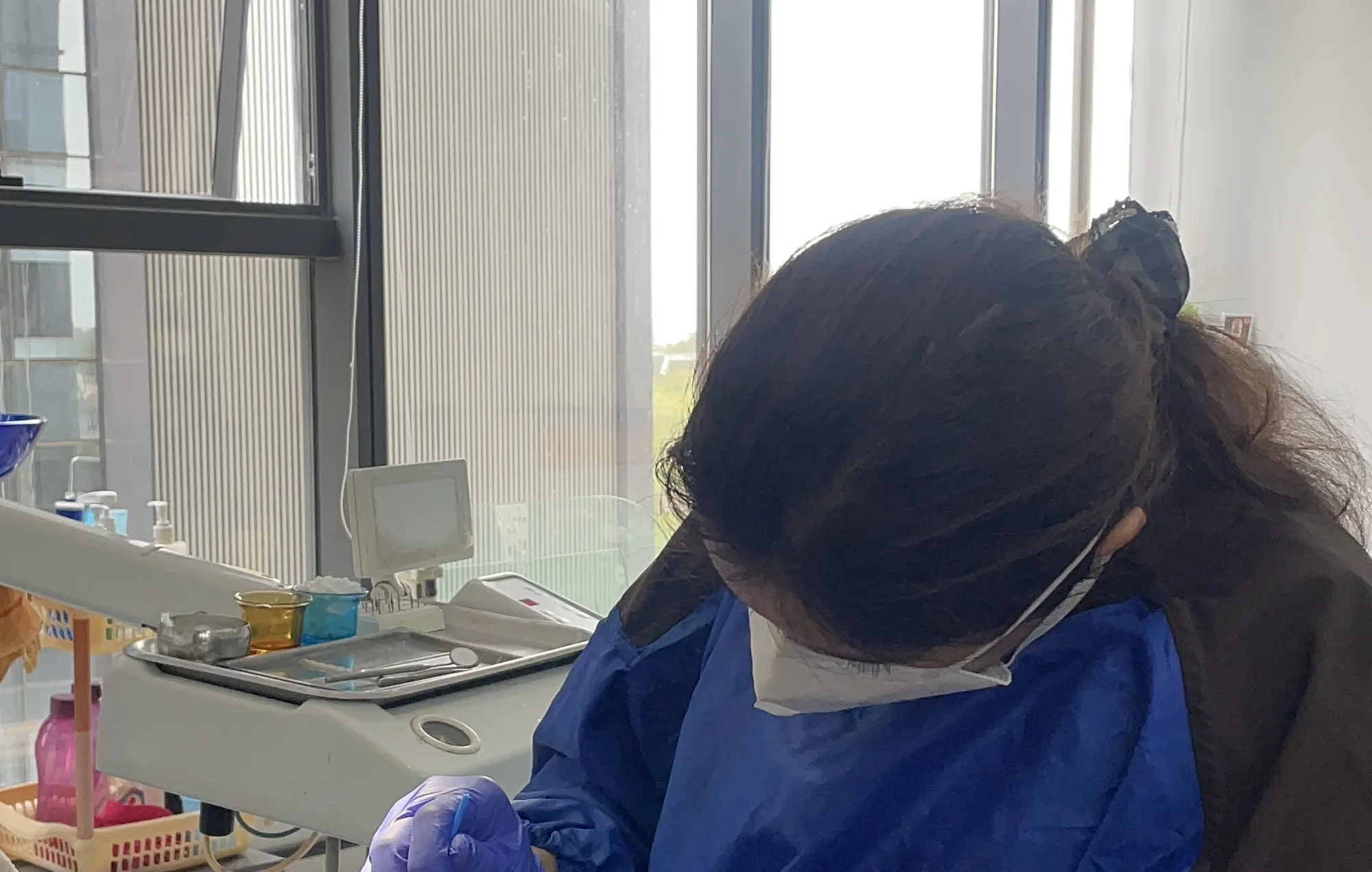
What is a tooth extraction?
A tooth extraction (also called exodontia) is the careful removal of a tooth from its socket in the jaw. It is carried out under local anaesthesia and is usually recommended only when a tooth is too damaged, decayed or loose to be saved by other treatment.
At Prudent Dental Clinic in Viman Nagar, extractions are performed by Dr. Puja Bansal (BDS), a dental surgeon with 27 years of experience. We always try to save a natural tooth first, and only remove one when it is the right choice for your health.
Key takeaways
- A tooth extraction is the removal of a tooth from its socket, carried out under local anaesthesia.
- We try to save a natural tooth first. Extraction is recommended only when a tooth cannot be repaired.
- Common reasons include severe decay, advanced gum disease, infection, trauma or crowding.
- At Prudent Dental Clinic, extractions are performed by Dr. Puja Bansal (BDS), a dental surgeon.
- Replacing the gap (with an implant, bridge or denture) helps protect your bite and neighbouring teeth.
When is a tooth extraction needed?
We consider an extraction only after weighing up the other options to save the tooth. A dentist may recommend removing a tooth for a few reasons:
- Severe tooth decay that has destroyed too much of the tooth to restore
- Advanced gum disease that has loosened the tooth
- A painful infection or abscess that cannot be resolved another way
- A cracked or broken tooth that cannot be repaired
- Severe crowding, or to make room as part of orthodontic treatment
- Impacted or problematic wisdom teeth
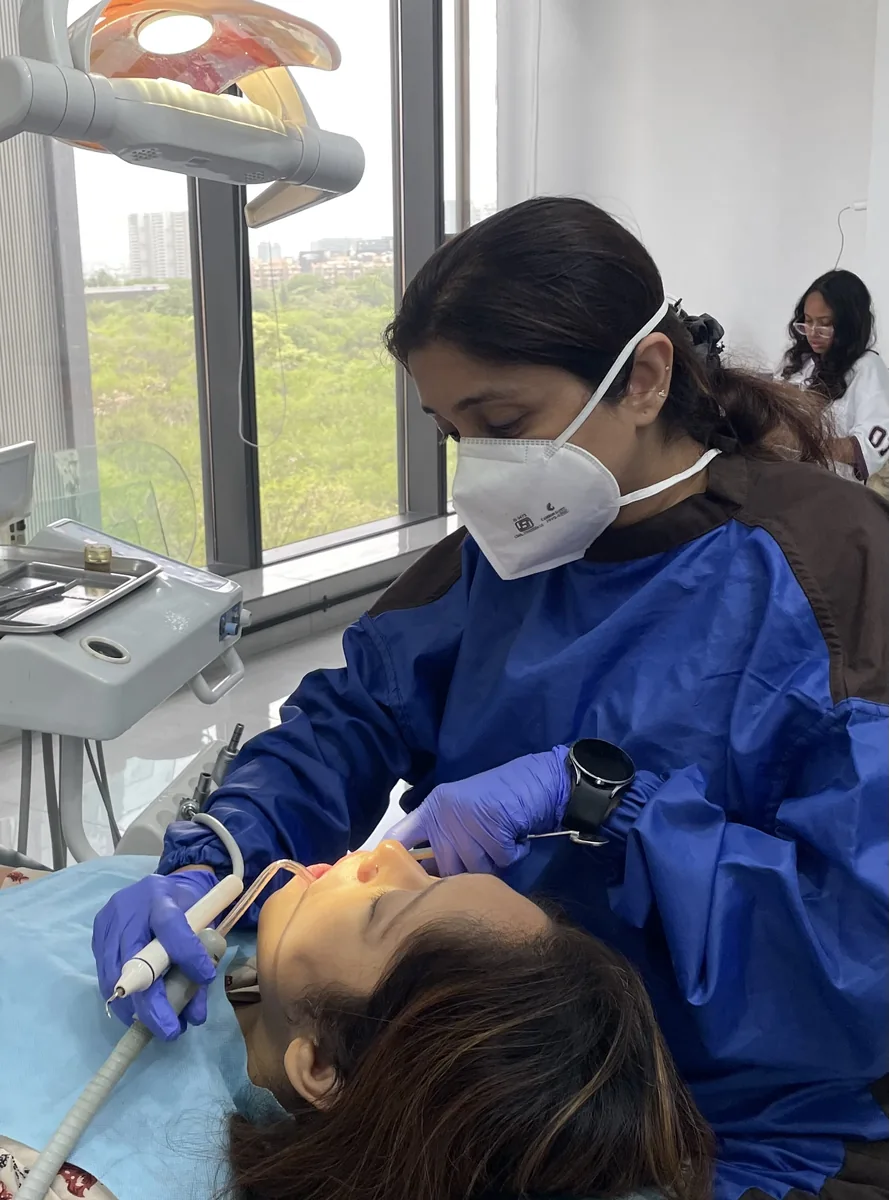
What does a tooth extraction involve?
1
Examination & X-ray
We examine the tooth and take an X-ray to assess its roots and the surrounding bone, and confirm extraction is the right step.
2
Local anaesthesia
The area around the tooth is fully numbed so the procedure is comfortable. You may feel pressure, but not pain.
3
Gentle removal
The tooth is carefully loosened and lifted from its socket. A more complex tooth may need a surgical approach.
4
Aftercare & healing
We help a clot form, give you clear written aftercare advice, and discuss options to replace the tooth if needed.
After an extraction the socket gradually heals over the following weeks. Healing times vary from person to person, so always follow the aftercare instructions you are given and contact us if anything concerns you.
Simple vs surgical extraction
| Type | When it is used | What to expect |
|---|---|---|
| Simple extraction | For a tooth that is fully visible above the gum | The tooth is loosened and lifted out under local anaesthesia |
| Surgical extraction | For a broken, impacted or below-the-gum tooth (such as some wisdom teeth) | A minor surgical approach is used to access and remove the tooth; see our oral & dental surgery page |
Dr. Bansal will explain which approach your tooth needs at your appointment, along with the aftercare involved.
Replacing the tooth afterwards
Leaving a gap, especially towards the back of the mouth, can let neighbouring teeth drift and can affect your bite over time. Where appropriate, we can talk through the ways to replace the tooth so you can choose what suits you.
- Dental implants, a fixed stand-alone replacement
- Bridges, a fixed option supported by nearby teeth
- Dentures, a removable, non-surgical option
What about cost?
There is no single price for a tooth extraction because every tooth is different. The cost depends on the tooth, how complex the removal is, and whether it is a simple or surgical extraction. Once we have examined the tooth and taken any needed X-ray, we give you a clear, written quote so you know exactly what to expect.
Request a ConsultationTooth extraction FAQs
Sources & further reading: Indian Dental Association; World Health Organization, Oral Health.
Also explore general dentistry, dental examinations, oral & dental surgery, and our sterilisation & safety standards.
In pain or worried about a tooth? Talk to Dr. Bansal. Call +91 70287 22200.
Call +91 70287 22200 · Open 7 days, 9 AM–9 PM (5 PM Sun)