

Key takeaways
- Back teeth usually need a crown after a root canal because chewing forces can crack the weakened tooth.
- Largely intact front teeth with small access cavities can often be restored with a filling alone.
- Skipping the crown risks fracture and reinfection, and a split root usually means losing the tooth.
- The crown is normally fitted within a few weeks of the root filling, once the tooth has settled.
- There is no blanket rule: the decision rests on how much healthy tooth structure remains, assessed tooth by tooth.
Not always, but more often than not. Back teeth take the full force of chewing, and once a tooth has been root treated it has usually lost both structure and internal moisture, which makes it more likely to crack. Front teeth with small, tidy access cavities can sometimes be restored with a filling alone. The honest answer depends on how much healthy tooth remains, and that is exactly what we assess before recommending anything.
Why a root-treated tooth is more fragile
During root canal treatment, the infected pulp is cleaned out of the tooth and the hollow space inside is sealed. The procedure saves the tooth, but it does not restore its full strength. Most teeth that need root canals were already compromised by deep decay or large fillings, and the access cavity drilled to reach the canals removes further structure. Without its living pulp, the tooth also loses internal moisture over time, which leaves it drier and more brittle than its neighbours.
This is why the restoration placed after a root canal matters as much as the root canal itself. Our consultant endodontist, Dr. Mrunal Godse, who has 18 years of experience in conservative dentistry and endodontics, treats the inside of the tooth; protecting the outside is the next stage. The two stages work together, and an excellent root filling sitting under a leaking or fractured restoration can still fail, which is a frustrating and avoidable way to lose a tooth.
Back teeth: why a crown is usually the right call
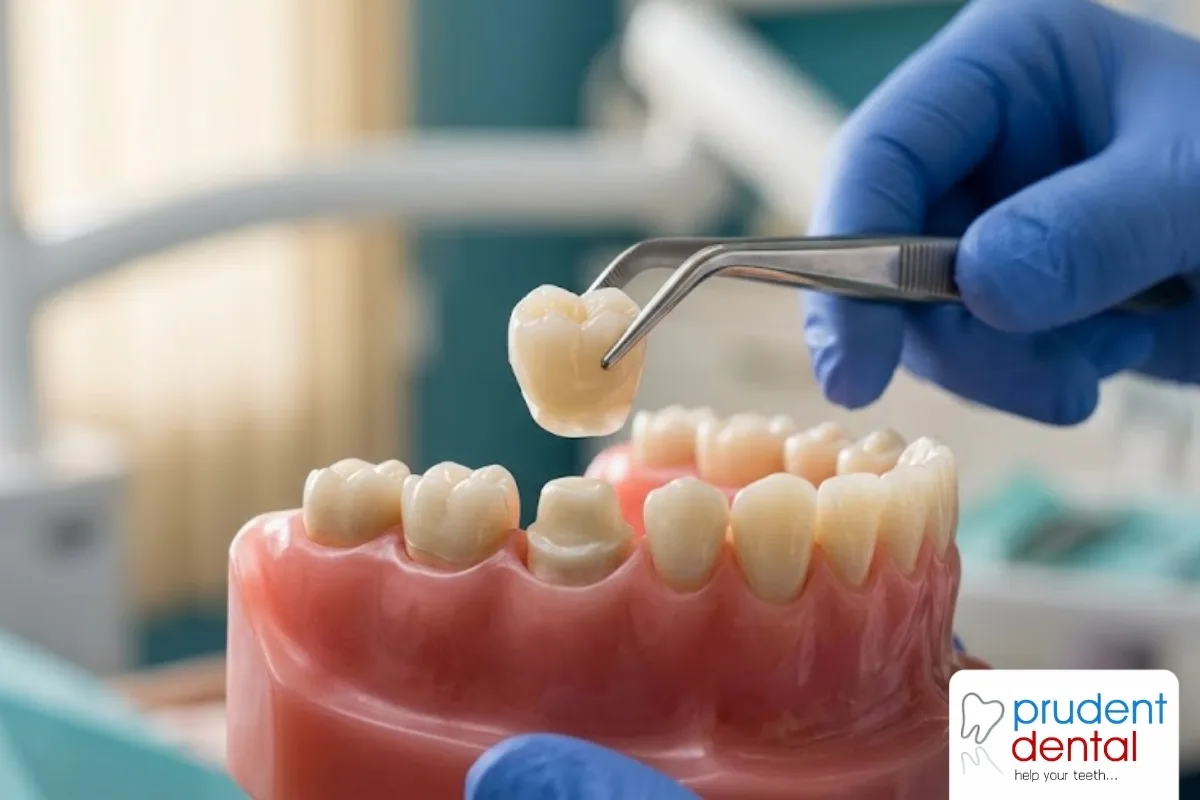
Molars and premolars do the heavy work of chewing. Every meal loads them with grinding forces, and a root-treated back tooth with weakened walls can flex until a cusp snaps or, worse, the tooth splits vertically through the root. A vertical root fracture usually cannot be repaired, and the tooth has to be removed. A crown covers the biting surface completely and spreads chewing forces evenly around the tooth, which is why crowns are recommended for almost every root-treated molar and for most premolars.
| Tooth type | Chewing load | Usual advice after a root canal |
|---|---|---|
| Molars | Heavy grinding forces | Crown almost always recommended |
| Premolars | Moderate to heavy forces | Crown usually recommended, especially with existing large fillings |
| Canines | Moderate tearing and guiding forces | Assessed case by case; sometimes a filling with careful review |
| Incisors | Light cutting forces | A filling alone may be enough if the tooth is largely intact |
Front teeth: when a filling alone can work
Front teeth are different. Incisors mainly cut and guide food rather than grind it, so they carry far lighter loads. If a front tooth needed a root canal because of an injury rather than decay, and the access cavity is small with strong walls all around it, a well-bonded tooth-coloured filling can be a sensible long-term restoration. Crowning such a tooth would mean trimming away healthy enamel for no structural gain, which no careful dentist wants to do.
That said, front teeth are not automatically exempt. A front tooth that already carries large fillings, has darkened noticeably after treatment, or sits in a bite where the edges meet heavily may still be better off crowned. Habits matter too, because patients who clench or grind at night place far higher forces on every tooth. Dr. Puja Bansal examines the remaining structure, the bite and your habits before advising either way, and she will tell you plainly when a crown is unnecessary.
What happens if you skip the crown
Some patients delay the crown to spread out treatment, and some skip it altogether. The risk is straightforward: the tooth may fracture under normal chewing, sometimes months or years later, often without warning. If the crack runs below the gum line or through the root, the tooth usually cannot be saved, and the effort spent on the root canal is lost along with it. The quieter risk is leakage, where a worn temporary filling lets bacteria seep back into the sealed canals and the infection returns.
If a root-treated tooth ever cracks, becomes painful to bite on, or the gum beside it swells or develops a pimple-like spot, see a dentist promptly rather than waiting for your next planned visit. These signs can mean fracture or returning infection, and early assessment gives the tooth its best chance. The clinic is open seven days a week, so call us on +91 70287 22200 and we will see you as soon as we can.
Timing, cost and how we decide
There is usually no benefit in waiting long. After the root filling, the tooth is protected with a temporary or core filling, and once your dentist is happy the tooth has settled, the crown is prepared and fitted, typically within a few weeks. Temporary fillings are not designed to survive months of chewing, so long delays are where most fractures happen. If very little natural tooth remains, a core build-up, sometimes with a small post placed inside a canal, is done first to give the crown a solid foundation.
On cost, we explain factors rather than quote figures in advance, because no two teeth need exactly the same work. After examining the tooth, we give you a written, itemised estimate so there are no surprises. A properly made crown over a well-filled root canal is one of the most durable combinations in dentistry; our guide on how long dental crowns last covers what to expect and how to look after it.
- Crown material: metal, porcelain fused to metal, or all-ceramic
- Whether a core build-up or post is needed before the crown
- The condition of the gum around the tooth and any treatment it needs
- Laboratory work involved and the number of visits required
Do you always need a crown after a root canal? FAQs
Sources & further reading: Indian Dental Association; American Dental Association (MouthHealthy).
Questions about your own teeth? Call +91 70287 22200.
Call +91 70287 22200 · Open 7 days, 9 AM–9 PM (5 PM Sun)