

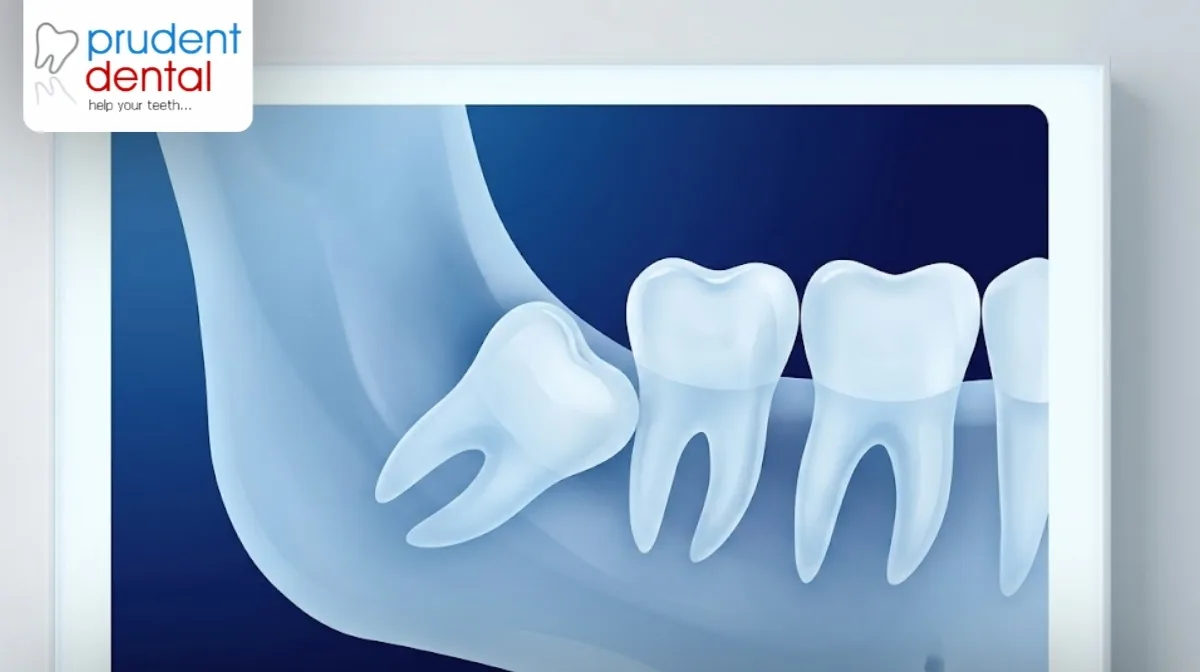
Key takeaways
- Healthy, fully erupted wisdom teeth that you can clean properly do not need to be removed.
- Removal is usually advised for impaction, repeated gum infection (pericoronitis), decay, damage to the neighbouring tooth, or a cyst seen on X-ray.
- A clinical examination plus an X-ray, not pain alone, is how the keep-or-remove decision is made.
- With modern local anaesthesia the procedure itself should not hurt. Soreness afterwards usually settles over a few days with good aftercare.
Wisdom teeth carry a fearsome reputation. They are the third molars that arrive at the very back of the mouth, usually between the late teens and mid-twenties. Many people assume that once a wisdom tooth appears, the countdown to extraction has begun. The reality is kinder. Plenty of wisdom teeth erupt, settle in and do quiet, useful work for a lifetime. This guide explains how dentists decide which wisdom teeth genuinely need to go and which can safely stay. It also covers what to expect if removal turns out to be the right call.
Do wisdom teeth always need to be removed?
No. A wisdom tooth can usually stay for life if it meets three conditions: it has come through fully, it sits upright in a useful position, and you can clean it properly with a toothbrush and floss. Dentists recommend removal when a tooth is already causing problems, or when an X-ray shows that it soon will.
The answer is 'not always' because it comes down to space. Jaws vary. Some have room for all four third molars to erupt cleanly. Others do not, which leaves the tooth tilted, stuck against its neighbour or half-buried under the gum. A tooth that erupts into a good position behaves like any other molar. It chews, it can be brushed, and it needs nothing more than the same care and check-ups as the rest of your teeth.
For that reason, many dental bodies do not recommend removing healthy, trouble-free wisdom teeth as a matter of routine. The NHS says so in its published guidance. Surgery carries its own small risks, so a tooth that is doing no harm is usually monitored rather than extracted. Honest assessment is what matters. Keeping a tooth under observation is a decision, not an oversight, and it should be revisited at each check-up.
When should a wisdom tooth be extracted?
Extraction is usually advised when a wisdom tooth:
- is impacted, so it cannot erupt into a usable position
- causes repeated gum infections, known as pericoronitis
- develops decay that cannot be properly filled
- damages the tooth next to it
- is linked to a cyst seen on an X-ray
One-off soreness while a tooth erupts is not, on its own, a reason to remove it.
The most common trigger is a partially erupted tooth. When a flap of gum sits over part of the crown, food and plaque collect underneath where no brush can reach. The gum can then become swollen, tender and infected. This is called pericoronitis. A single mild episode may settle with careful cleaning and salt-water rinses, but when the infections keep returning, removing the tooth is usually the lasting fix. Decay is the other frequent culprit. Wisdom teeth are hard to brush even when fully erupted, and a cavity that far back is often difficult to restore well.
| Factor | Tooth can often stay | Removal is often advised |
|---|---|---|
| Eruption | Fully erupted, upright, meets the opposing tooth | Impacted or partially erupted under a gum flap |
| Cleanability | Reachable with a toothbrush and floss | Traps food and plaque however well you brush |
| Gum health | Gum around the tooth stays healthy | Repeated episodes of pericoronitis |
| Tooth condition | Free of decay, not harming its neighbour | Decay in the wisdom tooth or the molar beside it |
| X-ray findings | Normal surrounding bone | A cyst or pressure damage to the adjacent root |
How the tooth comes out depends on its position. An upright, fully erupted wisdom tooth can often be removed with a routine tooth extraction, much like any other molar. A tooth that is angled, buried or close to the nerve canal may need a minor oral surgery procedure instead, where the gum is lifted and the tooth is sometimes sectioned to ease it out gently. Your dentist tells you which applies before anything is scheduled.
How do dentists decide whether a wisdom tooth can stay?
A clinical examination plus an X-ray. Your dentist checks the position of the tooth, the health of the gum around it, and whether you can realistically keep it clean. The X-ray shows what is happening below the gum: the angle of the roots, their closeness to nerves, and any early decay or cyst formation.
Much of a wisdom tooth is invisible to the naked eye, which is why the X-ray does the deciding. A tooth that looks calm above the gum can be pressing into the root of its neighbour underneath, and a tooth that feels alarming during eruption can be heading into a perfectly good position. At Prudent Dental Clinic in Viman Nagar, Pune, we use digital X-rays for this assessment. They are quick, and Dr. Puja Bansal can walk you through the image on screen so you can see exactly why a tooth should stay or go. If the verdict is 'keep and watch', the tooth is simply reviewed at your regular check-ups.
Is wisdom tooth removal painful?
The procedure itself should not hurt. Local anaesthesia numbs the tooth and the surrounding area completely, so you feel pressure and movement rather than pain. Some soreness and swelling afterwards is normal and usually settles over the following days, and your dentist will give you clear aftercare instructions to keep you comfortable.
The fear most people carry comes from stories of decades past. Modern local anaesthetics are effective, and the dentist confirms the area is fully numb before starting. During a surgical removal you may hear noises and feel firm pushing. It is odd, but not painful. If you ever do feel sharp discomfort, you raise a hand and more anaesthetic is given. And if wisdom-tooth pain is keeping you up before you have been seen, our guide to handling a toothache at night covers what helps safely in the meantime.
What does recovery involve?
Expect some swelling and jaw stiffness. These usually peak in the first day or two and then ease. Rest on the day of the procedure, stick to soft, cool foods, and avoid smoking, alcohol and drinking through straws. The suction can dislodge the healing blood clot and cause a painful condition called dry socket. From the day after, gentle warm salt-water rinses help keep the area clean. Most people are back to their normal routine within a few days to a week. Contact your dentist promptly if pain worsens after day three, if bleeding does not settle, or if you develop fever or swelling that makes swallowing difficult. If a wisdom tooth has been bothering you, you can book an assessment and get a clear answer either way.
Getting a wisdom tooth assessed in Viman Nagar, Pune
If a wisdom tooth is bothering you, the useful first step is an examination and an X-ray rather than a decision made from the pain alone. That visit tells you which of the two answers applies to your tooth: keep and watch, or plan a removal.
Prudent Dental Clinic is on New Airport Road in Viman Nagar, and is an easy drive from Kharadi, Kalyani Nagar, Yerwada and Wagholi. Because the clinic is open all seven days, 9 AM to 9 PM and until 5 PM on Sundays, a removal can usually be planned for a day when you have time to rest afterwards. Patients who cannot take leave often choose a Sunday or a late-evening slot for exactly that reason.
One honest limit is worth stating. A small number of wisdom teeth sit close enough to the nerve canal, or are buried deeply enough, that removal genuinely belongs in a hospital setting with a maxillofacial surgeon. When an X-ray shows that, we say so plainly and point you to the right place rather than attempting it here. You will also get a written, itemised estimate after the examination, so the cost is clear before anything is scheduled.
Sources & further reading
Indian Dental Association · NHS, Dental Health
Wisdom tooth questions, answered
Not sure about a wisdom tooth? Get it assessed 7 days a week. Call +91 70287 22200.
Call +91 70287 22200 · Open 7 days, 9 AM–9 PM (5 PM Sun)