Key takeaways
- The safest interim measures are head elevation, a cold compress on the cheek, a warm salt-water rinse and over-the-counter pain relief taken exactly as the pack directs.
- Never place an aspirin tablet against the gum. It does not work that way and can chemically burn the soft tissue.
- Toothache often feels worse lying down. More blood flows to the head, which raises pressure inside an inflamed tooth.
- Swelling of the face or gum, fever, or difficulty swallowing alongside a toothache are emergency signs. Call a dentist the same day.
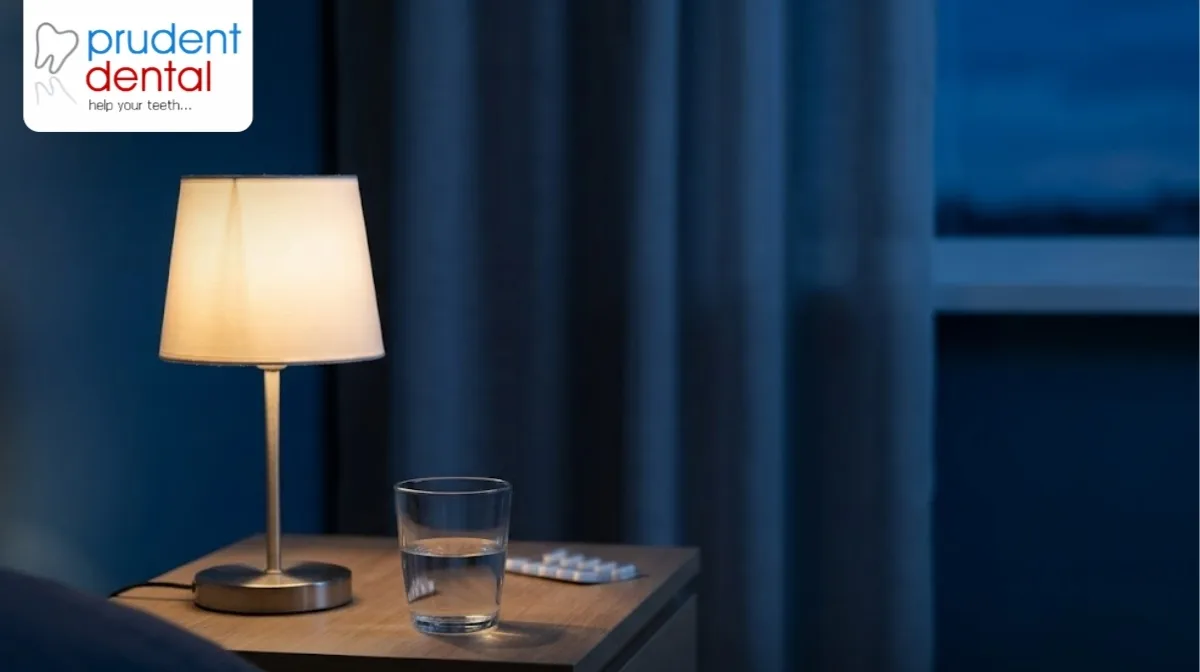
Toothache has a talent for terrible timing. A tooth that was merely grumbling at lunchtime can turn into a relentless throb at 2 AM, when no clinic is open and sleep feels impossible. This guide covers what genuinely helps in the meantime, what makes things worse, and the warning signs that mean the problem should not wait until a convenient moment.
How do I stop a toothache at night?
The safest interim measures are to keep your head elevated on an extra pillow, hold a cold compress against the outside of the cheek, rinse gently with warm salt water, and take an over-the-counter pain reliever exactly as the pack directs. These steps ease the pain until a dentist can find and treat the actual cause.
Here is a sensible order to try them in:
- Prop your head up. Add an extra pillow or two so your head stays above the level of your heart. This simple change reduces the blood pressure reaching the inflamed tooth and often takes the edge off the throbbing.
- Apply a cold compress. Wrap ice or a cold pack in a cloth and hold it against the outside of your cheek for short spells, with breaks in between. Cold narrows the blood vessels in the area, which can dull the pain. Never put ice directly on the tooth itself.
- Rinse with warm salt water. Dissolve a little salt in a glass of warm water, swish gently and spit it out. A salt-water rinse can soothe irritated gum tissue and help dislodge food debris pressing on the sore area.
- Use over-the-counter pain relief correctly. An ordinary pharmacy pain reliever can help you through the night, but only when swallowed and taken strictly according to the packet instructions. If you are pregnant, take other medicines or have a health condition, check with a pharmacist or doctor first.
- Avoid the triggers. Skip very hot, very cold or sugary food and drink, and chew on the other side of your mouth until the tooth has been seen.
The aspirin-on-the-gum myth: please do not do this
One piece of folk advice deserves a firm debunking: placing an aspirin tablet directly on the aching tooth or gum. Aspirin is not a local anaesthetic. It works only after it is swallowed and absorbed. Held against the gum, it is acidic enough to chemically burn the soft tissue, leaving a painful white ulcer on top of the original toothache. Dental authorities such as the American Dental Association do not recommend it, and neither do we. Pain relief belongs in your stomach per the pack instructions, never packed against your gum.
It also helps to be honest about what these measures are: stopgaps. They can calm the symptom for a night, but none of them removes decay, seals a crack or clears an infection. Whatever woke you up will still be there in the morning, which is exactly when it should be examined.
Why is my toothache worse when lying down?
When you lie flat, more blood flows to your head, which raises the pressure inside the rigid pulp chamber of an inflamed tooth and makes the throbbing feel stronger. Fewer distractions at night also make pain harder to ignore. Sleeping with your head propped up on an extra pillow helps reduce that pressure.
The reason this works the way it does comes down to anatomy. The living core of a tooth (its nerve and blood supply) sits inside a hard, sealed chamber that cannot expand. When that tissue becomes inflamed, even a small increase in blood flow raises the pressure on the nerve, because the swelling has nowhere to go. Lying down delivers exactly that increase. A tooth that was tolerable all day can then start pounding the moment your head hits the pillow.
A few other night-time factors can pile on. Some people clench or grind their teeth in their sleep, loading an already sore tooth. Congested sinuses can press on the roots of upper back teeth when you recline, which mimics or worsens toothache. And a quiet, dark room simply gives pain your full attention. Worse pain at night does not automatically mean worse disease. But a throbbing ache that repeatedly wakes you from sleep is a classic sign of an inflamed tooth nerve, and that is worth taking seriously.
When is a toothache an emergency?
Treat a toothache as an emergency if it comes with swelling of the face, jaw or gum, fever, difficulty swallowing or breathing, or a foul taste from a burst abscess. These can be signs of a spreading dental infection that needs prompt professional care. Call a dentist the same day rather than waiting it out.
Most night toothaches are miserable but not dangerous. The exception is a dental abscess, a pocket of infection at the root of a tooth or in the gum, that begins to spread beyond the tooth. Warning signs include a swollen cheek or jaw, swelling that tracks towards the eye or down the neck, difficulty opening your mouth, fever, and feeling generally unwell. If swelling ever makes breathing or swallowing genuinely difficult, do not wait for a dental appointment at all. Seek urgent medical care immediately.
For everything short of that, same-day dental care is the right response. See our emergency dentist in Pune page for what to do. At Prudent Dental Clinic in Viman Nagar, Pune, we are open seven days a week from 9 AM to 9 PM (5 PM on Sundays), including Sundays, so a tooth that kept you up all night can usually be examined that very day. You can call us on +91 70287 22200, find directions on our contact page, or request an appointment online and we will get back to you.
What will the dentist actually do about it?
The first step is finding the cause, not just silencing the pain. A dental examination and usually an X-ray reveal whether the culprit is deep decay, a cracked or leaking filling, gum infection, or an inflamed nerve inside the tooth. The treatment then matches the cause: a filling for a cavity, a professional cleaning for a gum problem, or root canal treatment when the nerve itself is inflamed or infected and the tooth is worth saving.
If the phrase "root canal" makes you more nervous than the toothache itself, take heart. Its fearsome reputation is largely outdated, and the procedure exists to relieve exactly the kind of pain that keeps people awake. We have unpacked the myths in our post Does a root canal hurt? The one thing a night toothache should never earn is a shrug: pain that severe is the tooth's way of asking for help, and the earlier it is examined, the simpler the fix tends to be.
Sources & further reading
American Dental Association (MouthHealthy) · NHS, Dental Health
Night toothache: quick answers
Tooth pain keeping you up? We are open 7 days, 9 AM – 9 PM (5 PM Sun). Call +91 70287 22200.
Call +91 70287 22200 · Open 7 days, 9 AM–9 PM (5 PM Sun)