Key takeaways
- Denture cost depends on the type (partial or complete), the materials, and whether you treat one arch or both.
- Basic acrylic dentures cost less; premium, more natural and durable options cost more.
- A well-fitting denture matters for comfort, appearance and eating, so the cheapest is not always the best buy.
- Dentures are usually the most affordable multi-tooth option upfront, with implants and bridges costing more but fixed.
Dentures remain one of the most practical and affordable ways to replace missing teeth, and their cost covers a wide range because "dentures" covers a lot of ground. A small partial and a full set are very different pieces of work. This guide explains what a denture is, what shapes its price, and how it compares with the fixed alternatives, so you can understand any quote you are given.
What a denture is
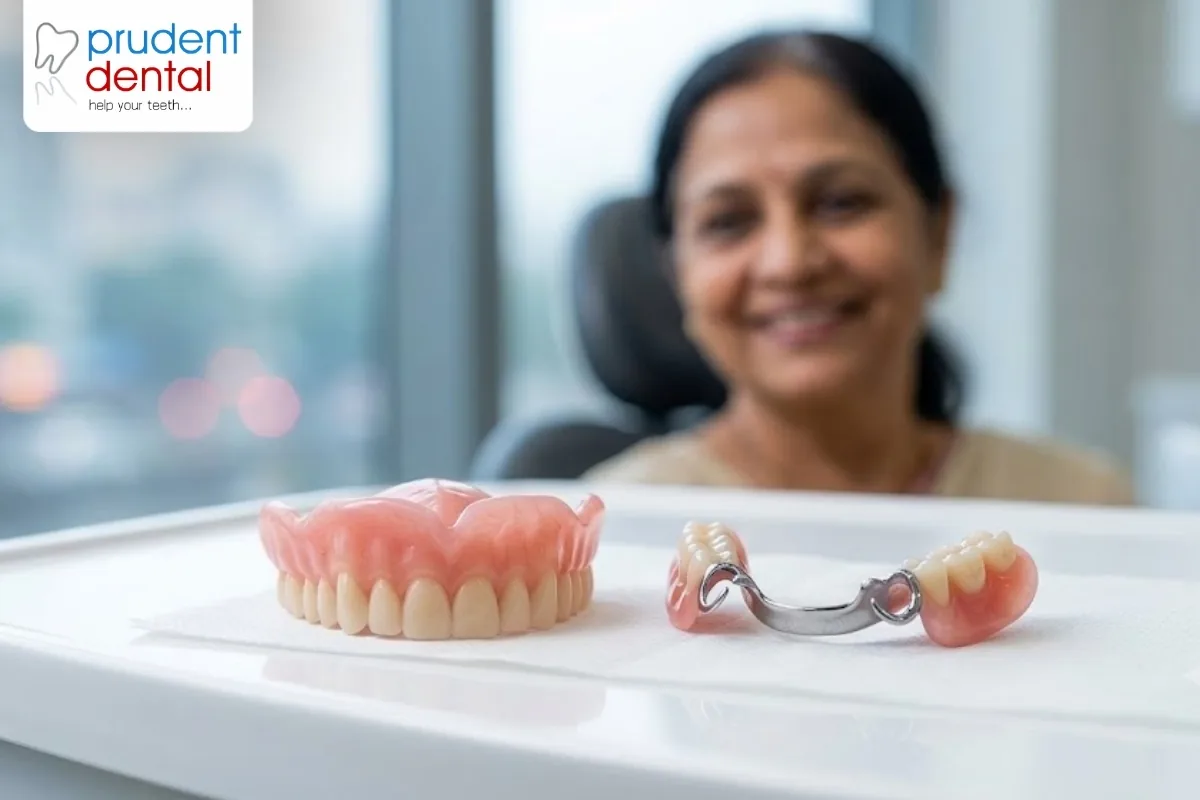
A denture is a removable replacement for missing teeth and the surrounding tissue. A partial denture fills in where some teeth are missing and clips onto the remaining natural teeth. A complete denture replaces a whole arch when no natural teeth are left. Both restore the ability to chew and speak and support the shape of the face, and both are made from an impression of your mouth so they fit you specifically.
What drives the cost of dentures
- Partial or complete. A small partial replacing a few teeth generally costs less than a complete denture replacing a full arch.
- The material and quality. Basic acrylic dentures are the most economical; premium options with more natural-looking teeth, better-fitting bases or flexible and metal-framed designs cost more and often feel and last better.
- One arch or both. Replacing teeth in both the upper and lower jaws costs more than a single arch.
- Groundwork first. Any extractions of unsavable teeth, and follow-up adjustments as the gums settle, add to the total.
- Implant support. Dentures can be stabilised with implants for a much steadier fit, which improves comfort but increases the cost.
Are cheap dentures a false economy?
A denture has to be worn all day, so how it fits and feels is not a minor detail. A very cheap denture that is poorly fitted or made from basic materials can rock, rub, look artificial and make eating and speaking difficult, and an uncomfortable denture often ends up unworn in a drawer. That is money genuinely wasted. Fit and materials are where the value lies, so it is usually worth choosing a well-made denture over the lowest quote, while your dentist helps you balance cost against comfort and appearance.
| Factor | What it means | How it moves the cost |
|---|---|---|
| Partial or complete | A few teeth replaced vs a full arch | Complete dentures generally cost more than small partials |
| Material and quality | Basic acrylic vs premium, flexible or metal-framed designs | Premium options cost more, often feel and last better |
| One arch or both | Upper jaw, lower jaw, or both treated | Both arches cost more than a single arch |
| Groundwork first | Extractions of unsavable teeth and follow-up adjustments | Each extra step adds to the total |
| Implant support | Denture stabilised with implants for a steadier fit | Improves comfort but increases the cost |
How dentures compare with bridges and implants
Dentures are typically the most affordable way to replace several missing teeth at once, which is a real advantage. The trade-off is that they are removable and rest on the gums, so they can feel less stable than fixed options. Bridges and implants cost more but are fixed in place and often last longer, and implant-supported dentures offer a middle path. Which represents the best value depends on your mouth, your priorities and your long-term plans. We lay out the trade-offs in implant vs bridge vs denture.
Getting a clear quote
Because so much depends on your specific situation, the accurate figure comes after an assessment. At Prudent Dental Clinic in Viman Nagar, Pune, we examine your mouth, explain the denture options that suit you, and give you an itemised quote covering any extractions and adjustments, so nothing is a surprise. You can see how it fits the wider picture on our treatment cost guide. The clinic is open seven days a week from 9 AM to 9 PM (5 PM on Sundays), and you can book online or call.
Sources & further reading
Indian Dental Association · NHS, Dental Health
Dentures cost FAQs
Considering dentures? Call +91 70287 22200 for an honest, itemised quote.
Call +91 70287 22200 · Open 7 days, 9 AM–9 PM (5 PM Sun)