Key takeaways
- Teeth yellow for two broad reasons: stains on the surface, and the natural colour of the tooth showing through thinning enamel.
- Tea, coffee, tobacco and age are the everyday culprits. Some medicines, fluorosis and old injuries cause deeper, built-in discoloration.
- Surface stain cleans and whitens well; built-in colour whitens less and may need veneers or bonding.
- The safest brightening plan starts with a professional clean and a dentist checking what result is realistic before you whiten.
Yellowing teeth are one of the most common reasons people first ask about cosmetic treatment, and one of the most misunderstood. Before spending money on whitening kits, it helps to know why your teeth look yellow in the first place, because the cause decides which fix will actually work. Some yellowing cleans away easily; some is built into the tooth and needs a different approach entirely.
This guide breaks down the real causes of yellow teeth, sorts the effective fixes from the gimmicks, and explains when to see a dentist rather than keep experimenting at the bathroom mirror.
Surface stains versus the tooth's own colour
Almost all yellowing falls into one of two groups, and telling them apart is the key to everything that follows.
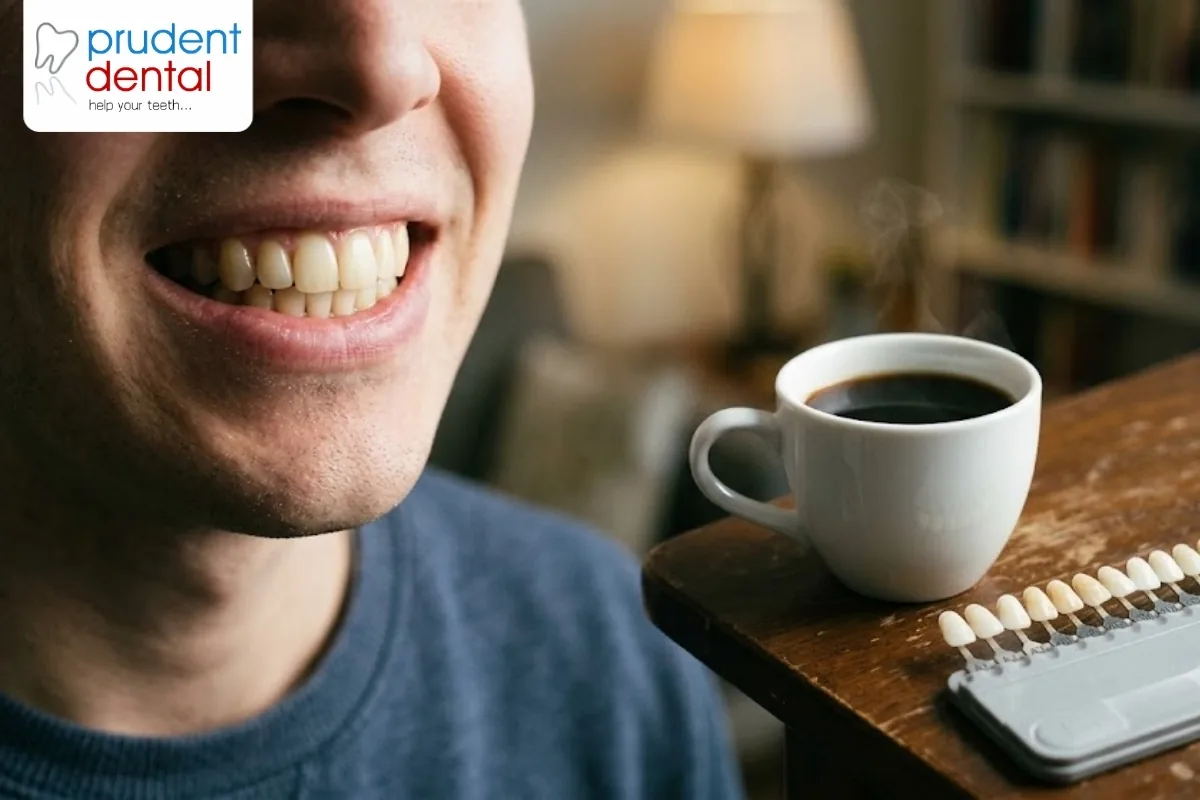
Extrinsic staining sits on the outside of the enamel. It builds up from the things we eat, drink and do: chai and coffee, red wine, deeply coloured curries, and above all tobacco and paan, which stain heavily. This kind of yellowing responds well to cleaning and whitening because it is, in effect, sitting on the surface.
Intrinsic colour comes from inside the tooth. Enamel is naturally slightly translucent, and beneath it lies dentine, which is yellower. As enamel gradually thins with age, or from acidic wear and hard brushing, more of that dentine shows through. Because this is the tooth's own structure rather than a stain, it cannot simply be scrubbed off, and it whitens less dramatically.
Why are my teeth turning yellow?
Put those two mechanisms together and the common causes line up clearly:
- Age. The most universal cause. Decades of enamel wear let the yellower dentine show through more.
- Food, drink and tobacco. Tea, coffee, cola, richly coloured food, smoking and paan all deposit stain over time.
- Hard brushing and acid wear. Aggressive brushing and frequent acidic drinks thin enamel, which paradoxically makes teeth look more yellow.
- Certain medicines and fluorosis. Some antibiotics taken in childhood, and too much fluoride during tooth development, cause built-in discoloration.
- An old injury or a dead nerve. A single tooth that has darkened after a knock is a different problem and needs individual assessment.
- Genetics. People naturally start with different enamel thickness and dentine shade, so some simply have warmer-toned teeth.
If one tooth is much darker than its neighbours, treat that as a signal rather than a cosmetic quirk. It can indicate a nerve problem inside the tooth, which is worth an examination before any whitening.
What actually makes yellow teeth whiter?
Matching the fix to the cause is what separates a good result from a disappointing one. In rough order of how most people should approach it:
- A professional clean first. A scaling and polishing removes hardened tartar and much of the built-up surface stain. Many people are surprised how much brighter their teeth look from this step alone, before any whitening.
- Professional whitening. Supervised teeth whitening lightens the natural tooth shade using controlled, dentist-checked gels. It is the most predictable way to tackle general yellowing, and far kinder to enamel than abrasive home tricks.
- Veneers or bonding for built-in colour. When discoloration is intrinsic and does not lift with whitening, thin cosmetic solutions such as veneers or composite bonding cover the tooth to give an even shade.
It is worth being honest about the limits. Whitening does not work on crowns, veneers or fillings, and results vary from person to person. A short consultation lets a dentist tell you what shade is realistically achievable for your teeth, so you are not chasing a result your enamel cannot give.
What to avoid
The internet is full of quick whitening hacks, and several of them quietly harm enamel. Scrubbing with charcoal, baking soda pastes, lemon juice or hydrogen peroxide of unknown strength can wear the surface down, and once enamel is gone it does not grow back. Thinner enamel then shows even more yellow dentine, which is the opposite of the goal. We look at the popular DIY methods in more detail in does baking soda whiten teeth and is charcoal toothpaste safe.
At Prudent Dental Clinic in Viman Nagar, Pune, we start by working out why your teeth look yellow, then match the treatment to the cause so the result lasts. The clinic is open seven days a week from 9 AM to 9 PM (5 PM on Sundays), and you can book a consultation online or call.
Sources & further reading
Indian Dental Association · American Dental Association (MouthHealthy) · NHS, Dental Health
Yellow teeth FAQs
Want to know what shade is realistic for your smile? Call +91 70287 22200.
Call +91 70287 22200 · Open 7 days, 9 AM–9 PM (5 PM Sun)