

Key takeaways
- Scaling is the professional removal of hardened tartar and plaque, especially along and just under the gumline.
- Polishing is the finishing step that smooths the teeth and lifts soft surface stains.
- It is usually not painful, and for most people every six months keeps the gums healthy.
- Scaling does not weaken or loosen teeth. That is a myth. It removes the tartar that harms your gums.
"What exactly is scaling?" is one of the most common questions people ask when a dentist recommends a cleaning. It is a simple, routine procedure, but it is often misunderstood, and a couple of myths put people off having one. This guide explains what scaling and polishing actually are, what the appointment feels like, and how often you really need it.
What is scaling?
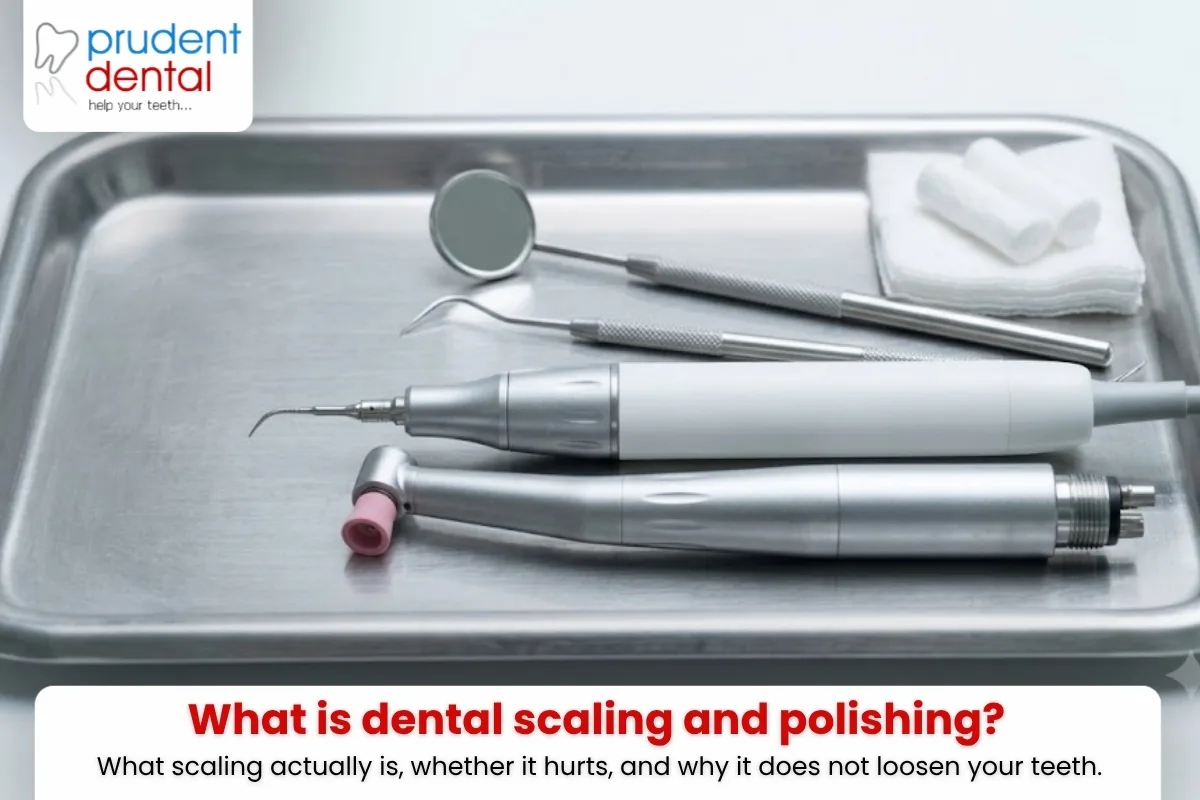
Every day, a soft film of bacteria called plaque forms on your teeth. Brushing removes most of it, but any that is missed hardens within a couple of days into tartar (also called calculus), a crusty deposit that bonds firmly to the tooth, usually right along the gumline. Once plaque has turned to tartar, no toothbrush can shift it. Scaling is the professional removal of that tartar and plaque, using an ultrasonic scaler that vibrates it loose with a fine water spray, plus small hand instruments to clean carefully around each tooth and just below the gum.
This matters because tartar is rough and porous, so it traps yet more bacteria against the gums, which is how gum disease starts. Scaling is the main way that gum disease is both prevented and treated. If you want the detail on plaque and tartar and how to keep them down at home, we cover it in how to remove plaque and tartar.
What is polishing?
Polishing is the finishing step that comes after scaling. Using a soft rubber cup and a mildly gritty paste, the dentist smooths the tooth surfaces and lifts soft surface stains from tea, coffee and tobacco. It leaves the teeth feeling clean and looking a little brighter, and the smoother surface makes it slightly harder for new plaque to cling on. Together, scaling and polishing make up the standard professional cleaning appointment.
Does it hurt, and what should I expect?
For most people, scaling is not painful, just a slightly strange vibrating, scratchy feeling with cool water spray. If your gums are inflamed or your teeth are sensitive it can feel more tender, and for deeper cleaning below the gumline the dentist can numb the area so you are comfortable. The appointment is usually quick and straightforward. Afterwards your teeth may feel a little sensitive and your gums slightly tender for a day or two, which settles on its own. A warm salt-water rinse and gentle brushing help in the meantime.
How often do you need scaling?
For most people, a professional cleaning every six months keeps tartar under control. Your dentist may suggest coming more often if you build tartar quickly, smoke, or already have gum disease. The point is that scaling and good home care work together: you control the soft plaque every day by brushing and cleaning between your teeth, and a professional removes the hardened tartar you cannot. Our guide on how often you need a dental check-up helps you judge the right interval.
The "scaling loosens teeth" myth
This worry stops a lot of people from getting the cleaning they need, so it is worth settling. Scaling removes tartar, not tooth structure, and it does not weaken healthy teeth. When someone has a lot of tartar, it can build up like a splint around teeth that gum disease has already loosened, and fill spaces where the gums have receded. Take the tartar away and, for a short while, those teeth may feel slightly loose or the gaps may look more obvious, simply because you are now seeing the true state of gums the tartar was hiding. Scaling did not cause that; it revealed it, and it gives the gums a chance to recover.
At Prudent Dental Clinic in Viman Nagar, Pune, a scaling and polishing is gentle, routine and nothing to fear, and it is one of the best-value things you can do for your teeth. You can see what affects the cost in our dental cleaning cost guide. The clinic is open seven days a week from 9 AM to 9 PM (5 PM on Sundays), and you can book a cleaning online or call.
Sources & further reading
Indian Dental Association · American Dental Association (MouthHealthy) · NHS, Dental Health
Dental scaling FAQs
Due a cleaning? Scaling protects your gums. Call +91 70287 22200 to book.
Call +91 70287 22200 · Open 7 days, 9 AM–9 PM (5 PM Sun)