

Key takeaways
- The blood clot that forms in the socket is doing the healing. Protecting it for the first 24 hours matters more than anything else.
- For the first day, avoid rinsing hard, smoking, straws, alcohol and hot food. All of these can dislodge the clot.
- Some soreness and mild swelling are normal and peak around day two to three, then ease steadily.
- A deep, throbbing ache that starts three to four days later can mean dry socket, and is worth a quick call to your dentist.
Having a tooth taken out is usually far less dramatic than people expect. What happens over the next few days matters just as much as the extraction itself, because good aftercare is what keeps healing smooth and comfortable. The whole plan comes down to one idea: protect the blood clot that forms in the socket, and let your body do the rest.
Here is a straightforward, day-by-day guide to recovering well, along with the signs that mean you should pick up the phone. Your own dentist may give you specific instructions for your situation, and those always take priority over general advice.
The first 24 hours: protect the clot
Immediately after the tooth comes out, a blood clot forms in the empty socket. Think of it as a natural dressing. It seals the wound, protects the bone underneath and forms the scaffold for new tissue. Almost every aftercare rule for day one exists to keep that clot in place.
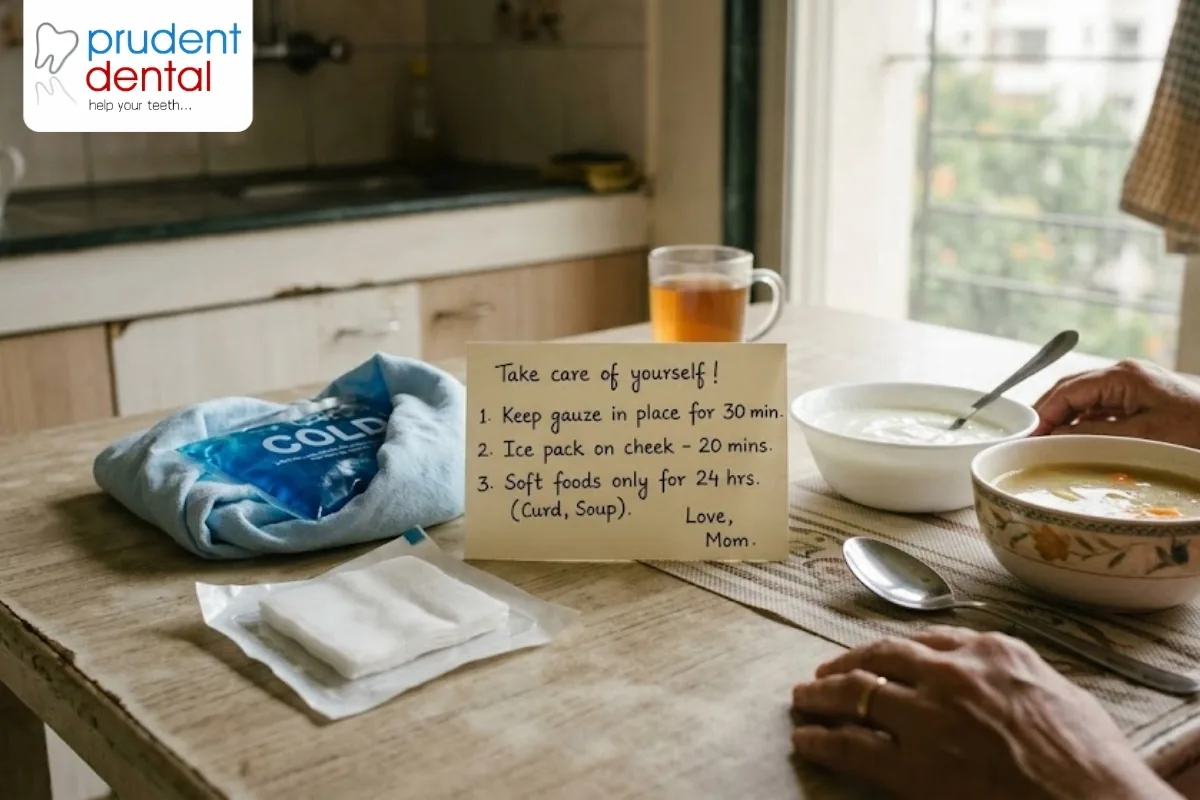
- Bite on the gauze your dentist places for the time they suggest, usually 30 to 45 minutes, to help the clot form.
- Do not rinse, spit or swish for the first 24 hours. This is the single most common way people disturb the clot.
- No smoking and no straws. The suction and the chemicals both work against healing and sharply raise the risk of dry socket.
- Rest and keep your head slightly raised. Avoid heavy lifting, exercise and bending over on the first day.
- Eat soft and cool. Wait until any numbness wears off before eating, so you do not accidentally bite your cheek or tongue.
If your dentist prescribed pain relief or antibiotics, take them exactly as directed. For everyday soreness, use whatever pain reliever your dentist recommends for you rather than reaching for aspirin, which can encourage bleeding.
Managing swelling, bleeding and pain
A little oozing for a few hours is normal, and your saliva may look pink. If bleeding picks up, fold a clean piece of gauze or use a damp black tea bag, place it over the socket, and bite firmly for 20 to 30 minutes without checking every couple of minutes. The tannin in tea can actually help a clot form.
Swelling is your body's normal response and tends to peak around the second or third day. A cold pack held against the cheek for 15 minutes at a time during the first day helps keep it down. Mild jaw stiffness and a tender cheek are common after a more involved extraction and settle over several days. If you have had a surgical or wisdom tooth extraction, expect a little more swelling and take recovery a touch more gently.
Days two to seven: gentle cleaning and eating
After the first 24 hours, you can start warm salt-water rinses. Half a teaspoon of salt in a cup of warm water, let it wash gently over the area and let it fall out of your mouth rather than spitting forcefully. Do this a few times a day, especially after meals, to keep the socket clean.
Keep brushing your other teeth normally, and from day two clean carefully around the extraction site without poking into it. For food, stay with soft options and build back up as comfort allows: dal, khichdi, curd rice, mashed vegetables, eggs, soups that are warm rather than hot. Chew on the opposite side for the first few days. Avoid crunchy, seedy or sticky foods that can lodge in the socket.
What is dry socket, and how do I avoid it?
Dry socket is the complication people most want to avoid, and it is largely preventable. It happens when the clot is lost or breaks down too early, leaving the bone and nerve endings exposed. The tell-tale sign is a deep, throbbing ache that appears around three to four days after the extraction, often spreading towards the ear, and sometimes with a bad taste or smell.
The prevention list is the same as the day-one rules: no smoking, no straws, no vigorous rinsing on the first day, and no picking at the area. If you think you have dry socket, it is not an emergency, but it is genuinely worth a call. A dentist can clean and dress the socket, which relieves the pain quickly and gets healing back on track.
When to call your dentist
Contact the clinic if you have heavy bleeding that will not settle after firm pressure, pain that gets worse instead of better after the third day, spreading swelling, a fever, pus or a bad taste that will not clear, or numbness that persists well beyond the appointment. These are uncommon, but they are worth acting on rather than waiting.
At Prudent Dental Clinic in Viman Nagar, Pune, we talk every patient through their aftercare before they leave, and we are reachable seven days a week from 9 AM to 9 PM (5 PM on Sundays) if something does not feel right. If you are already thinking about replacing the tooth once the gum heals, that is a conversation we are glad to have when the time comes. You can book a follow-up online or simply call.
Sources & further reading
Indian Dental Association · NHS, Dental Health · American Dental Association (MouthHealthy)
Tooth extraction aftercare FAQs
Worried about healing after an extraction? Call +91 70287 22200. We are open 7 days.
Call +91 70287 22200 · Open 7 days, 9 AM–9 PM (5 PM Sun)