

Key takeaways
- Drooling, chewing, tender gums and mild fussiness are normal teething signs; a slightly raised temperature can happen too.
- High fever, diarrhoea or a rash means illness, not teething: see a doctor rather than waiting for a tooth.
- Chilled (not frozen) teething rings, a cold damp cloth and clean-finger gum massage are the safest soothers.
- Ask your paediatrician or dentist before using any teething gel or medicine; product suitability varies by age.
- Book the first dental visit by the first birthday, or within six months of the first tooth appearing.
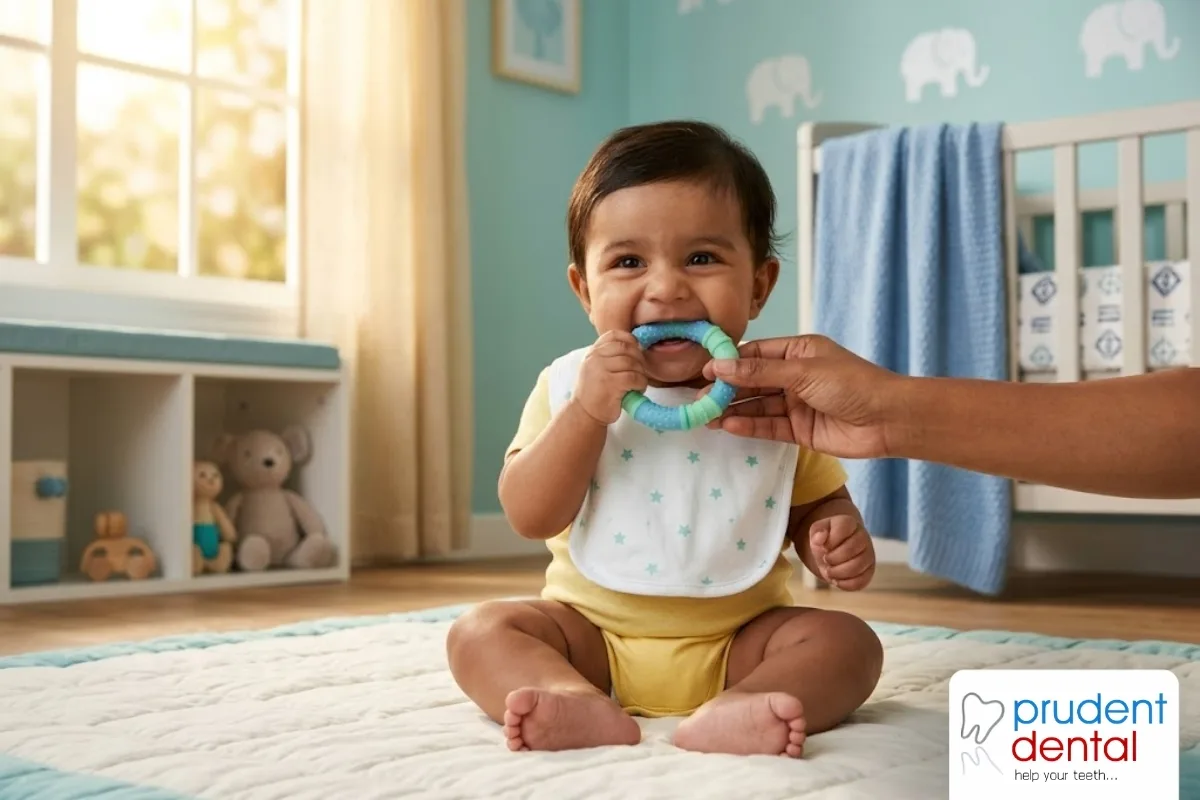
Teething usually begins around six months, though some babies start earlier or later, and it can make even the most contented baby grizzly for a few days at a time. Typical signs include extra drooling, a strong urge to chew, red or tender gums and mild fussiness, sometimes with a slightly raised temperature. A genuinely high fever, diarrhoea or a rash is not teething: it points to illness and needs a doctor. Simple comfort measures such as a chilled teething ring, a clean cold cloth or gentle gum massage often settle babies without any medicine at all.
What normal teething looks like
Most babies cut their first tooth somewhere around six months, usually a lower front tooth, although starting a few months earlier or later is perfectly normal. In the days before a tooth appears you may notice more drooling than usual, a red or slightly swollen patch of gum, flushed cheeks, and a baby who wants to chew on everything within reach. Some babies rub their ear on the same side, sleep a little worse or feed fussily. A slightly raised temperature can occur, but teething on its own does not make a baby seriously unwell.
Symptoms tend to come and go as each tooth moves, so expect a few unsettled days followed by calm stretches. All 20 baby teeth usually arrive by around three years of age. If you want to know which tooth is likely coming next, our baby teeth eruption chart walks through the typical order and timing, which makes the grizzly phases easier to predict and plan around.
Signs that point to illness, not teething
Teething gets blamed for far more than it causes, and that can delay treatment for a genuinely unwell baby. A high fever is not teething. Diarrhoea, vomiting and rashes on the body are not teething either. These usually mean an infection or another illness, and your baby should see a doctor rather than wait for a tooth to appear. Trust your instincts: if your baby seems drowsy, refuses feeds, is inconsolable or simply not themselves, get medical advice promptly instead of putting it down to teeth.
| Usually teething | See a doctor instead |
|---|---|
| Extra drooling and chewing on everything | High fever |
| Red, tender or swollen gums | Diarrhoea or vomiting |
| Mild fussiness and broken sleep | A rash on the body |
| Slightly raised temperature and flushed cheeks | Unusual drowsiness or refusing feeds |
Soothing that genuinely works
The safest remedies are also the simplest. Give your baby something firm and cool to chew: a solid teething ring chilled in the fridge works well, but never freeze it, because frozen surfaces can hurt delicate gums. A clean cloth dampened with cold water and offered to chew often works just as well. You can also wash your hands and massage the sore gum gently with a clean finger; that steady counter-pressure is often exactly what your baby is seeking. Wipe drool from the chin regularly and use a simple barrier cream to prevent a drool rash.
- Chill teething rings in the fridge, never the freezer
- Offer a clean, cold, damp cloth to chew on
- Massage the sore gum gently with a clean finger
- Wipe drool often and protect the chin with a barrier cream
- Extra cuddles and distraction help more than most parents expect
Teething gels and medicines: ask before you use them
Pharmacy shelves carry teething gels, powders and syrups, and not all of them are suitable for babies. Some contain ingredients that are not recommended for infants, and even familiar products can be misused if the age guidance or dose is wrong for your child. We deliberately give no dosing advice here: before you apply any gel or give any medicine, speak to your paediatrician, or ask us during a paediatric dentistry consultation. Dr. Vanessa Lobo, our consultant paediatric dentist, regularly advises parents on what is appropriate for their child's age and what to avoid altogether.
Timing the first dental visit
The general guidance is simple: a first dental visit by the first birthday, or within six months of the first tooth appearing, whichever comes first. That early visit is short and gentle. It lets the dentist check that teeth are erupting normally, spot early decay risk, and show you how to clean tiny teeth properly. It also gives you a trusted place to bring teething questions instead of guessing. Our guide to your child's first dental visit covers what happens in the chair, what to bring and how to prepare a wary toddler.
Prudent Dental Clinic in Viman Nagar, Pune is open seven days a week, which makes it easier to book around naps and feeds. Every child's care is overseen by Dr. Puja Bansal, with our consultant paediatric dentist Dr. Vanessa Lobo seeing our youngest patients where needed. If your baby's teething seems unusual, or a tooth is very late arriving, call us on +91 70287 22200 and we will take a look.
Teething FAQs
Sources & further reading: NHS, Dental Health; American Dental Association (MouthHealthy); World Health Organization, Oral Health; Indian Dental Association.
Questions about your own teeth? Call +91 70287 22200.
Call +91 70287 22200 · Open 7 days, 9 AM–9 PM (5 PM Sun)