

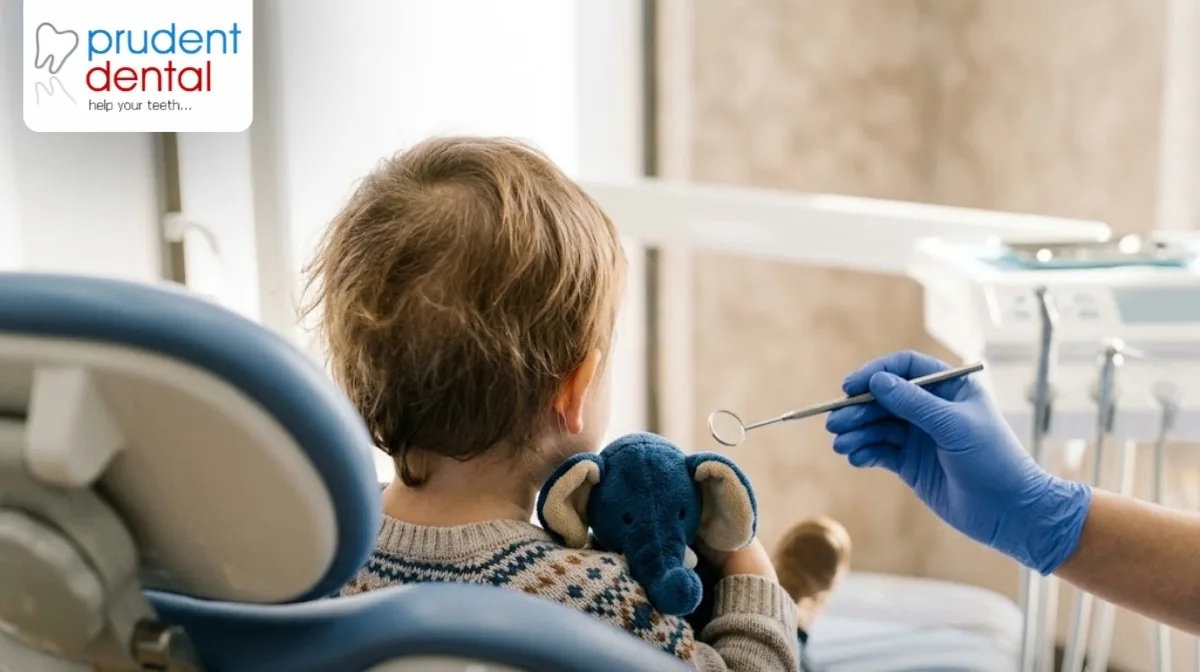
Key takeaways
- First dental visit: by the first birthday, or within six months of the first tooth, whichever comes first.
- Baby teeth hold space for the permanent teeth, so cavities in them do need treatment.
- Preparation is mostly attitude. Calm, positive language and pretend play work better than long explanations.
- Sealants and fluoride applications are quick, painless preventive treatments that lower cavity risk in children.
Few milestones sneak up on parents like the first dental visit. Many families wait until every milk tooth has arrived, or until something hurts, before booking an appointment. Dentists recommend starting much earlier. The habits, checks and gentle first impressions of that early visit shape how a child feels about dental care for years.
At what age should a child first see a dentist?
Most dental associations, including the Indian Dental Association and the American Dental Association, recommend that a child see a dentist by their first birthday, or within six months of the first tooth appearing, whichever comes first. This early visit is short and gentle. It focuses on checking development and coaching parents rather than performing treatment.
The guidance is often summarised as "first tooth, first birthday". The lower front teeth typically appear somewhere around six months of age, though later eruption is common and usually nothing to worry about. Once that first tooth is through, it can decay. That is why dentists prefer to meet babies early rather than waiting for a full set of teeth.
That first appointment looks nothing like an adult check-up. It is usually brief, and young toddlers often sit on a parent's lap while the dentist has a gentle look at the teeth, gums and jaw. The bigger part of the visit is a conversation: teething, bottle and breastfeeding habits, thumb-sucking, how to clean tiny teeth, and when to introduce fluoride toothpaste. At Prudent Dental Clinic in Viman Nagar, Pune, these early appointments are part of our pediatric dentistry service. The aim is simple. No fear, no pressure, just a friendly introduction.
Early visits also establish what dentists call a "dental home". That is a familiar place your family can turn to for routine care, and for quick advice if a tooth gets knocked or a cavity is suspected. Children who visit regularly from a young age tend to treat check-ups as normal, not frightening.
How do I prepare my child for the dentist?
Keep it simple and positive. Use plain, cheerful words like counting teeth, avoid scary vocabulary, and never use the dentist as a threat. Read a picture book about dental visits, play pretend check-ups at home, schedule a morning appointment when your child is rested, and stay calm yourself. Children mirror parental anxiety.
A simple routine that works well for toddlers and preschoolers:
- Mention it casually a day or two before. Not weeks ahead, which gives worry time to grow.
- Use friendly words. The dentist will "count your teeth" and "check your smile". Avoid words like hurt, pain, injection or drill, even when reassuring.
- Rehearse through play. Read a picture book about visiting the dentist and do a pretend check-up on a favourite toy.
- Pick a good time slot. Book when your child is fed and rested. Mornings usually go better than tired evenings.
- Keep your own anxiety out of the room. If dental visits worry you, let the other parent take the lead, and let the dental team do the explaining.
- Afterwards, praise and move on. A quiet well done beats a big fuss. Skip the sugary reward, which sends the wrong message.
What if the first visit doesn't go smoothly?
Some children cry, clamp their mouths shut or refuse the chair entirely. This is normal, and teams used to treating children expect it. A visit where the dentist only manages a quick look and a friendly chat is still a success. It builds familiarity, and the next visit usually goes better. What matters is that the experience stays positive and is never forced.
When do baby teeth need fillings?
Baby teeth do need fillings when decay reaches the inner tooth structure, causes pain, or risks infection. Although milk teeth eventually fall out, they hold space for permanent teeth, guide jaw development, and matter for chewing and speech. Losing them too early to decay can crowd or misalign the adult teeth that follow.
The "they fall out anyway" logic is understandable but misleading. Baby molars are typically not replaced until around ten to twelve years of age, so a cavity in a three-year-old's molar may otherwise need to survive for many years. Untreated decay can lead to toothache, abscesses, disturbed sleep and missed school. Infection around a baby tooth can also affect the permanent tooth developing beneath it.
Baby teeth are also natural space holders. When one is lost too early, the neighbouring teeth tend to drift into the gap, leaving too little room for the adult tooth that should erupt there. That crowding often needs orthodontic correction later, which is why dentists prefer to fill and keep a decayed milk tooth wherever practical. Early-childhood decay is strongly linked to sugary drinks in bottles, especially at bedtime, and to frequent snacking. Feeding habits matter just as much as brushing.
How do sealants and fluoride protect children's teeth?
Two quick, painless treatments do much of the work in childhood prevention. Dental sealants are thin protective coatings flowed into the deep grooves of the back teeth, where a toothbrush struggles to reach and where most childhood cavities begin. Professional fluoride applications, usually a varnish painted on in minutes, strengthen enamel and can help very early spots of weakened enamel repair themselves before they become cavities.
Neither replaces daily brushing, but both stack the odds in your child's favour, and both are quick enough to fit into a routine check-up. Your child's first permanent molars usually come through around age six, and that is a good moment to ask about sealants. You can book a check-up and the team will advise what is genuinely needed for your child, rather than offering a fixed menu of treatments.
Sources & further reading
Indian Dental Association · American Dental Association (MouthHealthy)
Questions parents ask
Planning your child’s first dental visit? Call +91 70287 22200. Open 7 days, 9 AM to 9 PM (5 PM on Sundays).
Call +91 70287 22200 · Open 7 days, 9 AM–9 PM (5 PM Sun)