

Key takeaways
- Most teeth grinding happens during sleep, so many people do not realise they do it.
- Tell-tale signs include a morning jaw ache or headache, flattened or chipped teeth, and new sensitivity.
- Over years, grinding wears enamel, cracks teeth and strains the jaw. The damage is gradual but real.
- A custom night guard protects the teeth by absorbing the force, while addressing stress and sleep tackles the cause.
Teeth grinding, which dentists call bruxism, is easy to miss because most of it happens while you are asleep. You cannot feel yourself doing it, so the first you know of it is often a worn tooth, a sore jaw in the morning, or a dentist pointing out the pattern. It is common, it is manageable, and left unchecked it quietly damages teeth over years.
Here is how to tell if you grind, what it does to your teeth and jaw, and how a night guard and a few changes can protect you.
How to tell if you grind your teeth
Because night-time grinding is silent to the person doing it, you have to read the after-effects. Common signs include:
- A dull headache or aching jaw when you wake up.
- Teeth that look flattened, shortened or chipped at the edges.
- New or increased sensitivity, as the enamel wears thin.
- Tiny cracks in the enamel, or fillings and crowns that keep chipping or coming loose.
- A partner who hears a grinding sound at night.
- Tightness or tenderness in the muscles at the side of the face.
A dentist can often confirm grinding at a glance, because it leaves a distinctive, even wear pattern that is different from ordinary chipping or a cavity.
What grinding does to your teeth and jaw
The forces involved are surprisingly high, especially during sleep when the usual protective reflexes are switched off. Over time that steady force wears the biting surfaces flat, thins and chips the enamel, and can crack teeth or the restorations on them. Worn enamel exposes the softer layer beneath, which is why sensitivity so often comes with grinding. The jaw muscles and joints take a load too, which shows up as morning tightness, aching or headaches. None of this happens overnight, but it does accumulate, and worn or cracked teeth can eventually need crowns or other repair.
Why people grind
Bruxism usually has more than one driver. Stress and anxiety are the most recognised, which is why many people grind more during difficult periods. Disturbed sleep is closely linked. An uneven bite, where the teeth do not meet smoothly, can contribute, and so can caffeine, alcohol, smoking and some medicines. Because the mix is individual, the most effective plan tackles both sides: protecting the teeth from the force, and easing whatever is triggering the grinding.
How a night guard helps
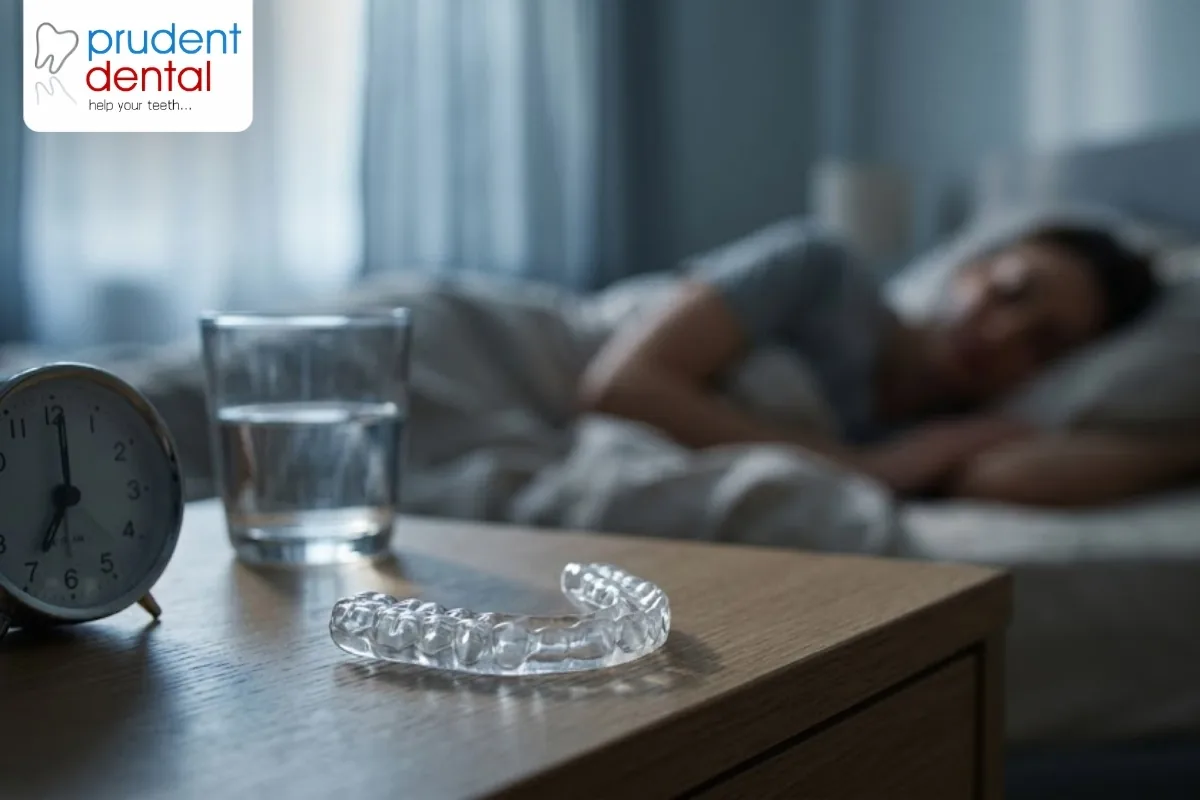
A night guard, sometimes called a bite splint, is a custom-made cover worn over the teeth during sleep. It does not stop the grinding itself, but it changes what gets worn down. Instead of your upper and lower teeth grinding against each other, they meet the guard, which absorbs the force and can be replaced far more cheaply than your teeth can be repaired. A good guard also helps distribute the load more evenly and eases strain on the jaw.
The fit matters. A custom guard made from an impression or scan of your teeth is comfortable, stays put and lasts; the soft one-size-fits-all versions from a pharmacy are better than nothing in the short term but fit poorly and wear out quickly. Alongside the guard, simple steps help: managing stress, cutting evening caffeine and alcohol, and improving sleep.
When to see a dentist
It is worth a visit if you notice worn or chipped teeth, wake with jaw ache or headaches, or a partner mentions grinding. See a dentist sooner if a tooth cracks, the pain is persistent, or your jaw clicks or locks painfully, which can point to a joint problem beyond grinding alone. At Prudent Dental Clinic in Viman Nagar, Pune, we check for the wear pattern, protect the teeth and talk through the likely triggers. The clinic is open seven days a week from 9 AM to 9 PM (5 PM on Sundays), and you can book online or get in touch.
Sources & further reading
Indian Dental Association · NHS, Dental Health · American Dental Association (MouthHealthy)
Teeth grinding FAQs
Waking with a sore jaw or worn teeth? Call +91 70287 22200 to protect your smile.
Call +91 70287 22200 · Open 7 days, 9 AM–9 PM (5 PM Sun)