

Key takeaways
- A regular scale and polish is preventive: it cleans above and just below the gum line and suits healthy gums or early gingivitis.
- Deep cleaning (scaling and root planing) treats periodontitis by cleaning the root surfaces inside deepened gum pockets, usually under local anaesthetic and often over more than one visit.
- The choice is decided by pocket measurements, bleeding and x-ray findings, not by preference or price.
- Deep cleaning is a treatment for an active infection, not a luxury version of a normal clean.
- Maintenance cleans after treatment are what keep gum disease stable; skipping them risks the pockets deepening again.
Regular scaling and polishing is a preventive clean that removes plaque and tartar from above and just below the gum line, and it suits people whose gums are broadly healthy. Deep cleaning, properly called scaling and root planing, is a treatment for established gum disease: it cleans much further beneath the gums, is usually done under local anaesthetic, and often takes more than one visit. The right option depends on what the dentist finds when measuring your gums, not on personal preference or budget. This guide explains how that decision is made and what to expect from each.
What a regular scale and polish does
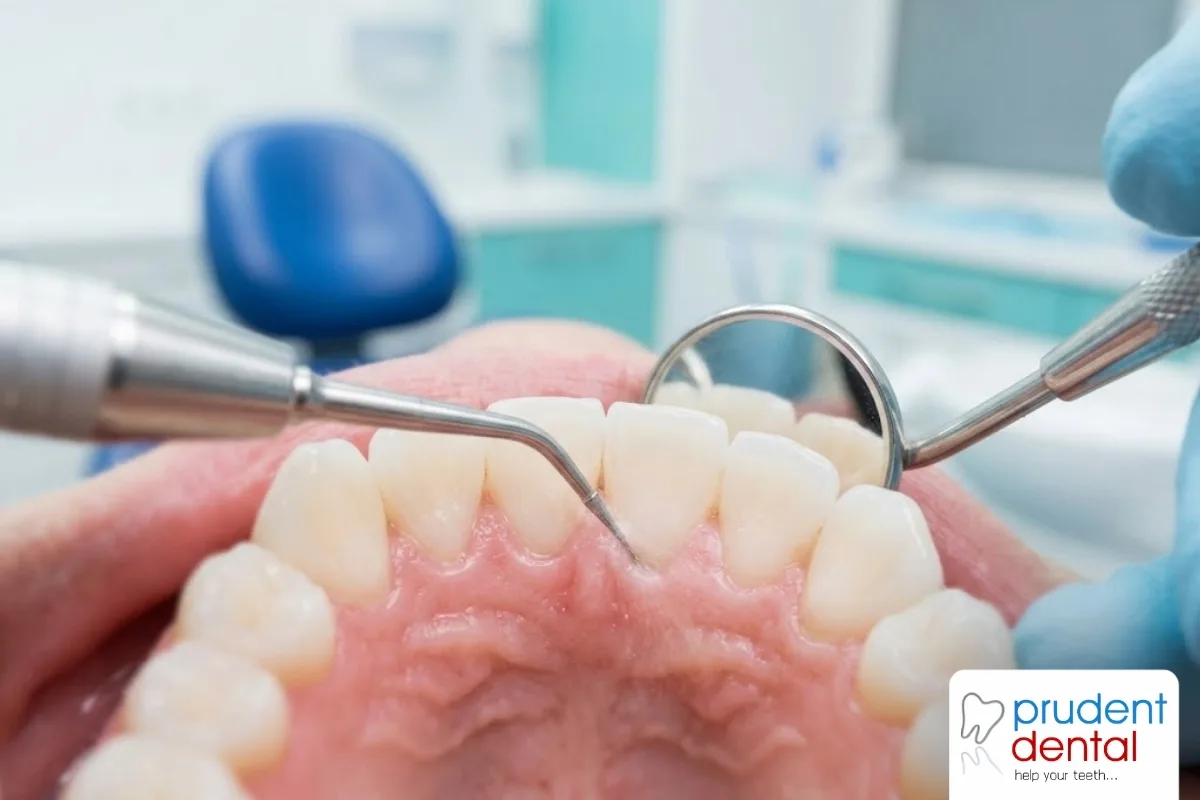
A routine scale and polish is preventive care. The dentist uses an ultrasonic scaler and fine hand instruments to remove plaque and hardened tartar from the visible tooth surfaces and just beneath the gum margin, then polishes the teeth to leave them smooth and stain free. Smooth surfaces make it harder for new plaque to cling on. The appointment is usually comfortable, needs no anaesthetic and finishes in a single visit. You can read more about what to expect on our scaling and polishing page.
This type of clean suits people whose gums are broadly healthy or show only early gingivitis, the mild and reversible stage of gum disease. If your gums bleed a little when you brush but the supporting bone is intact, a thorough scale and polish combined with better home care often settles things down completely. How often you need one varies from person to person, so the interval is tailored to your gum condition rather than applied as one rule for everyone.
What deep cleaning treats
Deep cleaning, known clinically as scaling and root planing or root surface debridement, treats periodontitis, the established stage of gum disease. By this point the gum has detached from the tooth and formed deepened pockets, and tartar has spread onto the root surfaces where a toothbrush and a routine clean cannot reach. The dentist carefully cleans these root surfaces and smooths them so the gum can heal snugly against the tooth again. Because the work happens well below the gum line, the area is usually numbed with local anaesthetic first.
Treatment is commonly divided across more than one visit, often section by section, so each area gets proper attention and your appointments stay comfortable. Deep cleaning sits within our wider periodontics service because its purpose is medical: to stop an active infection that quietly destroys the bone holding your teeth in place. Left untreated, periodontitis can lead to loose teeth and eventually tooth loss, which is far harder to put right than treating the gums early.
How the dentist decides: pocket measurements
The deciding tool is a periodontal probe, a slim, blunt instrument marked in millimetres. The dentist gently slides it into the crevice between gum and tooth at several points around each tooth and records the depth. Healthy gums usually sit snugly against the teeth, with shallow readings of around three millimetres or less. Deeper readings, especially alongside bleeding, indicate that pockets have formed and the attachment is breaking down. X-rays add the missing piece by showing whether the bone level around the roots has started to reduce.
Dr. Puja Bansal carries out this assessment as part of every thorough examination, checking for bleeding, gum recession, tooth mobility and tartar visible on x-rays. If the measurements point to periodontitis, you will be told plainly what was found and why a deep clean is recommended, with a written plan before anything begins. Advanced or stubborn cases are seen by our consultant periodontist Dr. Sumanth S., who holds an MDS in Periodontology and Oral Implantology and brings 25 years of experience to complex gum treatment.
The two procedures side by side
The two procedures use similar instruments, which is why they are so often confused, but they differ in purpose, depth, comfort measures and follow-up. A regular scale and polish maintains health that is already there. A deep clean recovers health that has been lost to infection. If you keep one distinction in mind, make it this: one is housekeeping, the other is treatment. The table below sets out the practical differences you will actually notice as a patient.
| Aspect | Regular scaling and polishing | Deep cleaning (root planing) |
|---|---|---|
| Purpose | Prevention and maintenance of healthy gums | Treatment of established gum disease (periodontitis) |
| Where it cleans | Above and just below the gum line | Deep below the gum line, along the root surfaces |
| Anaesthetic | Usually not needed | Local anaesthetic is commonly used |
| Visits | Usually completed in one appointment | Often spread over more than one appointment |
| Who needs it | Healthy gums or early gingivitis | Deepened pockets, bleeding and bone changes on x-ray |
| Afterwards | Routine check-ups and home care | Review of pocket depths and a maintenance programme |
Why deep cleaning is a treatment, not a luxury upgrade
Patients sometimes assume a deep clean is a premium version of a normal one, or a way for a clinic to charge more for the same thing. It is neither. Deep cleaning exists because periodontitis is an infection sitting where no brush, floss or routine scale can reach, and it usually progresses without pain. Choosing the cheaper option when pockets are present does not save money; it simply lets the disease continue undisturbed. The recommendation follows the pocket measurements, and you are welcome to see and discuss those readings yourself.
Equally, a clinic should never upsell a deep clean to someone with healthy gums, and measurement keeps everyone honest. If your pockets are shallow, a routine scale and polish is exactly what you should have, and that is what we will advise. When findings sit somewhere in between, we explain the reasoning, sometimes starting with a thorough clean and reviewing the gums again before committing to anything more involved.
Maintenance and cost after a deep clean
Deep cleaning is the start of gum care rather than the end of it. After healing, pockets are re-measured to confirm the gums have tightened, and you move onto a maintenance programme: professional cleans at intervals suited to your gum condition, along with refreshed home care techniques. This supportive phase is what keeps periodontitis stable in the long term, because the bacteria that cause it recolonise if cleaning lapses. Miss maintenance and the pockets can gradually deepen again, undoing the earlier work.
Costs vary with how many teeth are involved, how deep the pockets are, how many visits the treatment needs and whether a consultant periodontist takes over the case. We never quote a figure before looking; after your examination you receive a written, itemised estimate so there are no surprises. Our guide to gum treatment cost in Pune explains these factors in more detail. To have your gums measured and get a clear answer, call the clinic in Viman Nagar on +91 70287 22200; we are open seven days a week.
Regular scaling vs deep cleaning FAQs
Sources & further reading: American Dental Association (MouthHealthy); NIDCR, US National Institute of Dental & Craniofacial Research; NHS, Dental Health; Indian Dental Association.
Questions about your own teeth? Call +91 70287 22200.
Call +91 70287 22200 · Open 7 days, 9 AM–9 PM (5 PM Sun)