Key takeaways
- A gap between teeth (a diastema) does not close on its own, and there is no safe way to close it at home.
- Avoid DIY “gap bands” and elastic bands from the internet. They can slide up the roots and cause you to lose healthy teeth.
- The safe fixes are composite bonding, veneers, or braces and clear aligners. The right one depends on the gap size and your bite.
- A small gap is often perfectly healthy, so treatment is a choice. A check-up first rules out any underlying cause.
A gap between the front teeth, which dentists call a diastema, is one of the most common things people ask us how to fix. Search results are full of "close your gap at home" tricks, and some of them are not just useless but genuinely dangerous. This guide explains why the home methods do not work, the risk of the worst of them, and the safe ways a dentist actually closes a gap.
Why do teeth have gaps?
Gaps form for several reasons. Sometimes the teeth are simply smaller than the jaw, so there is spare room. A large or low-attached band of tissue between the two front teeth (the labial frenum) can hold them apart. Missing teeth let the others drift, and habits like thumb-sucking in childhood or tongue-thrusting can push teeth forward over time. Gum disease can also let teeth spread as their support weakens. Because the cause shapes the right fix, it is worth having a gap looked at rather than guessing.
Can you close a gap naturally at home?
This is the important part, so it is worth being blunt. You cannot safely close a real gap at home. Teeth only move when steady, controlled force is applied over time by an orthodontic appliance a professional has planned. No exercise, no pushing with your tongue, and no gadget from a marketplace does this safely.
The one to avoid completely is the "gap band" or elastic band trend, where people wrap a small rubber band around two teeth to pull them together. It can seem to work for a day or two, then the band slips up under the gum, out of sight, and squeezes the roots. It strips away the bone and gum that hold the teeth in, and people have lost otherwise perfectly healthy front teeth this way. It is one of the few dental "hacks" that can cause permanent, irreversible harm, and no dentist would ever recommend it.
The safe ways a dentist closes a gap
There are three well-established options, and the best one depends on how big the gap is, the state of your bite, and what result you want.
- Composite bonding. The dentist adds tooth-coloured composite resin to the sides of the teeth to fill a small gap, shaping and polishing it in a single visit. It is the quickest and most affordable option and removes little or no natural tooth.
- Veneers. Thin porcelain veneers cover the fronts of the teeth for a more durable, stain-resistant cosmetic result. They suit people who also want to change the shade or shape, not just close the gap.
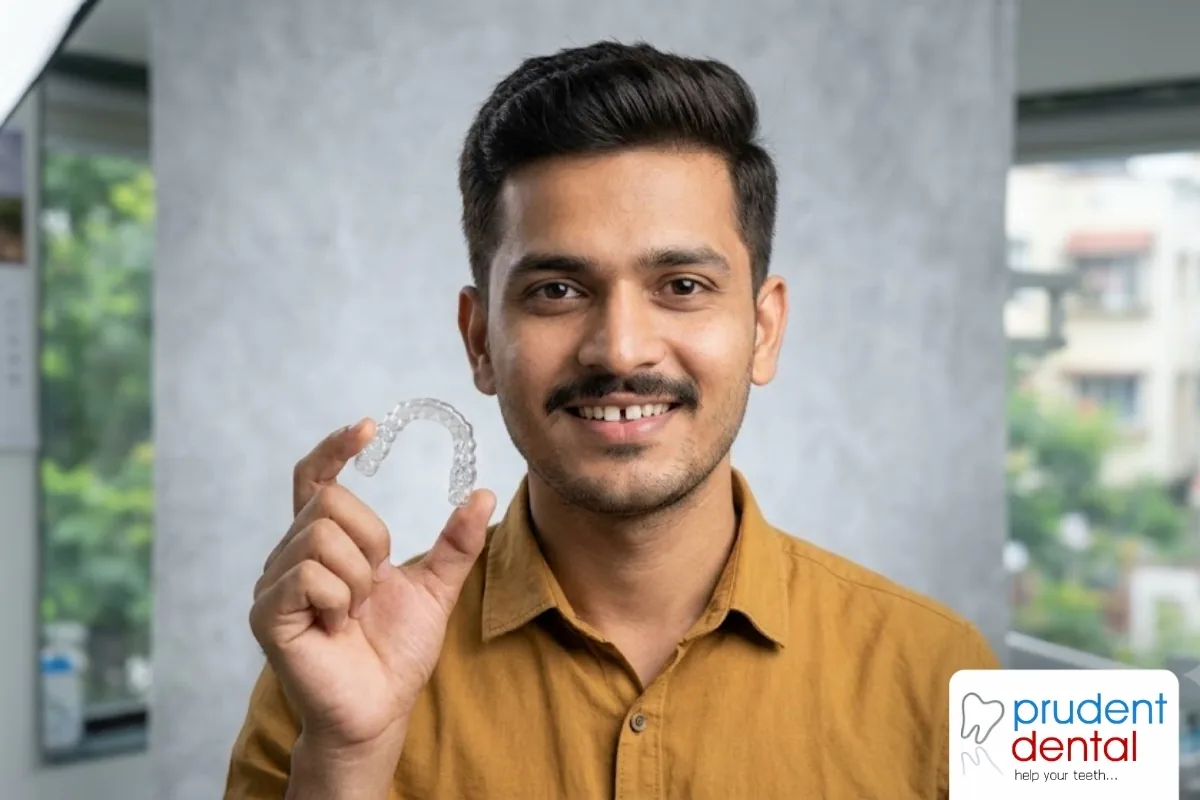
- Braces or clear aligners. Orthodontic treatment actually moves the teeth together. It is the right choice for larger gaps, several gaps, or when the bite needs correcting too. A retainer afterwards keeps the result.
For a purely cosmetic single gap, bonding is often the simplest answer; we compare the cosmetic routes in veneers vs bonding vs whitening. If the gap is part of a wider alignment issue, braces vs clear aligners is the more relevant read.
What does it cost to close a gap?
There is no single price, because the three routes cost very differently and the size of the gap matters. Bonding a single small gap is the most economical and is priced per tooth; veneers cost more and are also per tooth; braces or aligners cost more again but move the teeth properly and correct the bite. What determines each is covered in our guides to veneers and bonding cost and braces cost. Rather than quote a flat figure, we examine the gap and give you a written, itemised estimate.
Does a gap always need fixing?
No. A small midline gap is common and often completely healthy, so closing it is a personal choice if the look bothers you. It is still worth a check-up first, because a gap can occasionally point to gum disease, a missing tooth or a habit that is worth sorting out on its own. At Prudent Dental Clinic in Viman Nagar, Pune, we look at why the gap is there, then talk through the option that suits your teeth and your budget, honestly. The clinic is open seven days a week from 9 AM to 9 PM (5 PM on Sundays), and you can book a consultation online or call.
Sources & further reading
Indian Dental Association · American Dental Association (MouthHealthy) · NHS, Dental Health
Gap between teeth FAQs
Want to close a gap safely? Call +91 70287 22200 to talk through your options.
Call +91 70287 22200 · Open 7 days, 9 AM–9 PM (5 PM Sun)