

Key takeaways
- If colour is your only concern, professional whitening is the least invasive option and is usually tried first.
- Composite bonding repairs small chips, gaps and worn edges, often in one visit, with little or no drilling.
- Porcelain veneers change shape and colour together and resist staining, but most involve removing a thin layer of enamel.
- Healthy teeth and gums come first. A sound cosmetic decision starts with an examination, not a treatment already chosen.
A chipped corner, a stubborn stain, a small gap you notice in every photo. Most smile complaints come down to a handful of underlying problems, and each one has a different best-fit solution. The three treatments people ask about most are teeth whitening, composite bonding and porcelain veneers. They get talked about as rivals, but they solve different problems. So the honest first question is not "which treatment is best" but "what exactly am I trying to change?"
Start with the problem, not the treatment
Matching the fix to the flaw keeps treatment conservative and results predictable. Here is how a dentist typically sorts the common concerns.
Colour is the only issue → whitening
If your teeth are healthy and reasonably even but look dull or yellow, professional teeth whitening is usually the logical first step. A controlled bleaching gel lightens natural enamel without removing anything from the tooth, so every future option stays open. Its limits matter, though: whitening cannot change shape, close gaps, or lighten existing fillings and crowns. If you are weighing home kits against clinic treatment, our guide to at-home vs professional whitening covers that decision in detail.
Small chips, gaps or worn edges → bonding
Composite bonding uses the same tooth-coloured resin as composite fillings, sculpted directly onto the tooth and hardened with a curing light. In skilled hands it can rebuild a chipped corner, close a small gap or even out a worn edge, often in a single visit and usually with little or no drilling. It adds material rather than removing it, which makes it one of the most conservative cosmetic treatments available.
Shape, colour and durability together → veneers
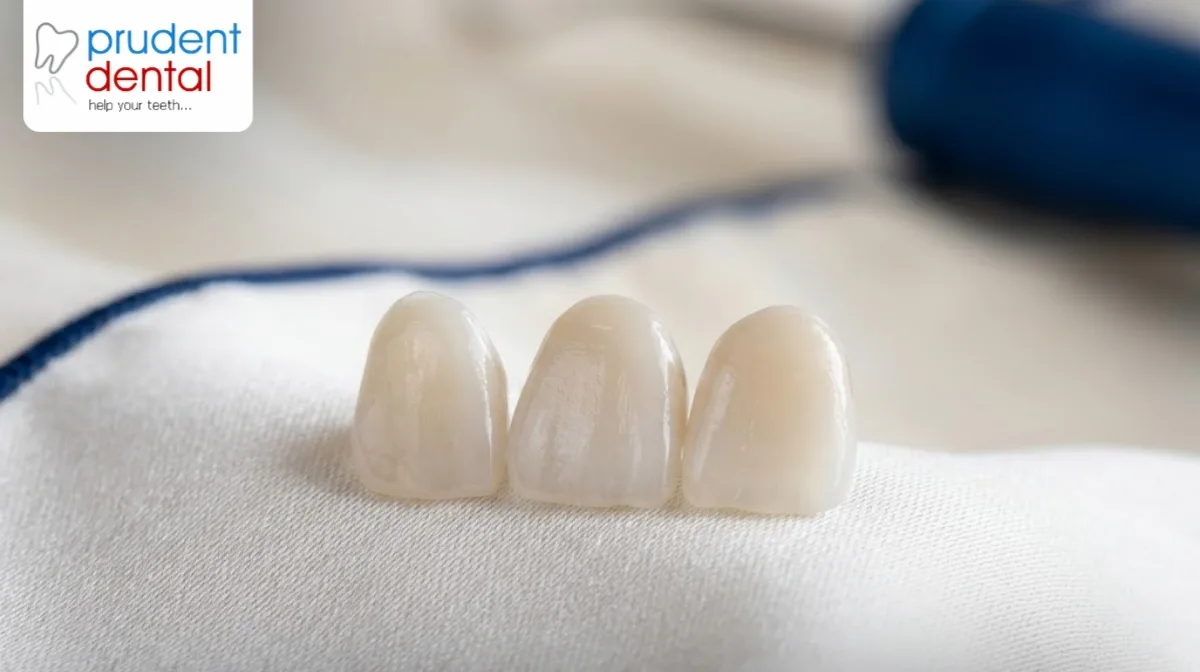
Porcelain veneers are thin, custom-made ceramic shells bonded to the front surface of the teeth. They can change colour, shape and proportion at the same time, and porcelain holds its polish and resists staining in a way composite cannot. The trade-off is commitment: most veneer cases involve removing a thin layer of enamel, which does not grow back, so veneers deserve more deliberation than the other two options.
Should I get veneers or bonding?
It depends on what you are correcting. Composite bonding suits small chips, minor gaps and edge wear, because it adds material with little or no drilling. Porcelain veneers suit teeth that need a change in shape and colour together, or several front teeth treated at once, because they are stronger and more stain-resistant.
One way to hold it in your head: bonding is additive and conservative, veneers are transformative and durable. The number of teeth involved matters too. For one or two teeth with minor flaws, bonding is often the proportionate choice. When several front teeth need reshaping for a uniform result, veneers tend to give a more consistent, longer-lasting outcome. Many patients combine approaches. They whiten the whole smile first, then match bonding or veneers to the new, lighter shade, since neither composite nor porcelain responds to bleaching afterwards.
What lasts longer, veneers or bonding?
Porcelain veneers generally last longer than composite bonding. Porcelain is harder, resists staining and holds its polish, so well-maintained veneers can serve for many years. Composite bonding is more prone to chipping and picking up stain over time, but it is quicker to place and far easier to repair or refresh.
Longevity is never only about the material, though. Habits play a large role: nail biting, chewing ice, opening packets with your teeth and untreated night-time grinding shorten the life of both treatments. Repairability is the other side of the ledger. Chipped composite can usually be patched or re-polished in the chair, while a fractured porcelain veneer typically needs a full replacement. Whichever you choose, healthy gums and regular check-ups protect the result more than anything else you can do at home.
What is the cheapest way to fix my smile?
For most people, professional whitening is the most economical starting point, because it treats colour without altering the teeth. Bonding sits in the middle, treating one tooth at a time. Veneers involve laboratory work and more of the dentist's time, so they are typically the larger investment, reserved for bigger changes.
"Cheapest" deserves one caveat. The most affordable treatment is the one that actually suits the problem. Whitening a chipped tooth will not hide the chip, and bonding a heavily discoloured, uneven smile may need frequent touch-ups that add up over time. A treatment that has to be redone, or that fixes the wrong problem, is rarely good value. That is why a proper cosmetic dentistry consultation weighs your goals against the condition of your teeth before any option is priced or planned.
How do whitening, bonding and veneers compare?
The table below sets out the practical differences: how much tooth structure each option affects, how the results age, and what happens if something chips or fades.
| Factor | Teeth whitening | Composite bonding | Porcelain veneers |
|---|---|---|---|
| Best suited to | Healthy teeth that look dull, yellow or stained | Small chips, minor gaps, worn or uneven edges | Larger changes to shape, size and colour, often across several teeth |
| Invasiveness | None. A bleaching gel lightens enamel; nothing is drilled | Minimal, usually little or no drilling | Moderate. Most cases need a thin layer of enamel removed |
| How results age | Shade fades gradually with tea, coffee and time; can be topped up | Composite can chip or pick up stain over time; typically shorter-lived than porcelain | Can last many years with good care; porcelain resists staining |
| Repairability | Simple. A top-up session refreshes the shade | Easy. Composite can be repaired or re-polished in the chair | Harder. A fractured veneer usually needs replacement |
| Reversibility | Yes. Nothing is removed from the tooth | Often, when no drilling was needed | Usually not. Removed enamel does not grow back |
Why we recommend the least invasive option first
Enamel is the one thing dentistry cannot give back, so a careful cosmetic plan spends it reluctantly. At Prudent Dental Clinic in Viman Nagar, Pune, cosmetic planning follows two rules: teeth and gums must be healthy before any cosmetic work begins, and the least invasive option that meets your goal comes first. Dr. Puja Bansal (BDS), who has practised for 27 years, will often suggest trying whitening (or whitening plus a little bonding) before committing to veneers, because those steps keep the door open rather than closing it.
If you are unsure where your smile fits in this guide, an examination settles it quickly. You can book a consultation any day of the week. The clinic is open seven days, 9 AM to 9 PM (5 PM on Sundays).
Sources & further reading
Indian Dental Association · American Dental Association (MouthHealthy)
Veneers, bonding or whitening?
Not sure which option suits your smile? Talk to Dr. Bansal. Call +91 70287 22200.
Call +91 70287 22200 · Open 7 days, 9 AM–9 PM (5 PM Sun)