

Key takeaways
- A filling repairs the outer, hard part of a tooth. A root canal treats the soft pulp inside once it is infected or inflamed.
- The deciding factor is depth: has the problem reached the nerve? A filling handles decay that has not; a root canal is for decay that has.
- Lingering pain to hot or cold, pain on biting, night pain, swelling or a gum pimple are signs a filling may no longer be enough.
- Only an examination with an X-ray can tell which you need, the same-looking tooth can need either.
"Is it just a filling, or do I need a root canal?" is one of the most common questions patients ask, usually with a wince, because the two feel worlds apart in effort and cost. The honest answer is that they treat different problems at different depths in the tooth, and which one you need is not a choice so much as a diagnosis. Here is how a dentist decides.
What each one actually treats
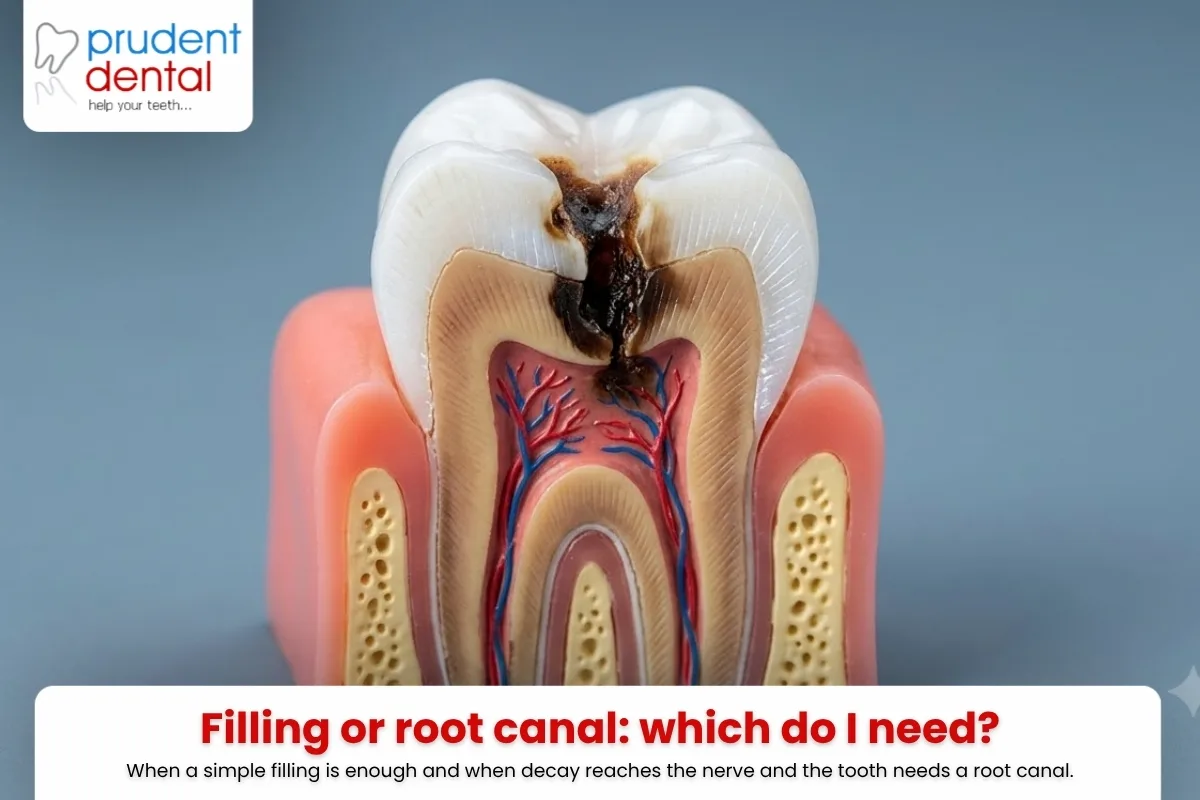
A tooth is layered. The hard white enamel on the outside covers a slightly softer layer called dentine, and at the centre sits the pulp: the living tissue that holds the nerve and blood supply. Decay starts at the surface and works inwards. Where it has reached decides everything.
A filling deals with decay in the outer layers. The dentist removes the decayed part and fills the space, restoring the tooth's shape and sealing it. It is usually a single, straightforward visit. A root canal is needed when the decay, a deep crack or an injury has reached the pulp and it has become infected or inflamed. At that point the tooth cannot simply be filled: the diseased pulp has to be removed, the canals cleaned and sealed, and the tooth usually protected afterwards with a crown.
How a dentist decides between them
The key question is whether the nerve is involved. Two teeth can look identical from the outside, yet one needs a filling and the other a root canal, because the difference is on the inside. That is why a dentist relies on an examination and usually an X-ray, which shows how close the decay is to the pulp and whether there are signs of infection at the root.
Your symptoms are an important clue. A sensitive spot that settles quickly usually points to a problem a filling can fix. Pain that lingers after hot or cold, throbs at night, flares when you bite, or comes with swelling or a small pimple on the gum, suggests the nerve is inflamed or infected, and a filling will not solve it.
| Sign | Points towards a filling | Points towards a root canal |
|---|---|---|
| Depth of decay | Within enamel or dentine, nerve not reached | Reached the pulp; nerve infected or inflamed |
| Reaction to hot/cold | Brief twinge that settles quickly | Lingering pain that continues after the trigger goes |
| Spontaneous pain | Usually none | Throbbing, especially at night, sometimes waking you |
| Pain on biting | Uncommon | Common, tooth feels tender to pressure |
| Gum & swelling | Normal | Swelling, or a pimple-like spot on the gum |
| Procedure | Usually one visit | One or more visits, usually a crown afterwards |
This table is a guide to understanding the difference, not a way to self-diagnose. Only a dentist can confirm which treatment a tooth needs.
Why catching it early matters
The reason dentists press so hard on regular check-ups is exactly this line between a filling and a root canal. Decay caught early, often before it causes any pain, is a small filling. Left to spread, the same cavity reaches the nerve and becomes a root canal, or eventually a lost tooth. Nothing about the decay changed except time.
This is also why pain is a poor early-warning system. Many cavities cause no symptoms until they are deep, which is why decay between teeth is often found on a routine examination or X-ray rather than felt. Waiting for a tooth to hurt usually means waiting until the cheaper option has passed.
The honest bottom line
You do not choose between a filling and a root canal; the state of the tooth chooses for you. What you can do is ask your dentist to show you the X-ray and explain why a particular tooth needs one or the other. A trustworthy answer will point to something specific, the depth of the decay, a sign of infection, a symptom, rather than simply asserting it. If a tooth is borderline, a good dentist will say so and explain the odds.
If you have a tooth that is sensitive, aching or bothering you when you bite, the sensible step is to have it looked at before the decision makes itself. You can book an appointment and get a clear explanation of what the tooth needs and why.
Sources & further reading
Indian Dental Association · American Dental Association (MouthHealthy) · NHS, Dental Health
Filling or root canal: your questions answered
Not sure if it is a filling or a root canal? Get it checked. Call +91 70287 22200.
Call +91 70287 22200 · Open 7 days, 9 AM–9 PM (5 PM Sun)