Key takeaways
- Self-ligating braces hold the wire with a built-in clip instead of elastic ties. That is the only real difference from conventional braces.
- Their honest advantage is hygiene and sometimes quicker adjustment visits, not dramatically faster or better results.
- Large evidence reviews find little difference in overall treatment time or final outcome versus well-managed conventional braces.
- They usually cost more, and the clinician planning your treatment matters far more than the bracket type.
If you have started researching braces in Pune, you have probably seen "self-ligating" offered as a premium upgrade, often with promises of faster, more comfortable treatment. Self-ligating braces are a real and perfectly good technology. But the gap between what they are marketed to do and what the evidence shows is wide, so it is worth understanding before you pay extra. This is a common question at an orthodontic consultation.
What are self-ligating braces?
To straighten teeth, fixed braces use two things: small brackets bonded to each tooth, and a springy metal wire (the archwire) that runs through them. As the wire tries to return to its shape, it gently guides the teeth into line. Something has to hold that wire inside each bracket, and that is the only place self-ligating braces differ.
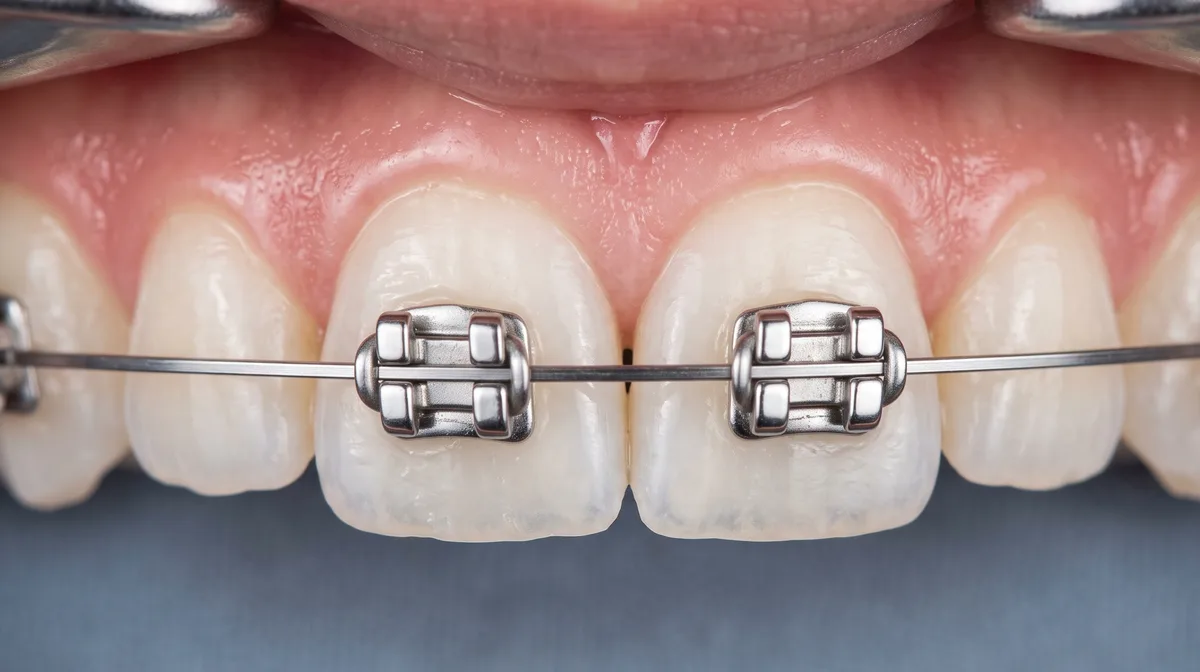
On traditional braces, the wire is tied into each bracket with a tiny elastic ring or a twist of fine wire, called a ligature. These are the little coloured modules people associate with braces. Self-ligating brackets replace those ties with a built-in clip or a sliding "door" that snaps shut over the wire. No elastic rings, no separate ties. That is genuinely all "self-ligating" means.
There are two broad types. Passive self-ligating brackets hold the wire loosely so it can slide freely. Active ones use a springy clip that presses lightly on the wire. Both come in metal and in tooth-coloured ceramic versions for people who want something less visible.
Are self-ligating braces better than traditional braces?
They have two honest advantages. The first is hygiene. Elastic ties sit on the front of each bracket and are notorious for trapping plaque and food, and they can discolour. Removing them removes one of the trickier cleaning challenges of braces. The second is chair time: because there are no ties to remove and replace, some adjustment appointments can be a little quicker.
What they do not reliably deliver is the headline promise. Manufacturers have long marketed self-ligating systems as faster, less painful and better. When researchers have pooled the evidence in systematic reviews, they have generally found little or no meaningful difference in overall treatment time, in the number of visits needed to finish, or in the quality of the final result, compared with conventional braces handled by a skilled clinician. The comfort claims are similarly mixed.
None of this makes them a bad choice. It simply means the deciding factor is not the bracket. A conventional brace in experienced hands will usually outperform any premium appliance used without careful planning. The technology is a tool; the judgement behind it does the work.
Are self-ligating braces faster?
This is the claim to treat with the most caution. Total treatment time is driven overwhelmingly by how far your teeth need to travel, the complexity of your bite, and how consistently the plan is followed, including keeping appointments and looking after the braces. A bracket that closes without elastic ties does not change the biology of moving a tooth through bone, which happens at its own pace and cannot be safely rushed.
Where self-ligating braces can save time is inside the appointment, not across the whole treatment. If skipping the tie-changing shaves a few minutes off each visit, that is a real convenience over a one-to-two-year course of treatment. It is just not the same thing as finishing months earlier, and it is fair to ask any clinic that promises a dramatically shorter timeline to explain exactly why.
How self-ligating and conventional braces compare
| Factor | Conventional braces | Self-ligating braces |
|---|---|---|
| How the wire is held | Elastic or wire ties on every bracket | Built-in clip or sliding door |
| Hygiene | Ties can trap plaque and discolour | No ties, so one less plaque trap |
| Adjustment visits | Slightly longer (ties are changed) | Can be a little quicker |
| Overall treatment time | Depends on the case | No reliable evidence it is faster |
| Final result | Excellent when well planned | No better on the evidence |
| Cost | Usually the more affordable option | Usually more expensive |
So are they worth it?
For some people, yes. If the easier cleaning matters to you, or you value slightly shorter visits and are comfortable with the higher cost, self-ligating braces are a sound choice. For others, a conventional brace does the same job for less. What you should not do is pay a premium expecting faster or better results than the evidence supports, or choose a clinic on the strength of the appliance brand alone.
The more useful question is not "metal or self-ligating?" but "is this clinician going to plan and monitor my treatment carefully?" Orthodontic treatment moves teeth through living bone and can affect the gums and roots, so it should start from a proper examination, usually with X-rays, and be supervised throughout. If you are also considering removable treatment, our guide comparing braces and clear aligners is a good next read, and the cost of braces in Pune is explained separately.
The honest way to decide is on your own teeth. Book an orthodontic assessment and ask directly whether self-ligating brackets offer you any real benefit for your case, or whether the money is better spent elsewhere. A good answer will be specific to your mouth, not a sales script.
Sources & further reading
Indian Dental Association · American Dental Association (MouthHealthy) · NHS, Dental Health
Self-ligating braces: your questions answered
Considering braces in Pune? Book an orthodontic assessment. Call +91 70287 22200.
Call +91 70287 22200 · Open 7 days, 9 AM–9 PM (5 PM Sun)