

Key takeaways
- A pulpotomy removes only the infected top portion of the pulp, so the milk tooth can stay alive and in place until it falls out naturally.
- Saving a milk tooth protects the space for the adult tooth underneath and supports normal chewing and speech.
- The procedure is done under local anaesthesia at your child's pace by consultant paediatric dentist Dr. Vanessa Lobo.
- Not every tooth can be saved; the X-ray decides between a pulpotomy, a pulpectomy or extraction with a space maintainer.
- A small crown after the pulpotomy protects the weakened tooth from fracture and reinfection.
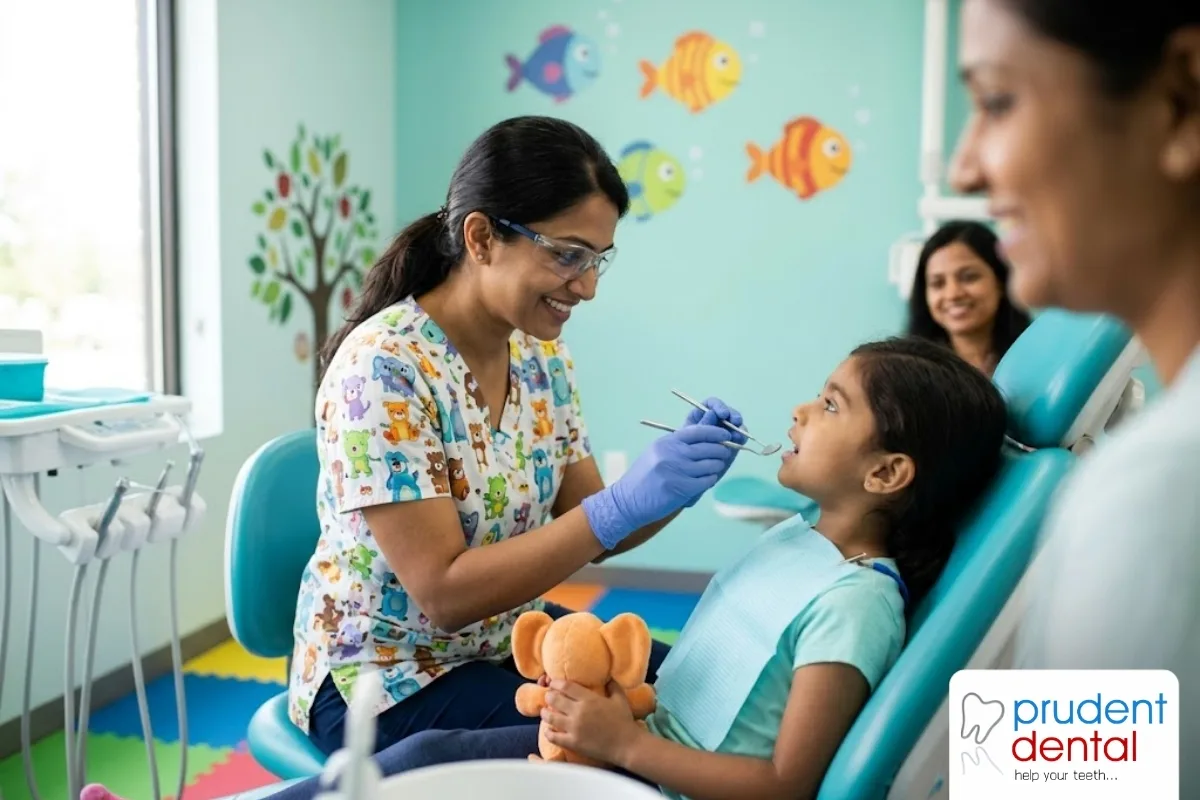
A pulpotomy is the baby-tooth version of a root canal. When decay in a milk tooth reaches the nerve inside, the infected top portion of the pulp is removed, the healthy portion in the roots is preserved, and the tooth is sealed and protected, usually with a small crown. It is done under local anaesthesia, at your child's pace, and in most cases the treated tooth stays in place doing its job until it falls out naturally. At Prudent Dental Clinic in Viman Nagar, pulpotomies are carried out by consultant paediatric dentist Dr. Vanessa Lobo.
When decay in a milk tooth reaches the nerve
Milk teeth have thinner enamel and proportionally larger nerve chambers than adult teeth, so decay can reach the pulp of a baby tooth surprisingly quickly. The pulp is the soft, living centre of the tooth that carries its nerve and blood supply. Once bacteria reach it, the pulp becomes inflamed and painful, and an ordinary filling can no longer fix the problem because it would seal infection inside. At that point a pulpotomy is often the treatment that saves the tooth. Our guide to cavities in kids explains how decay gets this far in the first place.
Some signs need same-day attention rather than a routine appointment. If your child has facial swelling, fever alongside tooth pain, or pain that is not settling, call us on +91 70287 22200 and we will see your child promptly; the clinic is open seven days a week. Left untreated, an infected milk tooth can develop an abscess that may harm the developing adult tooth underneath.
- Toothache that wakes your child at night or lingers long after eating
- Pain on chewing or biting on one side
- A gum boil or pimple near the affected tooth
- Swelling of the gum or cheek
- A deep cavity or dark discolouration you can see
What happens during a pulpotomy
Treatment starts with a small X-ray, which shows how far the decay has travelled and whether the roots are healthy enough for a pulpotomy. On the day, the tooth is numbed with local anaesthesia, the decay is cleaned away and the infected top portion of the pulp is removed from the crown of the tooth. The healthy pulp in the roots is left in place, a soothing medicated dressing is placed over it, and the tooth is sealed with a filling. In most cases a small crown is then fitted to protect the weakened tooth.
At Prudent Dental Clinic the procedure is carried out by consultant paediatric dentist Dr. Vanessa Lobo, who holds an MDS in Paedodontics and Preventive Dentistry and has nine years of experience treating children. Appointments run at the child's pace: she explains each step in child-friendly language, shows the instruments before using them, and pauses whenever your child needs a break. Many families find the visit calmer than they expected, because the tooth is fully numb and the focus stays on keeping the child comfortable. You can read more about our approach on the paediatric dentistry page.
Why saving the milk tooth beats early extraction
It is tempting to think a decayed baby tooth can simply come out, since it will fall out eventually anyway. But milk teeth do far more than fill a gap. Each one holds space for the permanent tooth developing underneath; lose it early and the neighbouring teeth can drift into the gap, leaving too little room and often leading to crowding or the need for orthodontic treatment later. Back milk teeth also do most of a child's chewing, and front ones shape early speech sounds. Our post on milk teeth versus permanent teeth covers this in more detail.
| What matters | Pulpotomy (tooth saved) | Early extraction |
|---|---|---|
| Space for the adult tooth | The milk tooth keeps holding space until it falls out naturally | Neighbouring teeth can drift in, often causing crowding later |
| Chewing | Normal chewing on both sides continues | Chewing shifts to one side and diet can suffer |
| Speech | Front teeth continue supporting clear speech sounds | Early gaps can affect certain sounds while speech is developing |
| Follow-up needed | Routine check-ups to monitor the tooth and crown | A space maintainer is often required to protect the gap |
When a pulpotomy is not the right option
A pulpotomy only works when the pulp in the roots is still healthy, and no dentist can promise that from looking at the tooth alone. That is why the X-ray comes first. If the infection has spread into the root canals or the bone around the tooth, Dr. Lobo may recommend a pulpectomy, which cleans out the entire pulp, or removal of the tooth if it is too broken down to restore. When a tooth does have to come out early, a space maintainer can be fitted to keep the gap open for the adult tooth. You will always be told plainly which option suits your child and why.
Timing also matters. If the tooth is already loose or close to falling out naturally, treating it may offer little benefit, and monitoring or removal can be the kinder choice. Every plan is reviewed by Dr. Puja Bansal, who leads each case at the clinic, so the decision reflects both the X-ray findings and what is realistic for your child on the day.
Aftercare and preventing the next cavity
Your child's lip and cheek will stay numb for a while after the appointment, so keep an eye out for cheek or lip biting and stick to soft foods until feeling returns. Mild soreness around the tooth usually settles on its own; if pain increases, swelling appears or the crown feels loose, call the clinic. Avoid very sticky sweets that can pull at a new crown, and treat the tooth like any other at brushing time.
A pulpotomy fixes one tooth; it does not change the conditions that caused the decay. The habits that protect the rest are simple: brush twice a day with a fluoride toothpaste, keep sugary snacks and drinks to mealtimes, and bring your child for regular check-ups so small cavities are caught before they reach the nerve. The clinic is open seven days a week, and children's check-ups are quick, friendly visits rather than something to dread.
Pulpotomy FAQs
Sources & further reading: NHS, Dental Health; American Dental Association (MouthHealthy); World Health Organization, Oral Health; Indian Dental Association.
Questions about your own teeth? Call +91 70287 22200.
Call +91 70287 22200 · Open 7 days, 9 AM–9 PM (5 PM Sun)