

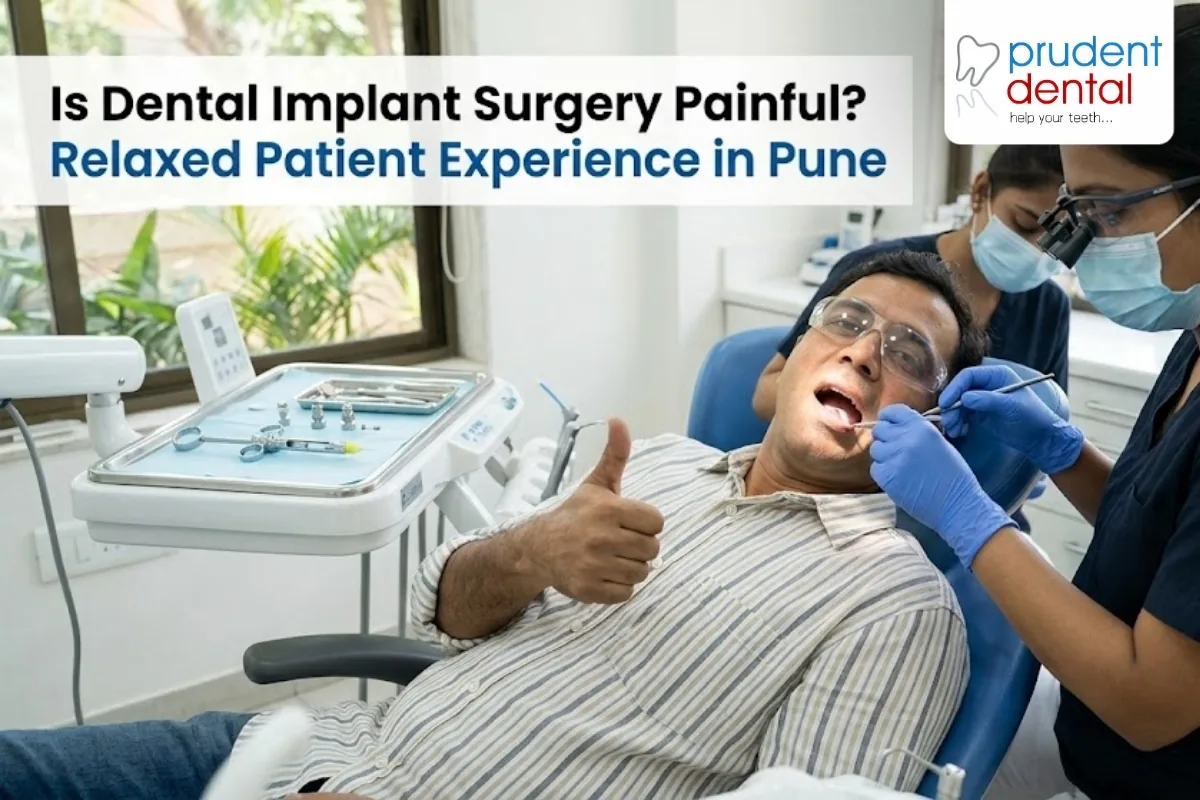
Key takeaways
- The implant is placed under local anaesthesia, so the procedure itself should not be painful. You feel pressure, not sharp pain.
- Mild soreness and swelling for a few days afterwards is normal and usually managed with simple aftercare and rest.
- Cold compresses, soft foods and following your dentist's aftercare instructions help the site settle comfortably.
- Pain that is severe or getting worse after the first few days is not typical. Call the clinic so it can be checked.
For most people weighing up a missing tooth, the biggest worry is not the result. It is the surgery. "Is it going to hurt?" is one of the questions we hear most often. The honest, reassuring answer is that modern implant placement is far more comfortable than its reputation suggests. Here is what to actually expect.
Is dental implant surgery painful?
No, the procedure itself should not be painful. Before an implant is placed, the area is fully numbed with local anaesthesia, so you feel pressure and movement but not sharp pain. A few days of mild soreness and swelling afterwards is normal, and for most patients it is managed comfortably with simple aftercare.
It helps to separate two very different things: the surgery and the recovery. During the surgery you are numb. The discomfort people describe almost always refers to the healing days that follow, and that is usually mild. Many patients tell us afterwards that they had braced for something dramatic and were surprised by how ordinary it felt. Placing an dental implant is a planned, controlled procedure, not the ordeal older stories make it sound.
Does getting an implant hurt during the procedure?
You should not feel sharp pain while the implant is being placed, because the site is numbed completely first. You may notice pressure, vibration or the sound of instruments, which some people find odd but not painful. If any discomfort does break through, your dentist can simply add more anaesthetic before continuing.
Local anaesthesia is the same principle used for a filling or an extraction, and it is very effective at the implant site. The surgeon works only once the area is fully numb and checks with you before starting. Because the jaw bone itself has no pain sensation in the way skin does, the sensations you notice come mostly from pressure rather than cutting. People who have previously had a difficult tooth removal or oral surgery are often the most relieved, because a planned implant tends to feel more straightforward than a stubborn extraction.
Anxiety is real and worth naming. If nervousness rather than pain is your main concern, say so at the consultation. A calm, unhurried appointment, a clear explanation of each step, and knowing you can pause at any time all make a genuine difference to how the experience feels.
How bad is dental implant recovery pain?
Recovery discomfort is usually mild to moderate and short-lived. Once the anaesthesia wears off you can expect some soreness and swelling around the site for a few days, much like after an extraction. For most people this eases steadily, ordinary aftercare is enough, and normal routine resumes quickly.
Knowing the rough shape of the first few days makes it far less daunting. Here is what a typical, uncomplicated recovery tends to look like.
- The first day. As the numbness fades, expect mild soreness and some swelling. Rest, avoid strenuous activity, and use cold compresses on the cheek in short spells to keep swelling down.
- Days two to three. Swelling and soreness are often at their most noticeable, then start to settle. Stick to soft, cool foods and chew away from the site. Keep the mouth clean gently, exactly as your dentist advises.
- The first week. For most people discomfort has largely faded and daily life is back to normal. You continue gentle cleaning and avoid disturbing the area while the deeper healing quietly continues underneath.
- The weeks that follow. The visible soreness is long gone while the implant integrates with the bone over the following months. This part is not painful; it simply takes time before the final crown is fitted.
For a fuller day-by-day picture of healing, including when you can eat normally and return to work, see our guide to recovery time after implant surgery. Good aftercare is the biggest lever you control: gentle cleaning, soft foods, no smoking, and following the specific instructions you are given all help the site settle comfortably.
One honest caveat matters here. Mild, improving soreness is expected. Pain that is severe, that gets worse rather than better after the first two or three days, or that comes with spreading swelling, fever or discharge is not the normal pattern. That is your signal to stop guessing and contact the clinic so the site can be checked. Reaching out early is always the right call, and it is never a bother.
Comfort during surgery vs the recovery days
Because people often blur the two together, it helps to see them side by side. The table below sums up the difference between how the procedure feels and how the healing days feel, so you know what to expect from each.
| During the procedure | The recovery days | |
|---|---|---|
| What you feel | Pressure and movement, but not sharp pain | Mild to moderate soreness and swelling |
| Why | The site is fully numbed with local anaesthesia | The tissue is healing, much like after an extraction |
| How it is managed | More anaesthetic added if you notice any discomfort | Cold compresses, soft foods, rest and gentle cleaning |
| How long | Limited to the appointment itself | Usually eases over a few days |
| When to worry | Tell your dentist during treatment if uncomfortable | Call the clinic if pain is severe or worsening |
Every mouth and every case is different, so the best guide to your own comfort is a proper assessment rather than a general article. At Prudent Dental Clinic in Viman Nagar, Pune, implant treatment is led by Dr. Puja Bansal (BDS), an implantologist with 27 years of experience (Maharashtra State Dental Council reg. A8860). At your consultation you can talk through anaesthesia, what the day looks like and how discomfort is handled, and have your nerves as well as your teeth taken seriously. If that would help, you can book a consultation. The clinic is open seven days a week, 9 AM to 9 PM (5 PM on Sundays), and you can call +91 70287 22200.
Replacing many teeth, or hoping for teeth in one visit? See our 2026 guides to full mouth implants and same-day dental implants.
Sources & further reading
Indian Dental Association · NHS, Dental Health
Implant surgery pain questions, answered
Nervous about implant surgery? Talk to Dr. Bansal. Call +91 70287 22200.
Call +91 70287 22200 · Open 7 days, 9 AM–9 PM (5 PM Sun)