

Key takeaways
- Calcium-rich Indian staples like paneer, dahi and milk, along with crunchy vegetables and nuts, actively support strong enamel.
- Sticky, sugary snacks that cling to teeth cause more cavities than an occasional dessert eaten with a meal.
- How often sugar touches your teeth matters more than how much you eat in one sitting.
- Rinsing with plain water after meals and snacks is a free, effective habit that reduces acid attacks on enamel.
Every time you eat, your teeth take part in the meal. Bacteria in dental plaque feed on sugars from food and produce acids that dissolve tiny amounts of enamel. Saliva then spends the next half hour or so repairing the damage. Whether your teeth stay ahead in that tug-of-war depends less on willpower and more on what you eat, and how often.
The good news for anyone eating a typical Indian diet is that many of our everyday staples are already tooth-friendly. This guide looks at which foods genuinely help, which quietly cause cavities, where chai fits in, and a few realistic swaps. No food-shaming, no impossible rules.
What foods are good for my teeth?
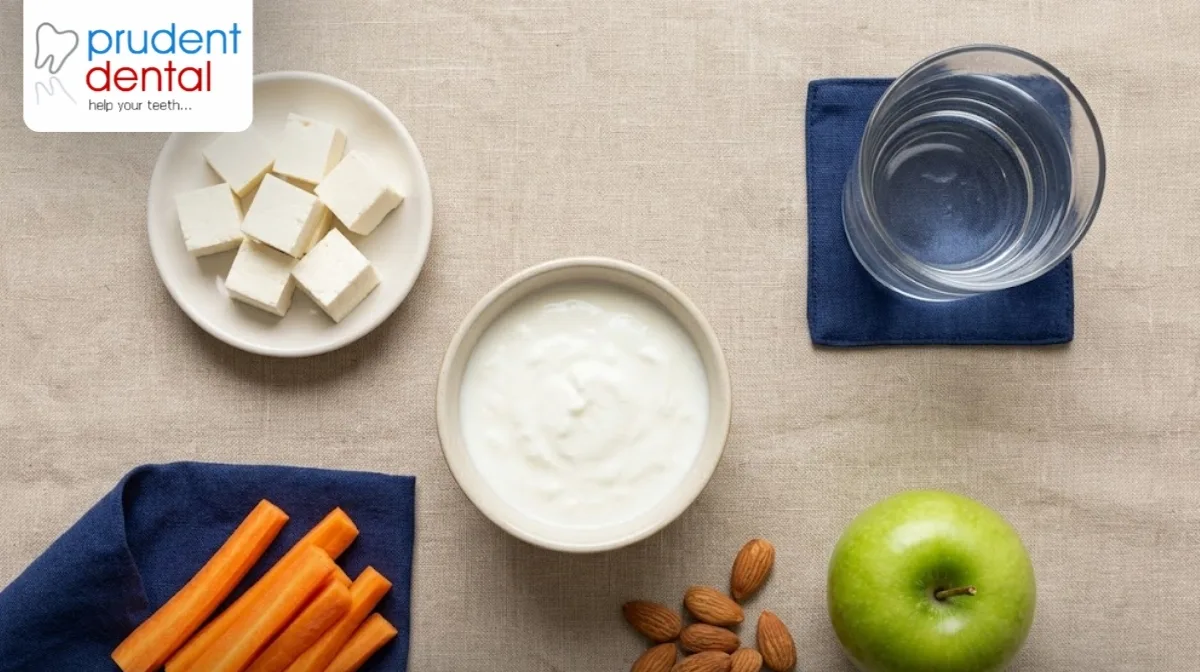
Calcium- and protein-rich foods such as paneer, dahi, milk and nuts help strengthen enamel, while crunchy vegetables like carrots and cucumber stimulate saliva, your mouth's natural defence. Fibrous fruits, leafy greens and plenty of water round out a tooth-friendly plate. A balanced Indian thali already contains most of what your teeth need.
Dairy deserves special mention. Paneer, dahi, milk and cheese provide calcium and phosphate, the same minerals enamel is built from, along with proteins that are thought to help protect the tooth surface. A bowl of plain dahi with lunch or a cube of paneer in the evening does quiet, useful work for your mouth as well as your bones.
Crunchy, fibrous vegetables (carrots, cucumber, radish, salad leaves) earn their place differently. Chewing them stimulates saliva flow, and saliva is the mouth's built-in rinse: it washes away food debris, neutralises acids and carries minerals back to the enamel. Nuts such as almonds and walnuts add minerals and healthy fats with very little sugar. That makes them one of the kindest snacks you can choose between meals.
None of this requires exotic ingredients. Dal, sabzi, roti, dahi and a handful of nuts is a perfectly tooth-friendly day. The trouble usually comes from what gets added in between.
What foods cause cavities?
Foods that combine sugar and stickiness cause the most trouble: toffees, chikki, biscuits, cakes and sweets that cling to the teeth long after you have finished eating. Sugary drinks and frequent snacking also feed acid-producing bacteria. How often sugar touches your teeth matters more than how much you eat in one sitting.
Stickiness is the underrated villain. A gulab jamun eaten as dessert is largely washed away by the meal and your saliva. A toffee or a piece of chikki, on the other hand, wedges into the grooves of your molars and keeps feeding bacteria for a long time afterwards. Biscuits and rusk behave similarly. The starch and sugar form a paste that lingers on and between teeth.
This is why frequency matters more than quantity. Each exposure to sugar triggers an acid attack that lasts roughly half an hour before saliva restores the balance. Five small sugary snacks spread across the day mean five separate acid attacks; the same treats eaten together after a meal mean just one. The World Health Organization recommends limiting free sugars generally. From a purely dental point of view, clustering sweets with meals instead of grazing on them is one of the most effective changes you can make.
If sweet snacks are a fixture in your family, or in your child's tiffin, it is worth pairing this habit change with regular professional care. Our guide to your child's first dental visit covers how early those habits start to matter.
Is chai bad for your teeth?
Chai itself is not the problem. Tea even contains natural fluoride and plant compounds called polyphenols. The trouble is sugar, sipped repeatedly through the day. Four or five sweetened cups keep your teeth bathed in sugar for hours. Reducing the sugar, or keeping chai closer to meal times, makes it far kinder to your teeth.
Think of it this way. One well-sweetened cup with breakfast is a single sugar exposure. The same cup repeated at eleven, two, four and six o'clock turns into an all-day drip of fuel for cavity-causing bacteria, especially if each cup comes with a biscuit. Strong tea can also stain enamel over time, though staining is a cosmetic issue rather than a health one.
You do not need to give up chai. Try stepping the sugar down gradually, from two spoons to one and a half, then one, so your taste adjusts. Rinse with plain water after your cup, and if you drink many cups a day, consider making some of them less sweet rather than cutting the ritual itself.
What are some realistic swaps?
Small substitutions beat dramatic diets. The goal is not to banish sweets from your life but to change when and how they appear. The table below sets out common habits alongside gentler alternatives that most households can actually stick to.
| Everyday habit | Why it challenges teeth | Smarter swap |
|---|---|---|
| Sweetened chai four to five times a day | Repeated sugar exposures all day long | Fewer or less-sweet cups; rinse with water after each |
| Biscuits or rusk with every tea break | Sticky starch-and-sugar paste lingers on teeth | A handful of roasted chana, peanuts or almonds |
| Toffees and chikki between meals | Cling to molar grooves and feed bacteria for hours | Enjoy sweets as dessert straight after a meal |
| Colas and packaged juices through the day | Sugar plus acidity attacks enamel directly | Water, plain milk or unsweetened lassi |
| Grazing on namkeen and snacks all evening | Constant food contact keeps the mouth acidic | Defined snack times; fruit or paneer cubes instead |
Notice that nothing on this list says "never". Festivals, weddings and Sunday mithai are part of life in Pune as much as anywhere in India. Teeth cope well with occasional indulgence. It is the daily, repeated pattern that decides your cavity risk.
What should you do after eating?
Rinse your mouth with plain water after meals and snacks. It is free, takes ten seconds, and washes away much of the sugar and debris before bacteria can use it. Wait about thirty minutes before brushing, because enamel is temporarily softened by acids straight after eating.
These small habits sit at the heart of preventive dentistry: sensible diet timing, rinsing after meals, brushing twice daily with fluoride toothpaste, and cleaning between the teeth. What home care cannot do is detect a cavity that has already started. Early decay is usually painless and invisible in the mirror. A routine dental examination can catch these spots while they are still small and simple to treat.
At Prudent Dental Clinic in Viman Nagar, Pune, we are happy to talk through your diet and snacking pattern at your check-up without judgement. The clinic is open seven days a week. If you have more general questions about oral care, our FAQ page covers the ones we hear most often.
Sources & further reading
Indian Dental Association · World Health Organization, Oral Health
Food & teeth: your questions answered
Due for a check-up? We're open 7 days a week. Call +91 70287 22200.
Call +91 70287 22200 · Open 7 days, 9 AM–9 PM (5 PM Sun)