

Key takeaways
- With healthy gums and good daily hygiene, dental implants can last for decades. No dentist can honestly promise a fixed lifespan.
- Unlike a bridge, an implant does not require grinding down healthy neighbouring teeth for support.
- An implant transmits chewing forces into the jaw, which helps maintain the bone in the gap left by a missing tooth.
- Untreated gum disease, heavy smoking and uncontrolled diabetes are the main reasons to delay or rethink implants. A proper assessment comes first.
Losing a tooth turns into a practical decision. Implant, bridge, denture, or leave the gap? Implants are often described as the closest thing to a natural tooth. They are also a bigger commitment than the alternatives. Here is an honest look at what they offer, how long they can last, and who should think twice.
Are dental implants worth it?
For many people with a missing tooth, yes. A dental implant replaces the root as well as the crown, does not rely on the neighbouring teeth for support, and helps preserve the jaw bone in the gap. With good hygiene and regular reviews, an implant can serve you for decades.
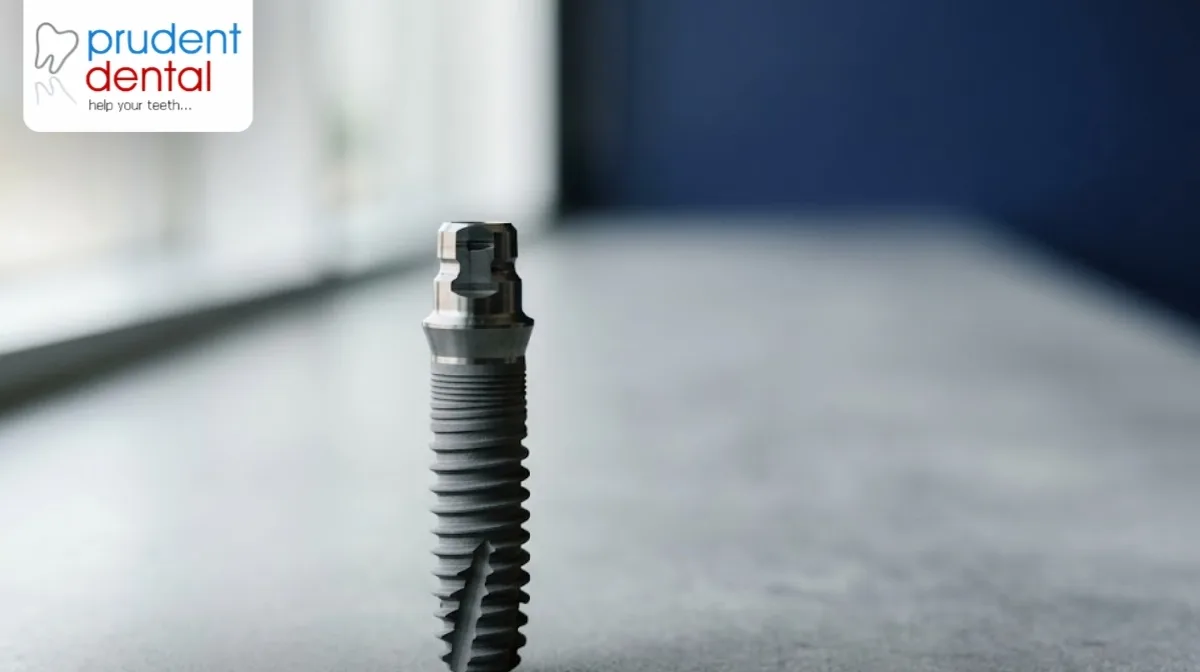
A dental implant is a small biocompatible post, usually titanium, placed in the jaw where the tooth root used to be. Over a few months the bone integrates with it, and a crown is then fixed on top. That root-level replacement is what sets implants apart. A conventional bridge fills the same gap by capping the two teeth on either side. That normally means reshaping healthy enamel that can never be put back.
The root also matters for the bone itself. When a tooth is lost, the jaw bone in that area no longer receives chewing stimulation and tends to shrink slowly over time. Because an implant transmits biting forces into the jaw much as a natural root does, it helps keep that section of bone active. Bridges and removable dentures sit above the gum, so they cannot do this.
How long do dental implants last?
There is no fixed lifespan, and no honest dentist will promise one. With healthy gums, careful daily cleaning and regular professional check-ups, dental implants can last for decades. Many patients keep them for the rest of their lives. The crown on top may need replacement sooner than the implant itself.
What determines longevity is less the implant and more the environment around it. An implant cannot decay, but the gum and bone supporting it can become inflamed if plaque builds up. This is called peri-implantitis, and it is the most common reason implants are lost. Smoking slows healing and is consistently linked with poorer implant outcomes. Heavy night-time grinding can overload an implant, though a simple night guard usually manages this.
So treat an implant like a natural tooth, not a maintenance-free spare part. Brush twice daily, clean between teeth as your dentist shows you, and keep routine check-ups so any early gum inflammation is caught while it is still easy to reverse.
How do implants compare with bridges and dentures?
All three can restore your smile and chewing, but they work differently. A bridge is quicker but relies on reshaping the neighbouring teeth. A removable denture is the most economical option but does not preserve bone. An implant works independently and helps maintain the jaw, which is why it is often the long-term choice.
| Dental implant | Fixed bridge | Removable denture | |
|---|---|---|---|
| Neighbouring teeth | Untouched; the implant is self-supporting | Reshaped and crowned to carry the bridge | Untouched, though clasps may rest on them |
| Jaw bone in the gap | Stimulated by chewing forces, helping preserve it | Not stimulated; gradual shrinkage can continue | Not stimulated; gradual shrinkage can continue |
| Feel and stability | Fixed; closest to a natural tooth | Fixed and stable | Removable; can move while eating or speaking |
| Daily care | Brush and floss like a natural tooth | Needs special cleaning under the bridge | Removed and cleaned separately each day |
| Longevity | Can last decades with good hygiene | Many years; supporting teeth limit lifespan | Usually needs relining or remaking over time |
None of this makes the alternatives obsolete. A well-made denture or fixed prosthesis remains a sensible choice when several teeth are missing, when bone volume is limited, or when a fixed budget takes priority. For a deeper side-by-side discussion, see our guide to replacing a missing tooth.
Who should not get implants?
Implants may not be suitable, at least not immediately, for people with untreated gum disease, uncontrolled diabetes, heavy smoking habits, or too little jaw bone at the site. Young patients whose jaws are still growing are usually asked to wait. Many of these barriers can be managed first.
Most of these are obstacles rather than permanent exclusions. Gum disease can be treated and stabilised before implant planning begins. Diabetes is not a barrier in itself. What matters is that blood sugar is well controlled, because poor control impairs the healing an implant depends on. Smokers are encouraged to quit, or at minimum pause around the time of surgery, since smoking is one of the strongest risk factors for implant problems. Where bone has already shrunk, grafting procedures can often rebuild enough volume, although this adds time to treatment.
This is why candidacy is decided by assessment, not assumption. At Prudent Dental Clinic in Viman Nagar, Pune (serving patients since 2005 under a strict sterilisation protocol), implant planning is led by Dr. Puja Bansal (BDS), an implantologist with 27 years of experience. An examination and X-ray come first. Only then can anyone tell you honestly whether an implant is the right choice for your mouth. If you are weighing your options, you can book a consultation. The clinic is open seven days a week, 9 AM to 9 PM (5 PM on Sundays).
If you are looking at a bigger case, our 2026 guides to full mouth dental implants and same-day implants cover full-arch and immediate-load treatment in depth.
Sources & further reading
Indian Dental Association · World Health Organization, Oral Health
Dental implant questions, answered
Considering a dental implant? Talk to Dr. Bansal. Call +91 70287 22200.
Call +91 70287 22200 · Open 7 days, 9 AM–9 PM (5 PM Sun)