

Key takeaways
- Most mouth ulcers are harmless and heal by themselves within one to two weeks.
- They usually follow a small injury, or appear during stress, tiredness or low iron and B12.
- You can ease the pain with salt-water rinses, gentle brushing, protective gels and by avoiding spicy or acidic food.
- The one rule worth remembering: any ulcer that has not healed in three weeks should be checked by a dentist.
A mouth ulcer is one of those small problems that feels much bigger than it is. That raw little crater catches on every bite and sip, and it can turn a normal meal into a careful negotiation. The good news is that most ulcers are minor and heal on their own. The useful skill is telling an ordinary ulcer apart from the rare one that needs attention.
This guide covers what causes mouth ulcers, how to settle the soreness while they heal, and the clear warning signs that mean it is time to see a dentist rather than wait it out.
What actually causes mouth ulcers?
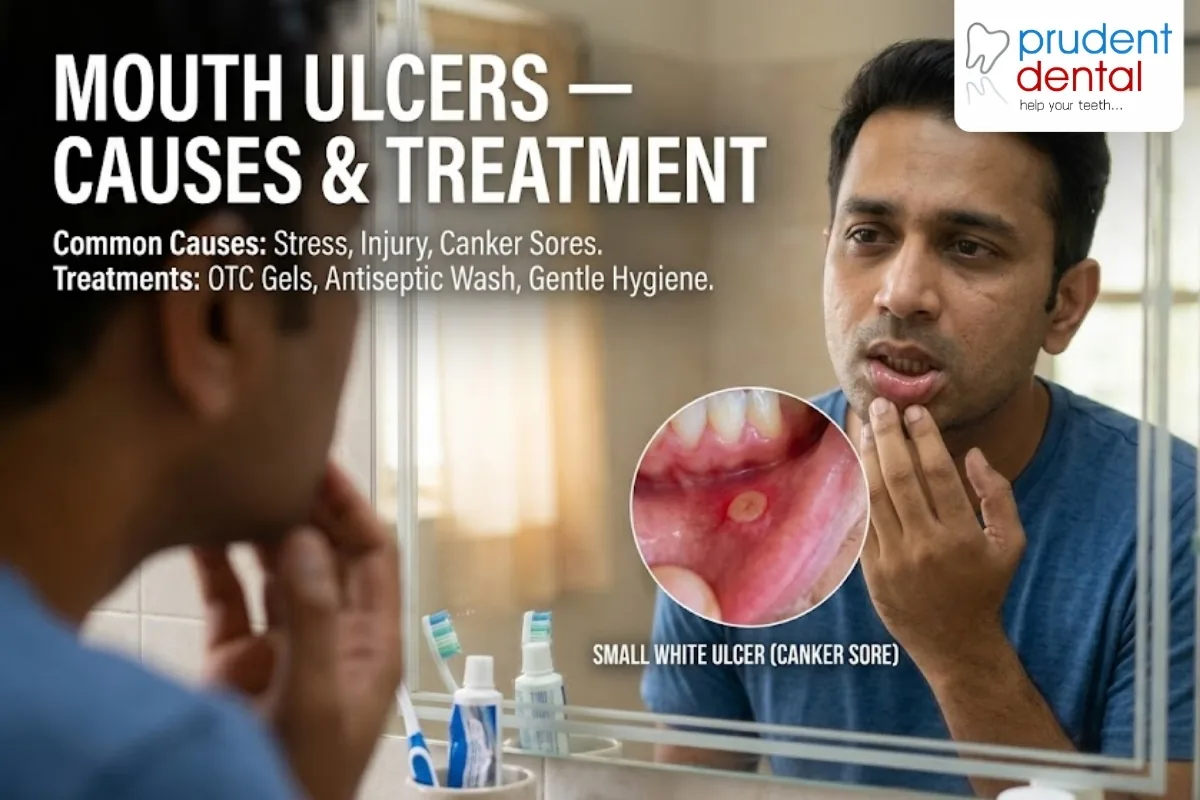
Most common ulcers, the small round or oval sores with a pale centre and a red rim, are called aphthous ulcers. They are not infectious and you cannot catch them from anyone. In many cases they follow a minor injury to the delicate lining of the mouth.
- Physical injury. Biting the inside of your cheek, a sharp or broken tooth, a rubbing brace or denture, or brushing too hard.
- Stress and tiredness. Many people notice ulcers appear during exam season, illness or a run of poor sleep.
- Nutritional gaps. Low iron, folate or vitamin B12 can make ulcers more frequent, which is worth a blood test if they keep returning.
- Foods and toothpaste. Acidic and spicy foods trigger some people, and an ingredient in certain toothpastes can irritate a sensitive mouth.
- Hormonal changes. Some women find ulcers track their menstrual cycle.
A different, very common type is the cold sore, which appears on the lip rather than inside the mouth, is caused by a virus and does spread. This article is about the ordinary ulcers that form on the inside of the cheeks, tongue and gums.
How do I get rid of a mouth ulcer?
You cannot rush healing, but you can protect the ulcer and take the sting out of it while your body does the repair. The aim is to keep the area clean and avoid anything that irritates raw tissue.
- Rinse with warm salt water a few times a day. Half a teaspoon of salt in a glass of warm water is soothing and keeps the area clean.
- Avoid the obvious irritants while it heals: spicy, salty, acidic and very hot foods, along with crunchy edges that can catch the sore.
- Keep brushing gently with a soft brush. Skipping brushing near an ulcer lets bacteria build up and slows healing.
- Use a pharmacy gel. Protective or numbing gels made for mouth ulcers can cover the sore and dull the pain, especially before meals.
- Fix the source if there is one. A sharp tooth, a rough filling or a rubbing denture will keep causing ulcers in the same spot until it is smoothed or repaired.
If a rough tooth or restoration is the culprit, a quick visit for an examination often solves a problem that creams never will, because it removes the cause rather than treating the symptom.
When should a mouth ulcer be checked?
This is the part worth remembering. Most ulcers heal within two weeks and need nothing more than patience. A small number behave differently, and those are the ones to take seriously. Book an appointment with a dentist or doctor if you notice any of the following:
- An ulcer that has not healed after three weeks.
- Ulcers that keep coming back, or several appearing at once, again and again.
- An unusually large or deep sore, or one that is painless.
- A lump, or a red or white patch, alongside or instead of the ulcer.
- Numbness, persistent bleeding, difficulty swallowing, or unexplained weight loss.
A single ulcer that simply will not heal is the most important sign not to ignore. It is very often nothing serious, but a dentist can examine it properly and, if there is any doubt, arrange the right next step. That reassurance is worth far more than weeks of quiet worry.
Can I prevent mouth ulcers?
If you are prone to them, a few habits reduce how often they appear. Use a soft toothbrush and a gentle technique, deal with sharp teeth or ill-fitting appliances promptly, and keep an eye on foods that seem to set yours off. A balanced diet with enough iron and B vitamins helps, and if ulcers are frequent despite all this, ask your physician to check for a deficiency. Managing stress and sleep is not a cure, but it genuinely lowers the frequency for many people.
At Prudent Dental Clinic in Viman Nagar, Pune, we are happy to look at an ulcer that is worrying you, smooth a tooth that keeps causing them, or reassure you when all is well. The clinic is open seven days a week from 9 AM to 9 PM (5 PM on Sundays), and you can book online or call. Quick answers to other everyday questions live on our FAQ page.
Sources & further reading
Indian Dental Association · NHS, Dental Health · World Health Organization, Oral Health
Mouth ulcer FAQs
An ulcer that will not heal in three weeks should be checked. Call +91 70287 22200.
Call +91 70287 22200 · Open 7 days, 9 AM–9 PM (5 PM Sun)